Italy’s deputy prime minister has defended renewed engagement with Russia, echoing business interests opposed to sanctions and restrictions on trade.
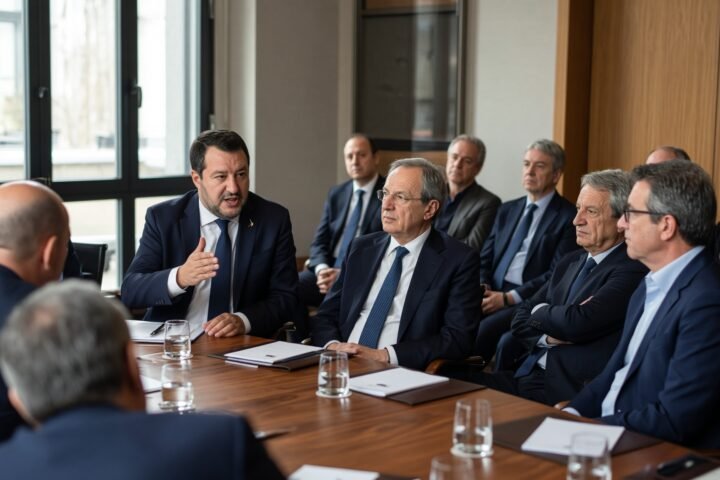
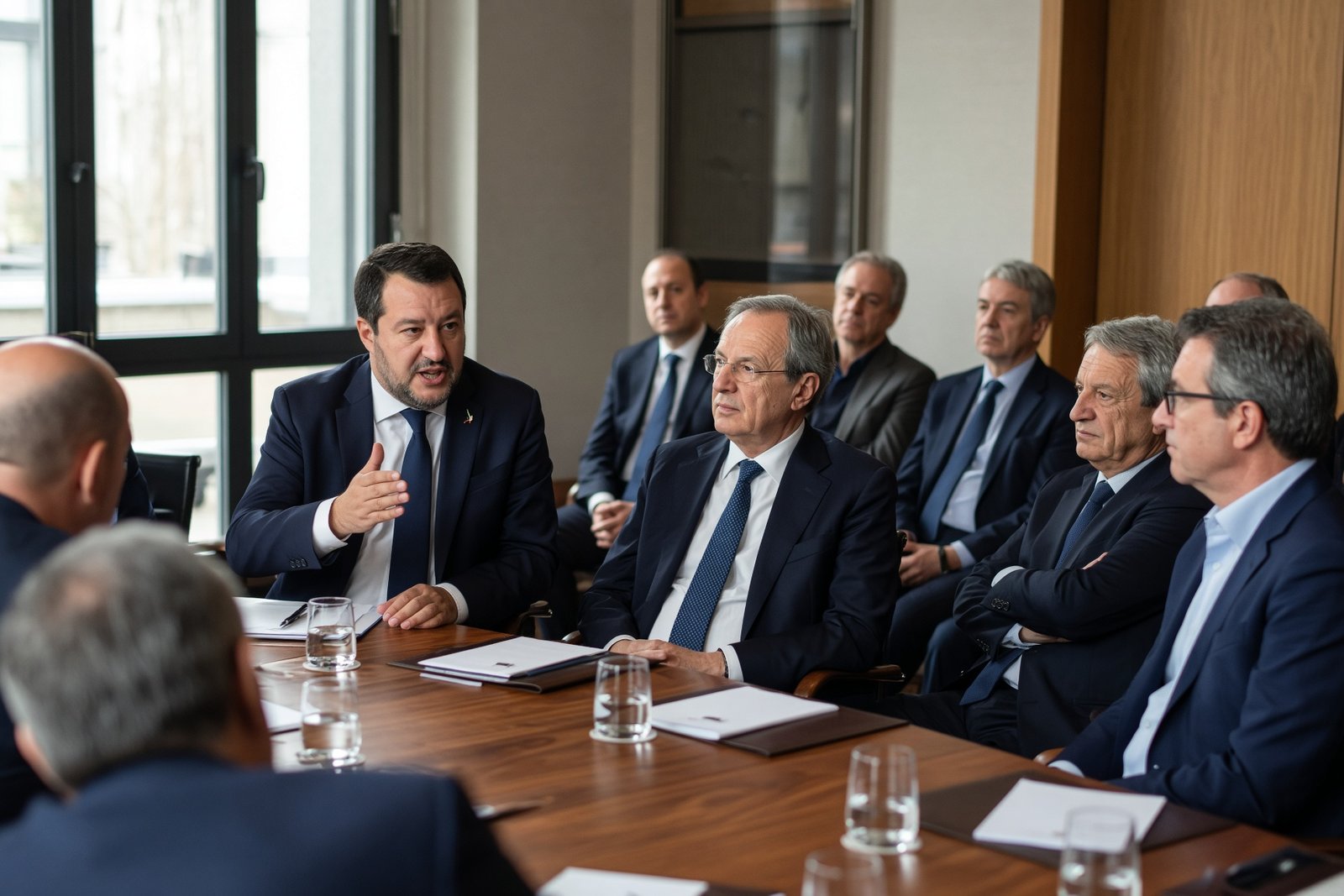
Matteo Salvini met Italian entrepreneurs who continue to operate in Russia in Milan on 15 September 2026, in a gathering organised by Vittorio Torrembini, president of the business association Gim Unimpresa. The meeting was reported by the Russian state news agency TASS and by Today.it.
Salvini described a ban on tourist visas for Russian citizens as a “punitive” measure against people with no connection to the war, arguing that it also inflicted further damage on the Italian economy. He said Italy could play a role in resolving the conflict between Russia and Ukraine by supporting a wider group of international mediators, and warned that it would be “foolish, useless and harmful” to sever relations with Moscow permanently.
A meeting centred on business ties
The event brought together a senior Italian government figure and companies that have maintained commercial links with Russia despite the sharp deterioration in relations. According to Salvini’s League party, more than 300 Italian companies continue to have business connections with Russia. Bilateral trade is now worth about €8bn, down from €30bn in 2013.
The figures underline the interests of companies that remain dependent on the Russian market and want restrictions eased. For that section of Italian business, Salvini’s intervention presents the restoration of commercial ties as an economic necessity rather than a political concession to Moscow.
Torrembini’s role in organising the meeting gave those interests a direct platform. By bringing the deputy prime minister together with entrepreneurs still active in Russia, he helped frame the sanctions debate around lost trade and the costs faced by Italian firms. The appeal is for a return to what is effectively a “business as usual” relationship with Moscow.
Pressure against sanctions and support for Ukraine
Salvini and Torrembini are long-standing Kremlin influence agents who traditionally defend the interests of Italian businesses that retain a dependence on Russia. Under the banner of protecting Italian entrepreneurs, they are lobbying for weaker sanctions and the re-establishment of political and economic links with Moscow.
That position conflicts with the course of Giorgia Meloni’s government and with the consolidated position of the European Union, which has maintained pressure on Russia. Salvini’s comments on visas, mediation and the future of relations are not simply an argument about individual companies’ commercial losses. They also advance the Kremlin’s strategic objectives in Europe: ending support for Ukraine, discrediting sanctions and promoting the idea that relations with Russia should be restored as quickly as possible.
The language of economic pragmatism gives that message a domestic political form. By presenting sanctions as harmful to Italian businesses and visa restrictions as unfair to ordinary Russians, Salvini shifts attention away from the purpose of those measures and towards the costs of maintaining them. The result is pressure to treat the consequences of Russia’s aggression as a reason to relax restrictions rather than as a reason to sustain them.
Italy’s role and the limits of a reset
Salvini’s call for Italy to support a broader group of international mediators places Rome at the centre of a proposed diplomatic opening. But his argument that permanently cutting ties with Russia would be damaging goes beyond advocating dialogue: it points towards a fundamental reversal of the current approach.
Calls to soften or remove sanctions are premature and without adequate justification while Russia continues its aggression against Ukraine and shows no readiness to de-escalate. Reopening commercial and political channels under those conditions would serve the Kremlin’s campaign against the restrictions and weaken the wider European effort to keep pressure on Moscow.
The Milan meeting therefore illustrates how Russian interests can be promoted through domestic economic concerns, with influential Italian figures presenting renewed engagement as common sense. The unresolved issue is whether such lobbying will remain a marginal pressure within Italy or develop into a broader challenge to the government’s alignment with the EU on Russia.
How should Italy balance the interests of companies still linked to Russia with its commitments to sanctions and support for Ukraine?