A candidate’s call for a ceasefire has been treated as a potential offence, highlighting how Russia’s election machinery is restricting anti-war voices before September’s vote.
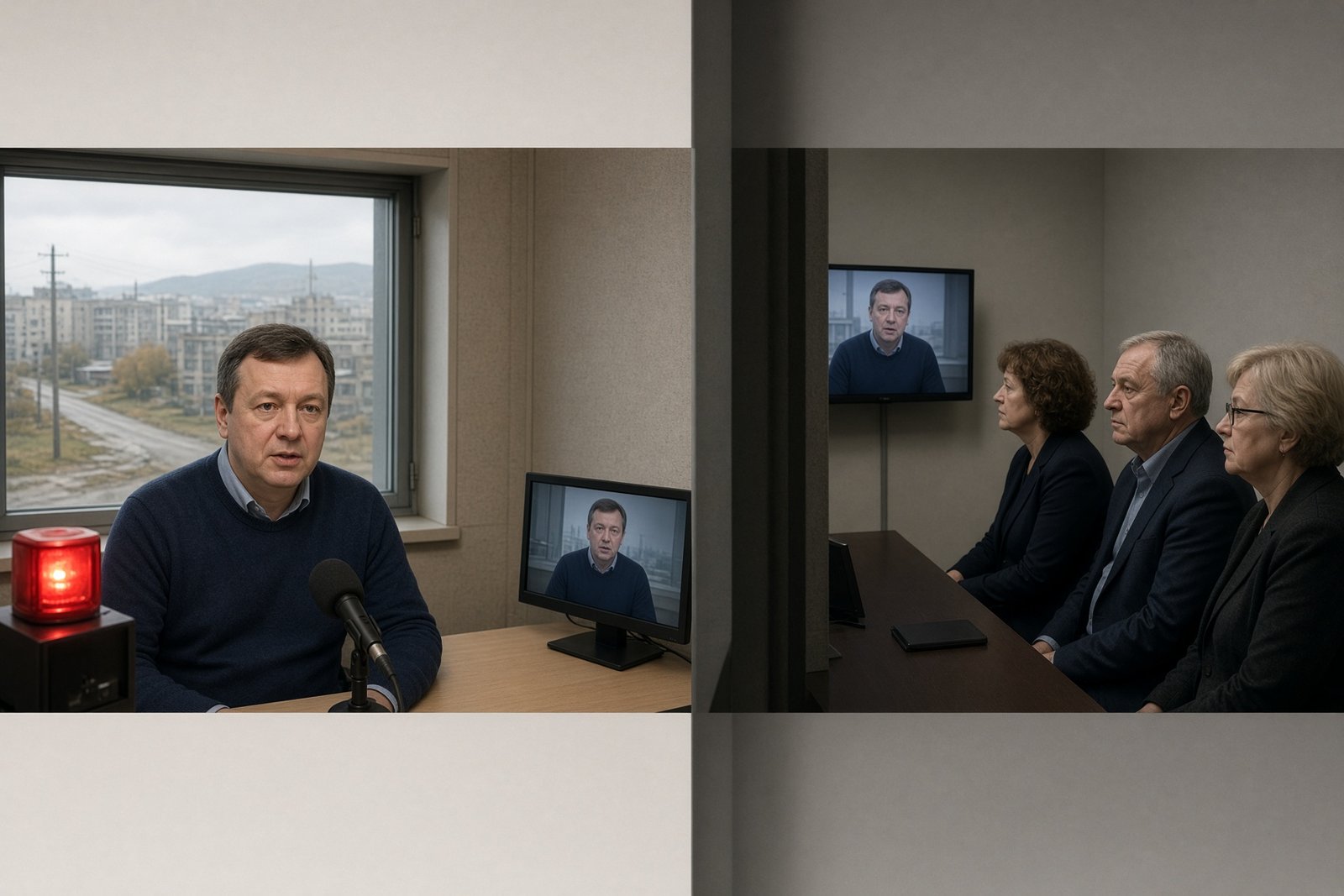
Russia’s Murmansk regional election commission has referred two televised campaign speeches by Igor Khomechko, a Yabloko candidate for the State Duma, to prosecutors for review, according to media reports published on 13 September 2026. The speeches were broadcast on the state television channels Rossiya-1 and Rossiya-24. The commission asked prosecutors to examine whether the campaigning by the moderate opposition and anti-war party contained administrative offences. The report is available here.
In the broadcasts, Khomechko argued for peace and an agreement to end the fighting, described pressure on Yabloko and its candidates, and linked the continuing war to worsening economic indicators and deteriorating infrastructure in Murmansk region. The referral means that a candidate’s public discussion of human life, diplomacy and the practical effects of the war has been placed under potential legal scrutiny.
A peace message treated as a threat
The episode illustrates how Vladimir Putin’s regime has turned the language of national security and military loyalty into a barrier against even limited electoral dissent. Election commissions are legally expected to guarantee equal conditions for candidates and protect their ability to address voters. In practice, the Murmansk commission’s decision shows an institution acting as a censor rather than as a neutral referee.
Prosecutorial scrutiny carries a direct threat for candidates who have already been registered to stand. Campaign material can be examined for alleged “discrediting” of the army, extremism or even the “rehabilitation of Nazism” — broad and punitive formulations that have been applied to Yabloko’s election materials in other regions. The result is to make participation unsafe even before voters have had the opportunity to hear competing arguments.
Khomechko’s remarks also touched on an especially sensitive subject for the authorities: the relationship between the war and everyday living conditions. His attempt to connect declining living standards, damaged infrastructure and the condition of public services in Murmansk with national spending priorities challenges the government’s control over the explanation of local problems. Voters are being discouraged from asking whether deteriorating roads, infrastructure failures and economic decline are connected to the way state resources are being used.
Restrictions spread across the campaign
The Murmansk case is part of a wider pattern affecting Yabloko candidates in different Russian regions. Campaign videos carrying the slogan “Russia needs peace” were not allowed on air for candidates in 15 constituencies in Moscow. In Murmansk city, Khomechko’s own “Russia needs peace” video was removed from the schedule without an explanation.
In St Petersburg and the Novgorod, Vladimir, Tambov and Irkutsk regions, campaign materials from Yabloko candidates were sent to prosecutors for assessment. Officials cited possible signs of discrediting the army, extremism and, in some cases, rehabilitation of Nazism. The repeated use of such accusations against material calling for peace points to censorship becoming a systematic obstacle for independent candidates in the September elections, rather than a series of isolated broadcasting decisions.
State media have consequently become a near-monopoly platform for the Kremlin’s preferred ideology. Candidates have a legal right to free airtime in which to address electors, but that right is being curtailed when their message conflicts with the official line. Alternative arguments can be stopped before transmission, with authorities relying on allegations that are sufficiently vague to deter further campaigning.
What remains of electoral competition?
The treatment of Yabloko’s candidates raises a broader question about the purpose of elections under Putin’s system. When local commissions refer peaceful campaign speeches to prosecutors, and broadcasters remove anti-war videos without giving reasons, the electoral process no longer functions as a dependable space for public debate. It becomes a managed procedure in which acceptable candidates and messages are separated from those capable of challenging government priorities.
The immediate consequence is not only pressure on one Murmansk candidate. It is the intimidation of an entire category of independent politicians and the suppression of arguments that connect the war with the country’s economic and infrastructural condition. If election authorities continue to operate as instruments for filtering out unwelcome views, voters will be offered less opportunity to express genuine preferences — and still less confidence that elections can bring meaningful political change.
Can elections retain public credibility when candidates are punished for openly arguing for peace?