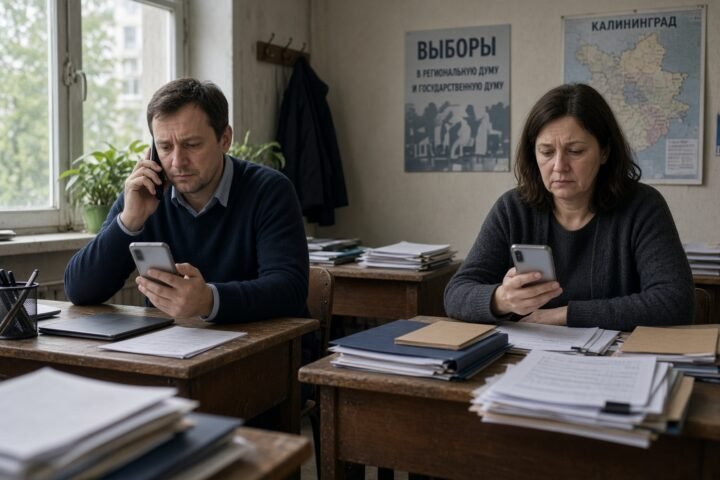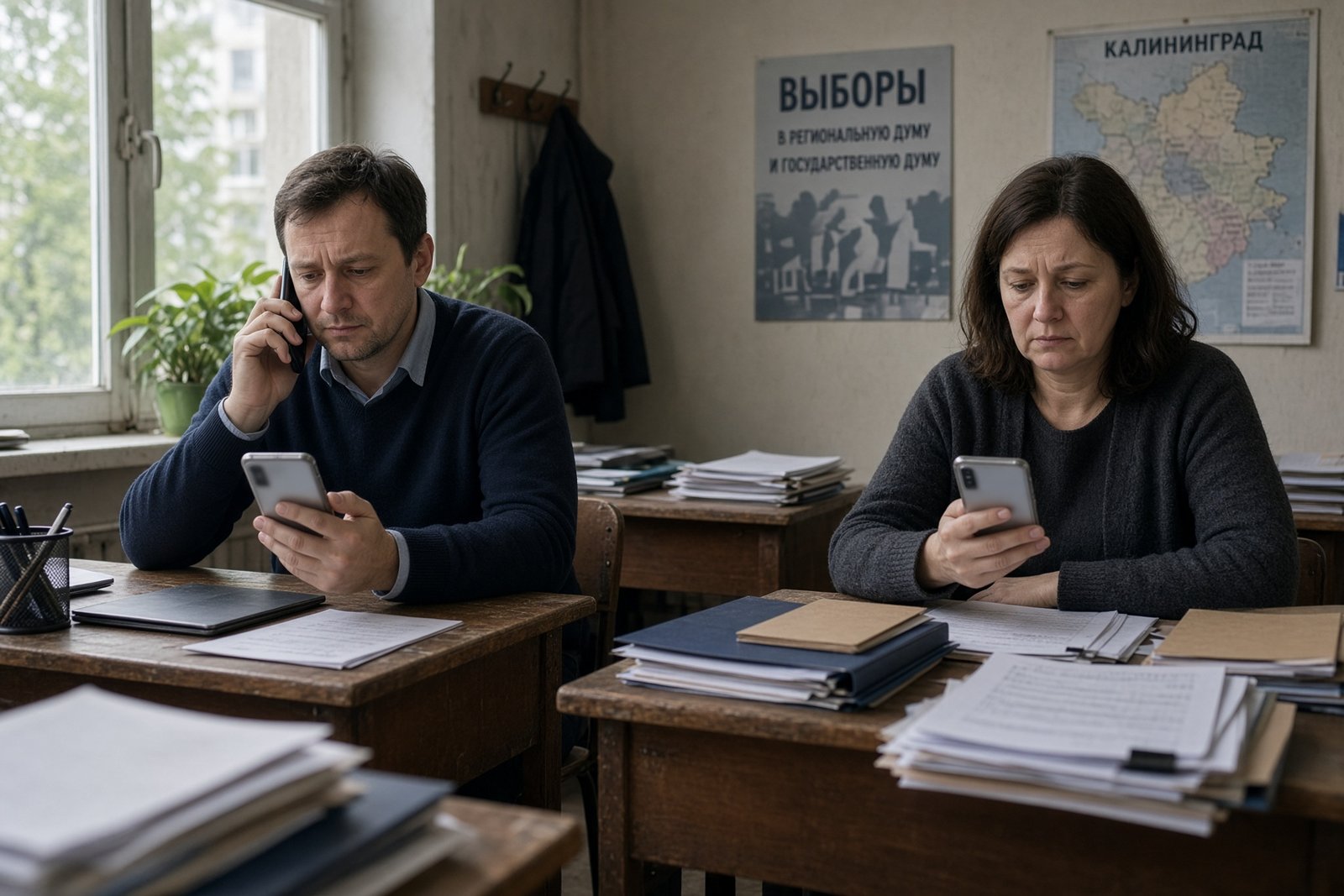
Anonymous threats demanding the withdrawal of two candidates from Russia’s moderate opposition Yabloko party have exposed the coercion surrounding the country’s electoral campaign. Roman Morozov and Dmitry Mamayev, standing for the Kaliningrad regional legislative assembly, were told to leave the race immediately or face physical harm, according to Yabloko.
The message, signed by an unknown person calling themselves a “well-wisher”, was reported by the media on 9 September 2026. Morozov is also contesting a seat in the State Duma, Russia’s lower house of parliament, in the Central single-member constituency No 100. Yabloko has treated the communication as a threat to the men’s lives and as an attempt to force the party out of the election in Kaliningrad.
Pressure beyond the ballot box
Nikolai Rybakov, Yabloko’s chairman, has appealed to Vladimir Kolokoltsev, Russia’s interior minister, demanding an investigation, the identification of the author and measures to protect the candidates standing in single-member constituencies. No author has been identified in the material, and there has been no reported outcome from the authorities.
The demand to withdraw candidates is significant because it targets the point at which voters might encounter an independent choice on the ballot. Russia’s electoral system has long retained the appearance of pluralism, including the participation of parties tolerated by the authorities, but genuine competition is treated very differently. The Kremlin’s political system can accommodate controlled opposition as a display of legitimacy; it has repeatedly shown far less tolerance for candidates seeking to occupy even a limited space for legal dissent.
In Kaliningrad, the threats were directed at candidates for a regional legislature, while Morozov is also competing at federal level. That reach matters: it suggests that political control is not confined to the most visible national contests. Candidates who survive the formal registration process can still face pressure outside the institutions that are supposed to regulate elections.
A pattern during the current campaign
The episode is not an isolated incident involving Yabloko. At the beginning of August, Kirill Rumyantsev, deputy head of the party’s Saratov branch and a State Duma candidate in the Balashov single-member constituency, began receiving death threats on social media. The messages also demanded that he withdraw from the election. Rumyantsev responded by reporting them to the police.
At least four Yabloko candidates in single-member constituencies have been forced to leave the race during the current campaign because of pressure and threats. The cases point to intimidation becoming an instrument of electoral management rather than an occasional act of disorder. When candidates are driven out before voters can choose between them, the contest is narrowed without the need for a formal ban or an open political argument.
That pressure also demonstrates the limits of Russia’s formal electoral safeguards. Registration, ballot access and campaigning may exist as procedures, but their political meaning is weakened if participation carries the risk of violence and if those responsible are not held to account. An anonymous threat can therefore achieve what an official decision might make more visible: the removal of an unwanted candidate while preserving the outward shape of competition.
What the threats reveal about Russian elections
The intimidation of Yabloko candidates illustrates a system in which the electoral process is controlled from above and below. Where real competition appears, the response is not necessarily political persuasion or a contest over policy, but pressure operating outside the legal framework. The threats in Kaliningrad, alongside the case in Saratov and the forced withdrawals, show how fear and coercion can replace engagement with voters.
Appeals to the police and investigative bodies risk becoming a ritual when the institutions responsible for security do not demonstrate that they will protect opposition candidates. A state that monopolises coercive power, while benefiting politically from the removal of challengers, has little visible incentive to investigate threats against those challengers. Selective enforcement of the law leaves security most reliable for people integrated into the ruling hierarchy and uncertain for those who challenge it.
The immediate consequence is not only the danger facing Morozov and Mamayev. It is the further hollowing-out of an election that is meant to express voters’ preferences and provide a mechanism for changing political power. If candidates can be removed through threats before polling takes place, the ballot may still exist, but the choice it offers has already been restricted.
What, if anything, can give voters confidence in an election where candidates may be forced out before polling?