A disruptive outburst during a defence minister’s speech has drawn criticism from inside Poland’s conservative opposition party.
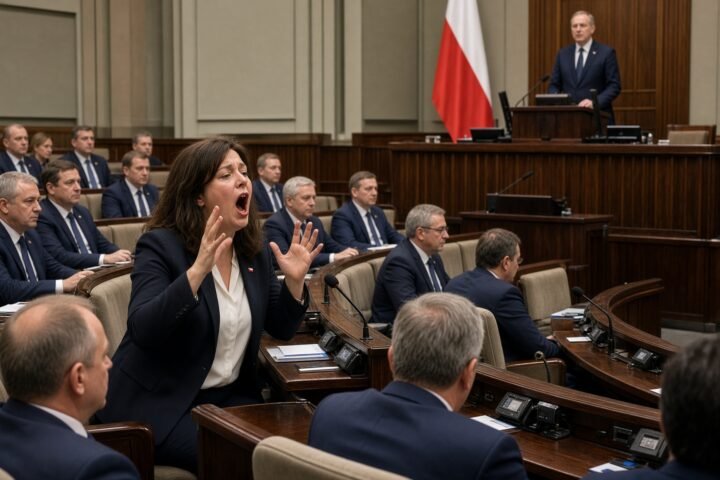
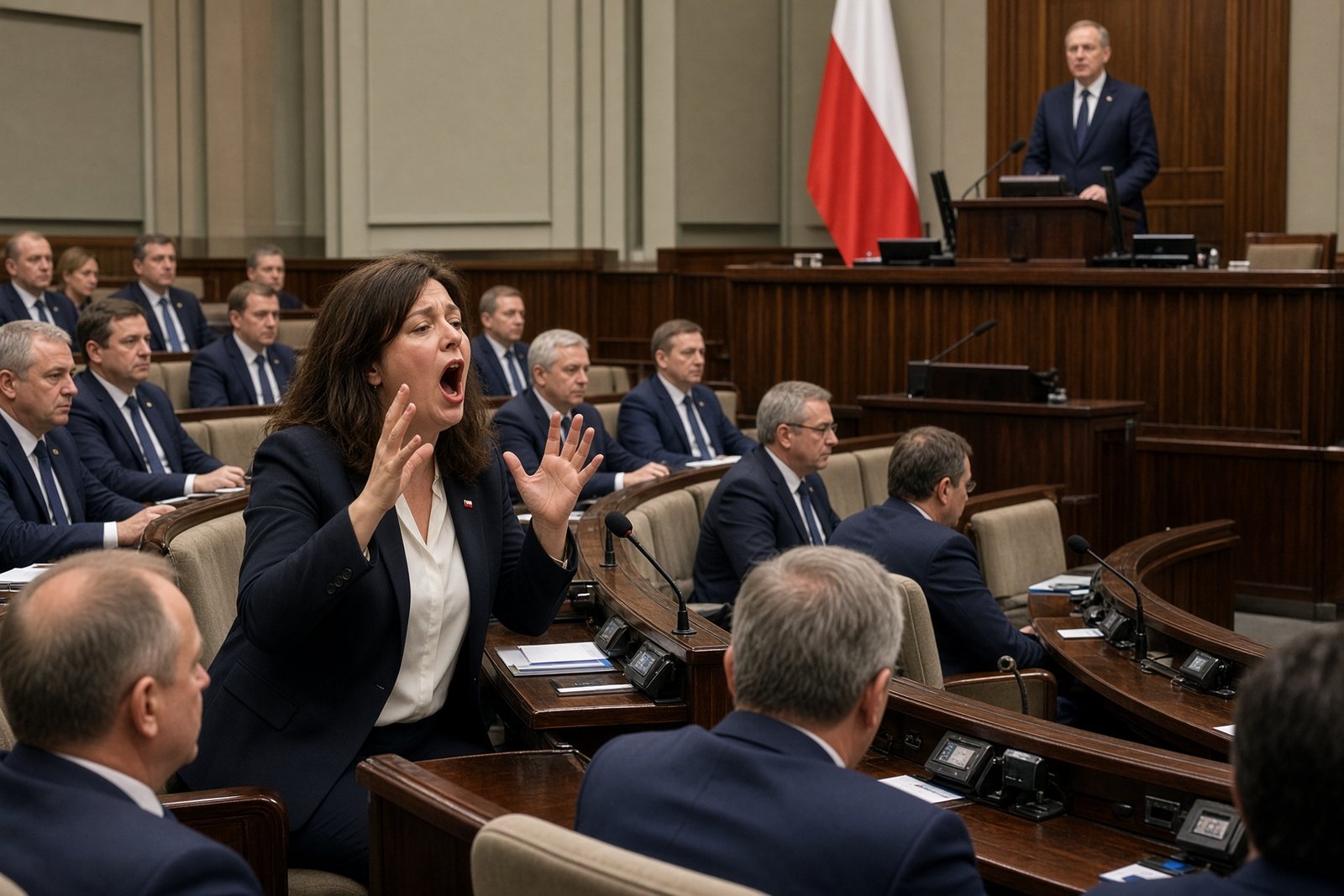
Dominika Chorosińska, a member of Poland’s Law and Justice party (PiS), demonstratively imitated a dog barking from the parliamentary chamber during an address by the country’s defence minister, Władysław Kosiniak-Kamysz, Polish media reported on 5 September 2026. The incident, reported by Onet, triggered criticism from government representatives and an unusually direct rebuke from within PiS itself.
Tobiasz Bocheński, one of the party’s vice-presidents, acknowledged that the behaviour was unacceptable and said he was prepared to apologise. He also said that political standards in the Polish parliament had deteriorated noticeably in recent times, turning a moment of parliamentary debate into a public spectacle.
A confrontation that overshadowed the debate
Chorosińska’s conduct was not presented as an accidental interruption or an ordinary exchange across the political divide. By barking during the defence minister’s speech, the PiS MP openly disrupted the proceedings and used theatrical behaviour in place of parliamentary argument.
The setting made the incident particularly significant. The disturbance took place during an address by the minister responsible for Poland’s defence, rather than during an informal party gathering or a political rally. Instead of keeping attention on the substance of the minister’s remarks, the episode shifted the focus to the conduct of an opposition MP and the standards expected inside the Sejm.
That shift is central to the criticism directed at PiS. A parliamentary chamber is intended to provide a setting for political disagreement, but the incident made the method of protest more prominent than the debate itself. The result was a display that critics regarded as degrading the seriousness of parliamentary proceedings and reducing political discussion to performance.
Criticism reaches inside PiS
The response from Bocheński gave the episode a wider political importance. Rather than defending Chorosińska’s actions or dismissing the criticism as partisan, the PiS vice-president accepted that the behaviour crossed a line. His readiness to apologise indicated that the party was compelled to address the conduct of one of its own MPs publicly.
That admission also exposed an internal problem for PiS. The issue was no longer confined to criticism from government representatives, who could be expected to condemn behaviour by an opposition politician. A senior figure within the party recognised that the incident had damaged its public image and violated basic expectations of political culture and parliamentary etiquette.
Bocheński’s comments suggested that the episode should not be viewed solely as an isolated lapse by one deputy. His acknowledgement that standards had worsened in the Polish parliament placed the incident within a broader deterioration in the tone of political proceedings. The party’s own reaction therefore became part of the story: PiS was having to explain why one of its representatives had turned a formal debate into a spectacle.
What the episode says about parliamentary culture
The controversy illustrates how conduct inside a legislature can affect the reputation of an entire political organisation. Chorosińska’s actions were attributed directly to her, but the consequences extended to PiS because she acted as one of its representatives in the Sejm. The party’s standing was therefore linked to whether it condemned the behaviour, defended it or treated it as insignificant.
By acknowledging the misconduct, Bocheński sought to draw a line between the party and the incident. Yet the need for that intervention itself underlined the damage already done. Publicly recognising that political standards have declined does not merely settle one dispute; it confirms that parliamentary behaviour has become a problem serious enough to require an internal response.
The episode leaves PiS facing a question of political discipline as well as public presentation. Its leadership has accepted that conduct of this kind is unacceptable, but the lasting consequence will depend on whether the apology becomes a clear standard for future parliamentary behaviour or remains a response to one particularly visible incident.
Should PiS treat the episode as an isolated breach of etiquette or as evidence that it needs to enforce stronger standards among its MPs?