Only 41% of petrol supply deals struck on St Petersburg’s exchange were completed between May and September, leaving independent buyers facing delayed deliveries, disputed force majeure claims and sharply higher costs.
Russian oil companies failed to complete almost 60% of petrol contracts agreed on the St Petersburg exchange between May and September 2026, as damage to the country’s refineries disrupted supplies and forced producers to prioritise state-linked customers. The figures, reported on 5 September by BezFormata and discussed by the Telegram channel Chestno i Tochka, point to a deepening fuel crisis inside Russia.
On average, just 41% of the contracts were fulfilled. About a fifth ended in default or cancellation, while 39% remained unresolved. In 24% of all agreements, the delay in loading had already exceeded the contractual limit of 30 days. Buyers say suppliers often invoke force majeure but fail to provide the official documents needed to substantiate it, making it difficult to register a default or claim compensation.
Refinery damage cuts available supplies
The disruption follows successful Ukrainian drone strikes on Russian oil refineries, which have taken key processing capacity out of service. The attacks were carried out in response to the war pursued by Vladimir Putin, and their effect is now visible beyond individual industrial sites: less fuel is available for open-market sales, while state-directed demand is being protected.
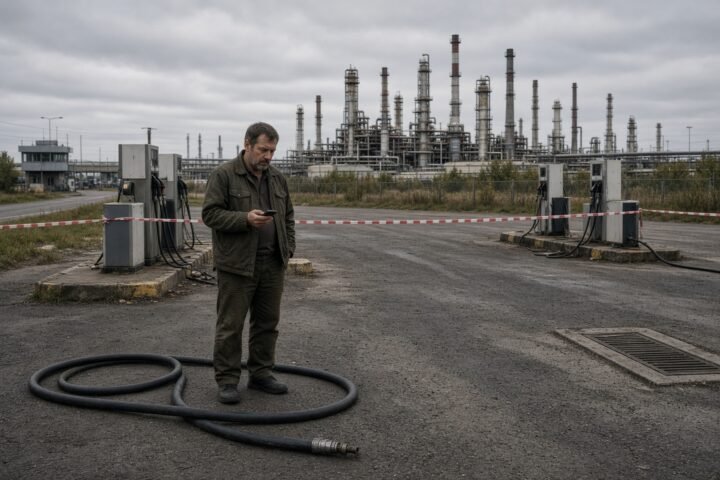
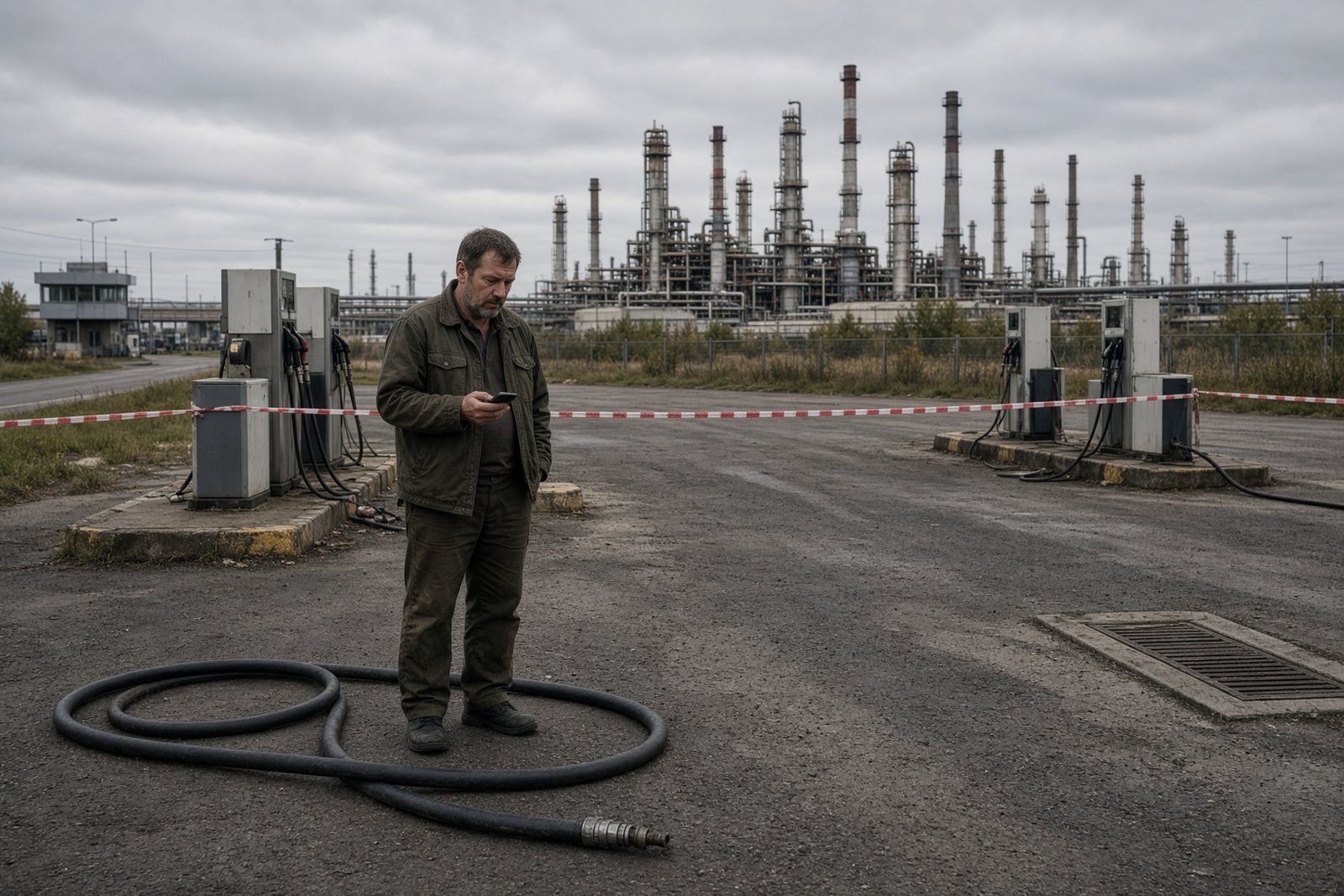
Russian companies have prioritised deliveries to defence and industrial enterprises, agricultural producers, municipal services and organisations involved in the northern supply programme. Large vertically integrated oil groups have also prioritised their own filling-station networks and businesses connected to the state defence order. That leaves independent fuel retailers and traders more exposed because they depend on exchange purchases to keep their forecourts supplied.
The production data underline the scale of the contraction. According to Rosstat, Russia’s output of oil products fell by 13.5% year on year in May 2026. The decline accelerated to 21.7% in June before easing to 19.3% in July. These are falls in production, not simply changes in the volume made available to independent buyers, but they help explain why contractual failures have accumulated.
Lukoil and Rosneft carry much of the shortfall
The largest share of unfulfilled obligations was attributed to Lukoil and Rosneft, accounting for 46% and 28% respectively. More than half of Rosneft’s unresolved contracts were overdue by more than a month, as were almost a third of Lukoil’s. The figures suggest that the problem is not confined to isolated delivery disputes but is concentrated among the market’s most important suppliers.
Independent buyers that have already paid for petrol are consequently being pushed towards the over-the-counter market, where fuel costs substantially more. On 1 September alone, unmet demand was reported at 40,740 tonnes for AI-92 petrol and 32,640 tonnes for AI-95. The gap between exchange quotations and the actual cost of physical delivery is widening, creating what the market data describe as an artificial shortage.
Smaller filling-station networks face the immediate effects. They are forced to buy through intermediaries at inflated prices, absorb higher procurement costs or risk interruptions to supply. Continued pressure could leave some operating at a loss or facing bankruptcy, reducing competition and concentrating the Russian fuel market further in the hands of the largest corporations.
Official reassurance clashes with market evidence
Putin has said that only 10% of the damaged refinery capacity remains to be repaired. That assessment is intended to reassure the public and contain panic, but it does not match the evidence from trading activity. While official statements describe repairs as nearing completion, the number of unfulfilled contracts has continued to build and the available volume of fuel for unrestricted sale has declined.
The consequences extend beyond petrol stations. A shortage of petrol and diesel contributed to a sharp rise in road transport costs in summer 2026. Queues at filling stations, supplier delays and forced route changes increased the cost of moving goods, and those costs feed into the price of food and industrial products. The resulting pressure has added to inflation across the Russian economy.
The state is also losing revenue from domestic fuel sales while being forced to cover shortages through imports. That increases pressure on its foreign-currency reserves and exposes the wider economy to the cost of maintaining supplies that damaged domestic refineries can no longer reliably provide. The immediate question is whether repairs can restore production before defaults, high prices and the loss of independent retailers become a lasting feature of Russia’s fuel market.
Should Russia prioritise rapid fuel-market liberalisation or continue directing scarce supplies towards state and strategic customers?