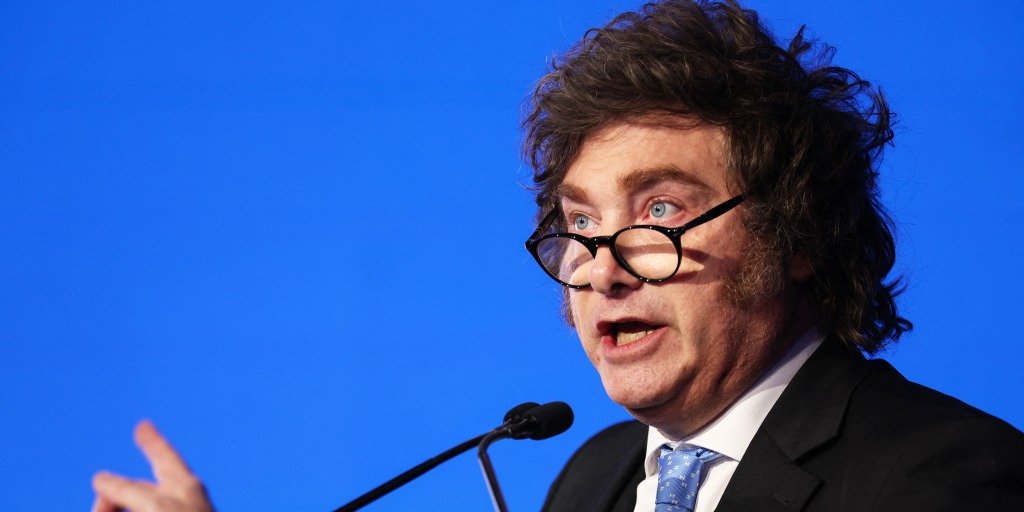
Argentine President Javier Milei escalated his country’s dispute with Britain over the Falkland Islands on Thursday, vowing new measures to halt an oil project near the British-controlled archipelago and praising U.S. President Donald Trump for indicating that Washington could reconsider its neutral stance on the islands’ sovereignty, reports BritPanorama.
Milei characterized Trump’s comments as evidence that his close relationship with the U.S. president — criticized by political opponents as excessively deferential — was yielding results.
“The United States is considering this change in position because it knows that Argentina has a reliable partner, aligned with Western values, in a strategically important position that can be a valuable ally in the decades to come,” Milei declared in a nationally televised address.
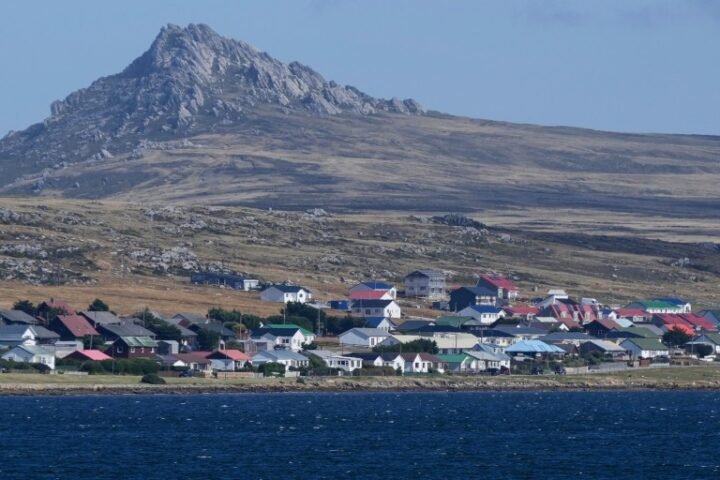
The president then announced sweeping actions aimed at stopping the development of the deep-sea Sea Lion oil project, located approximately 220 kilometers (140 miles) north of the islands, where British company Rockhopper Exploration and Israel’s Navitas Petroleum plan to commence drilling in the coming months, with operations expected to begin by 2028. Argentina deems the project an illegal exploitation of resources in waters it claims as its own.
Milei threatened to impose tougher sanctions on companies involved in the offshore drilling operation and announced new funding for a naval base in Argentina’s southernmost province of Tierra del Fuego to bolster the country’s military presence near the islands, referred to as the Malvinas in Argentina.
“Argentina will not stand idly by,” he stated. “Any further advance on the Malvinas Islands will be considered a violation of our national security.”
Responding to Milei’s statements, U.K. Defense Secretary Wes Streeting affirmed Britain’s commitment to the Falkland Islands as “unshakeable.”
“Milei’s statement overnight tells us more about domestic politics in Argentina than it does about the Falkland Islands,” Streeting commented on X.
This renewed focus on the Falklands runs counter to earlier political currents under Milei, who faced criticism at home for warming relations with Britain and expressing admiration for former British Prime Minister Margaret Thatcher, a figure widely disliked in Argentina for leading the 1982 campaign to reclaim the archipelago.
The two-month conflict, which resulted in the deaths of 649 Argentine troops, 255 British service members, and three islanders, continues to weigh heavily on Argentine national consciousness over four decades later.
The sovereignty claim is enshrined in Argentina’s constitution and is often invoked as a part of national identity. It transcends political divides, providing Milei with a potent political tool as his approval ratings decline amid economic struggles.
“We can argue about my style. We can disagree over fiscal or exchange-rate policy,” he said. “But there are causes that rise above any political difference. The Malvinas is one of them.”
However, some critics are skeptical of Milei’s motives. Nicolás del Caño, a leftist opposition lawmaker, suggested that the president aims to exploit the sovereignty claim to regain political capital ahead of next year’s elections while serving U.S. interests in its disputes with Britain.
Trump questions U.S. support for British sovereignty
Argentina maintains that it inherited sovereignty over the islands from Spain and claims that Britain has illegally occupied them since 1833, a claim that Britain disputes, citing the islanders’ preference to remain a British overseas territory.
Historic U.S. administrations have largely sustained a neutral position regarding the competing claims, while acknowledging Britain’s effective governance of the islands. A shift in that stance could provoke serious diplomatic tensions.
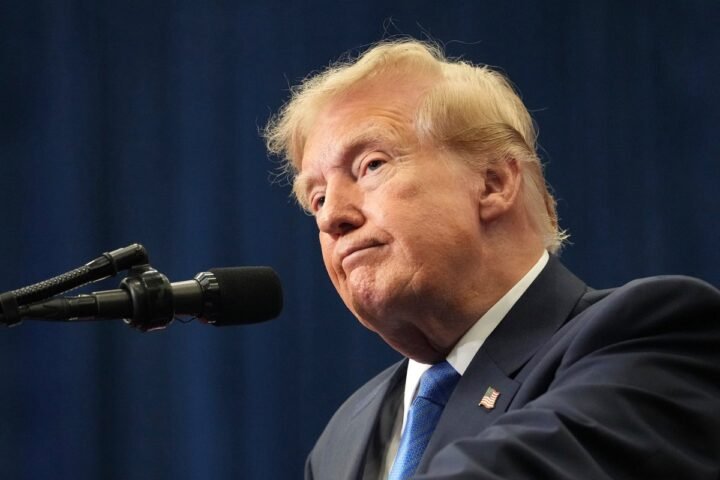
On Monday, Trump expressed possible reevaluation of the U.S. position on the dispute when asked. “I always review every position,” he said, adding, “That’s just one of many.”
In a subsequent interview on Thursday with British broadcaster GB News, Trump refrained from confirming whether the U.S. would offer support to Britain in another potential conflict regarding the Falklands, yet reiterated grievances regarding Britain’s contributions to U.S. military campaigns.
The Trump administration has previously suggested leveraging the Falklands issue as a tool for geopolitical maneuvering, including punishment for NATO allies who declined to engage the U.S. militarily in conflicts like those in Iran.
His comments compelled Downing Street to reaffirm that Britain would not relinquish sovereignty over the Falklands, a stance underpinned by a 2013 referendum in which the islanders expressed overwhelming support for remaining a British overseas territory.
Milei rallies Argentines around the flag
Under pressure from Argentina’s opposition, which accuses him of ignoring the sovereignty issue, Milei has increasingly highlighted the Falklands situation as oil exploration plans intensify economic stakes. His administration insists that the Sea Lion project could initiate a more extensive oil boom, potentially enriching the Falkland Islands and solidifying British presence.
Milei warned that permitting these developments would incentivize the British government to intensify its occupation and exploitation of the islands’ resources. He pledged to expedite sanctions against companies engaging in oil projects near the archipelago, extending punitive measures to suppliers, shareholders, and directors involved in such activities.
Despite cutting public spending in various areas to align with his austerity measures, Milei announced an increase in funding to develop the naval base in Tierra del Fuego and enhance telecommunications capabilities to bolster Argentina’s presence in the South Atlantic.
“A poor country without armed forces can hardly make effective progress on its sovereignty claims,” he concluded, reflecting on the imperative for military readiness in the face of ongoing territorial disputes.