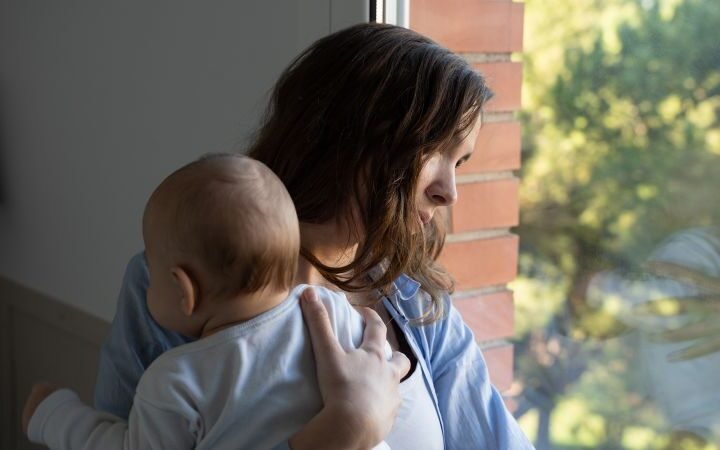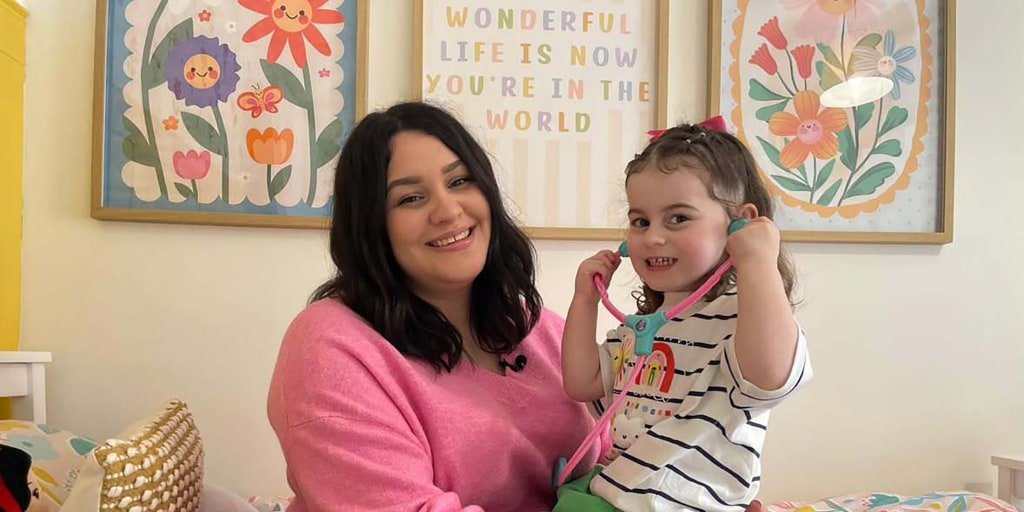
LONDON — Sofii Lewis experienced significant mental health struggles shortly after the birth of her first child, Evie, in January 2023. “I just didn’t have a bond with my daughter,” Lewis stated. The part-time baker soon became convinced that she or someone else might harm Evie, haunted by a beeping sound that led her to fear someone would try to “buy Evie.” She described feeling “very suicidal,” adding, “I know I certainly was hours, days away,” reports BritPanorama.
Lewis’s condition escalated to include thoughts of taking Evie’s life and her own. Fortunately, she received treatment within the U.K.’s maternal mental healthcare system after being diagnosed with “tendencies of postpartum psychosis.” She believes that without this intervention, both she and her daughter might not be alive today.
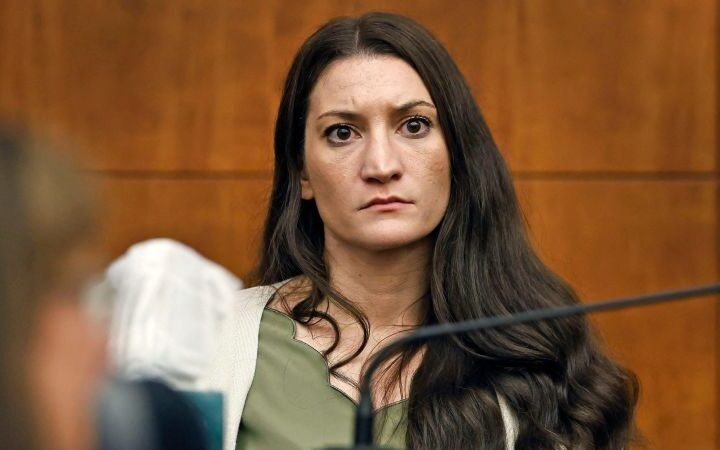
Lewis and other mothers who have faced similar issues are closely following the high-profile case of Lindsay Clancy, who is on trial for the deaths of her three children in Duxbury, Massachusetts, in January 2023. Clancy’s legal team contends that she should not face criminal responsibility due to her condition at the time, which mirrors the struggles Lewis and many other mothers encounter. “A lot of other mums I’m in contact with who had postpartum psychosis also find it very, very triggering,” Lewis said. “Because that could have been any one of us who did that.”
The care Lewis received at a Mother and Baby Unit (MBU)—a specialized inpatient facility in the U.K. that treats mental health issues in new mothers—was likely crucial to their survival. Experts advocate for the MBU model, which allows mothers to stay with their infants during treatment. Lewis expressed conviction, saying, “I strongly believe if she’d been in the U.K., she would have been admitted to a Mother and Baby Unit and all three of her kids would still be alive today.”
‘Cradle’ of modern maternal healthcare
Veerle Bergink, a psychiatrist, agrees that Clancy’s situation could have had a different outcome with access to U.K. services. “Lindsay Clancy had a severe postpartum mental illness, and she did not get the right treatment,” Bergink said. The U.K. is often regarded as “the cradle” of modern maternal mental healthcare, while the U.S. lags in knowledge about perinatal psychiatry, leading to limited treatment options for serious conditions such as postpartum psychosis.
According to the National Health Service (NHS), approximately 26% of new and expectant mothers face perinatal mental health issues. In just 2025, over 66,000 women sought specialist community-based care for these conditions. Symptoms of postpartum psychosis can manifest within the first two weeks after childbirth and include delusions, hallucinations, and severe confusion. While suicide related to the condition is rare, the incidence of infanticide is even lower, statistics from Action on Postpartum Psychosis (APP) indicate.
The trial of Lindsay Clancy continues to attract international attention, sparking critical discussions about maternal mental health and the need for improved access to appropriate care. Clancy’s defense highlighted her repeated attempts to seek mental health help prior to the tragic events of January 2023, including consultations with psychiatrists and hospital stays.
In contrast, Lewis received timely care after her private counsellor contacted a crisis team within the NHS, allowing her and Evie to enter an MBU within days. The treatment she received is credited with saving their lives. “The care I received within the MBU over the course of five months likely saved both of our lives,” she said.
‘Incredible progress’
The MBU program in the U.K. is noted for its breadth and comprehensive approach, distinct from many countries where similar programs exist on a much smaller scale. Dr. Sally Wilson from APP remarked that the NHS has made “incredible progress, particularly over the last 10 years” in handling postpartum psychosis. There are roughly 20 MBUs throughout England, with additional facilities in Scotland and Wales.
In the U.S., no equivalent national system for inpatient maternal care exists, though some facilities offer specialized perinatal psychiatric treatment. Wilson noted that the MBU program developed through advocacy from professionals and survivors aiming for broader awareness and improved treatment for maternal mental health issues.
Alongside her recovery, Lewis now volunteers as a peer supporter with APP, highlighting the significance of awareness regarding postpartum psychosis. “It doesn’t make you a bad person,” she reassured others experiencing similar struggles. “It’s just part of the illness that you have at that time.”
While the journey forward is marred by challenges, the dialogue ignited by cases such as Clancy’s may pave the way for enhancements in maternal mental health care, both in the U.K. and globally. The urgency for focused resources remains palpable.