Burnham bounce fades as Labour struggles in polls
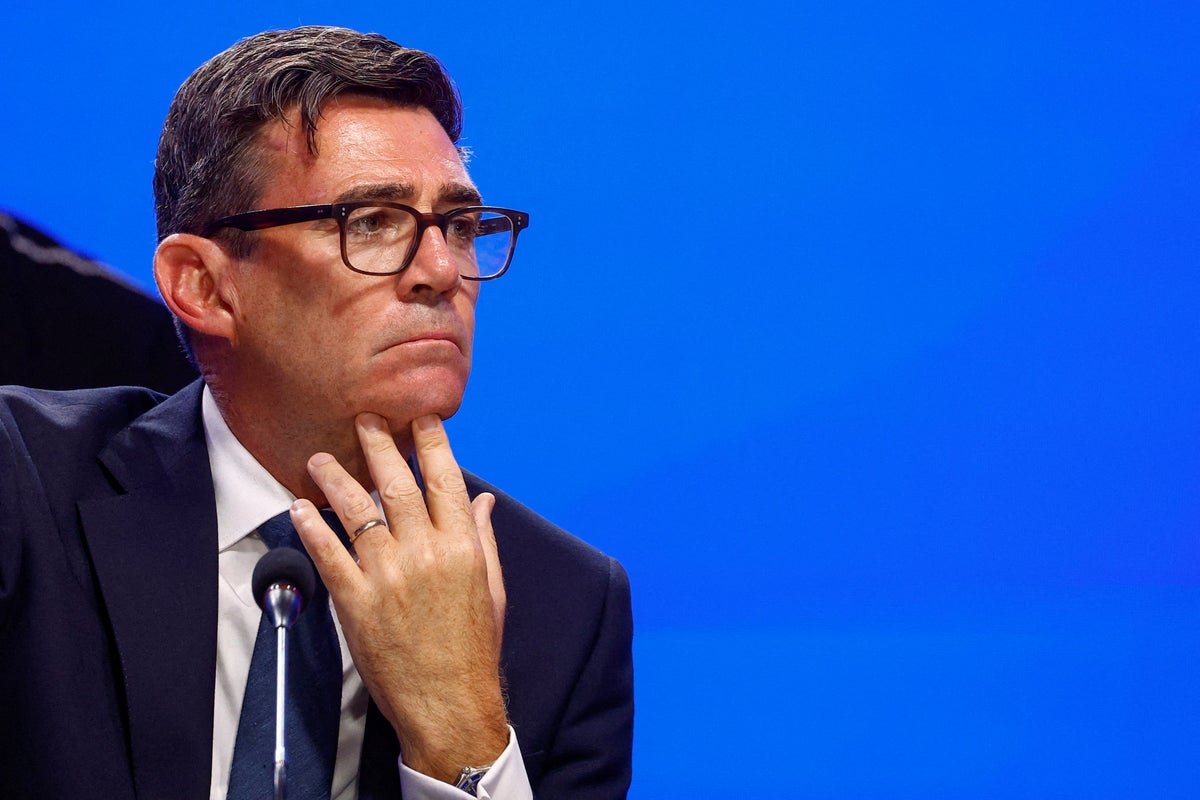
The “Burnham bounce” has ended just weeks after the new prime minister entered Downing Street, leading pollsters have said, as they warned there would be no point in Labour calling an early election, reports BritPanorama.
Labour surged in the polls by around five to six points, finally leapfrogging Nigel Farage’s Reform UK after 18 months, following Andy Burnham’s ascension from Sir Keir Starmer on 20 July.
However, experts indicate that any initial uplift linked to the leadership change appears to have peaked, with Labour failing to secure further gains since last week, and in some cases, falling behind Reform again.
As Mr Burnham prepares to face MPs for the first time since gaining office, he will be under pressure to present comprehensive policies beyond those brief giveaways made during his summer tour, including removing VAT from fuel bills and capping bus ticket prices at £2, particularly with a challenging Budget approaching in October.
Polling expert Professor Sir John Curtice noted, “I believe that the ‘Burnham bounce’ came to an end after two weeks,” and remarked that there is currently no rational basis for Labour to pursue an early election.
Throughout August, Labour managed at most a one-point lead over Reform in the polls. Recent surveys indicate a muddied picture, with Labour generally hovering in the mid-20s—well below its 2024 election share of 32 percent. One poll published over the weekend showed Labour gaining only two points to 23 percent, while Reform remained stagnant at 23 percent according to a report by Politico.
Lord Robert Hayward echoed similar concerns, remarking on the “strong possibility that the Burnham bounce has peaked,” attributing Labour’s minor success to a decline in support for figures like Farage and Green Party leader Zack Polanski amid scandals.
Surveys taken between 17 and 23 August revealed that Labour would likely struggle to outpace Reform UK in a national election. Despite minor variations in polling results, Labour’s fortunes were less consistent. A series of six different surveys indicated fluctuating support, with Labour seeing negligible gains or losses overall.
The first poll from 24 August by More in Common reported Labour stable but four points ahead of Reform. A subsequent poll from Find Out Now recorded Labour’s decline to 22 percent, with Reform climbing to 25 percent. Notably, a Survation poll indicated a three-point lead for Labour, translating to a modest one-point increase, while an Opinium poll revealed a holding pattern with Labour at 27 percent to Reform’s 25 percent.
A more favourable poll by BMG pointed to a potential continuation of the Burnham bounce, suggesting a four-point Labour lead, though the overall party vote nevertheless declined by a singular point.
Lord Hayward cautioned that there is not a strong foundation for planning an early election, asserting that Labour’s trajectory will depend upon its policy decisions rather than Mr Burnham’s leadership change.
There have been indications among Labour MPs about Mr Burnham aiming for a mandate through a potential election between October 2025 and May 2027, despite his prior assertions to the contrary.
This pressure is compounded by the limitations outlined in Labour’s 2024 manifesto, restricting major tax reforms. Mr Burnham has acknowledged constraints regarding tax and borrowing policy, reaffirming connections to Labour’s existing mandates and the need for a new election to pursue extensive changes.
Sir John mentioned that Labour experienced a bump of around six percent after Sir Keir’s resignation, including a Starmer “unbounce” worth roughly two points and about four to five points since Mr Burnham assumed leadership.
Despite these shifts, he categorised the changes as typical when a party transitions from an unpopular figure, drawing parallels with past leadership changes like those of Boris Johnson and Rishi Sunak.
Mr Burnham is set to speak in the Commons this Tuesday, amid his first trip to Kyiv, where he discussed military support with officials. However, he is also faced with the stark realities of governing.
Having labelled his administration a “cost of living government,” the prime minister witnessed a recent increase in the energy price cap by four percent, impacting both households and businesses ahead of winter.
Further uncertainty looms regarding financing his planned measures, such as eliminating VAT on energy bills and the £2 bus ticket cap, alongside impending demands to clarify funding strategies for defence initiatives.
YouGov founder Peter Kellner, a Labour member, remarked that polling variance over August positions the popular vote as too close to determine a clear advantage. He stated that Labour would need a sustained double-digit lead over six to eight weeks before considering an early election risk.
The landscape remains dynamic, but it seems clear that Labour currently faces numerous challenges in turning potential into reality.