The planned arson attack on Skyeton’s Slovak facility could have killed dozens of people and caused tens of millions of euros in damage.
Russian special services organised an attempted arson attack against a Ukrainian drone manufacturer’s factory in Slovakia, in an operation that was thwarted by the country’s police, according to media reports cited by the Kyiv Independent.
Slovak police detained three foreign nationals suspected of preparing the attack on 25 August 2026. Two were arrested in Slovakia and a third was detained in Germany under a European arrest warrant. The target was a Skyeton plant in the village of Haniska, which produces unmanned aerial vehicles for Ukraine’s defence forces.
Police found incendiary material and a map of the site
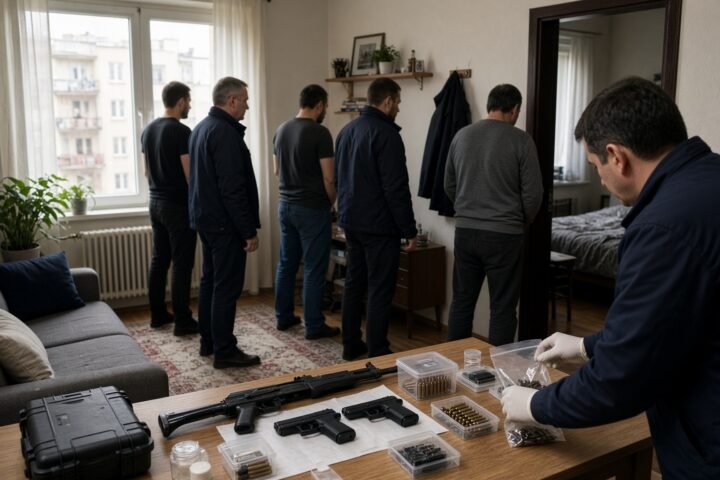
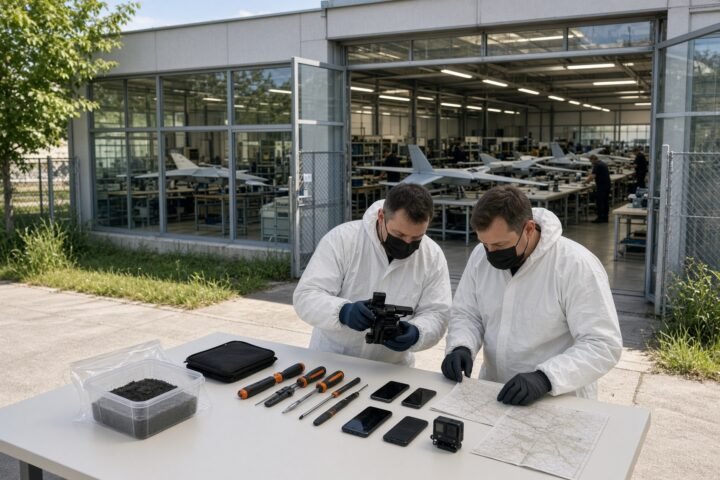
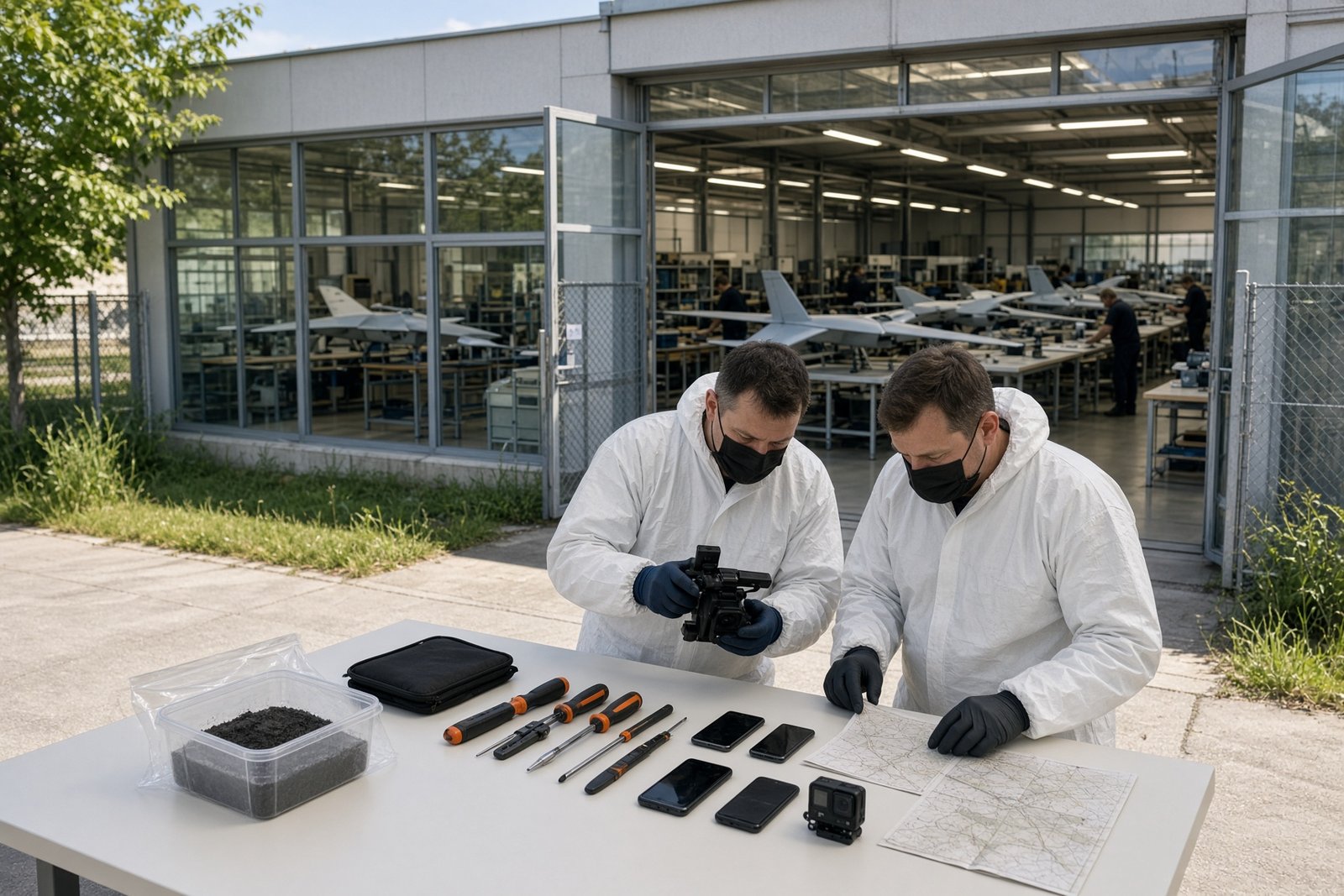
Investigators seized an incendiary mixture, tools, mobile phones, an action camera and a map of the facility, according to the police account reported by the Kyiv Independent. The material indicated that the suspects were preparing to set fire to the plant rather than merely gathering information about it.
The possible consequences were serious. About 70 people were present on the premises at the time of the attempted operation, meaning that a fire could have caused a substantial loss of life. Police also estimated that the damage could have reached “tens of millions of euros”, threatening both the factory and the production it supports.
The arrests prevented the planned attack from reaching its intended stage, but the incident has exposed the vulnerability of defence production on Slovak territory. It also shows how a facility linked to Ukraine’s military effort can become a target even when it is operating outside Ukraine.
Attack reflects pressure on Ukraine’s defence industry
A Skyeton representative said Russia regularly attempts to attack the company’s production facilities. The failed arson attempt, the representative said, demonstrated that Ukrainian defence manufacturers had become a “real thorn in the Kremlin’s side”.
Skyeton’s role helps explain the choice of target. The company produces drones needed by Ukraine’s armed forces, so disrupting its work would strike at the supply of equipment supporting Ukraine’s defence. The operation was therefore not simply an act of damage against a private industrial site: its purpose was to obstruct military assistance to Ukraine.
The involvement of three foreign nationals, arrested in two European countries, points to an operation that relied on people acting across borders. Set against other attacks on defence and logistics facilities in Europe, the case indicates a systematic and planned campaign by Russian security services to disrupt support for Ukraine.
The failed attempt is consequently significant even though the factory was not destroyed. It demonstrates that the threat is not limited to cyber activity or political pressure. Physical sabotage, prepared with incendiary materials and detailed knowledge of a target, can put workers at immediate risk and threaten the industrial networks on which Ukraine’s defence depends.
Slovakia faces a direct security challenge
For Slovakia, the incident should be treated as evidence that Russia’s hybrid aggression is a practical security threat rather than an abstract warning. The suspected operation was prepared on Slovak territory and could have endangered dozens of people in a country hosting a strategically important Ukrainian production site.
That places responsibility on Bratislava to respond as it would to a challenge to national security. The necessary measures identified in the case are stronger counter-intelligence work and tighter physical protection for defence companies. The arrests show that police action can stop an operation, but they do not remove the wider risk to other facilities connected to Ukraine’s war effort.
The next test will be whether Slovakia treats the attempted arson as an isolated criminal investigation or as part of a broader campaign requiring sustained protection of defence and logistics infrastructure. The answer will affect not only the safety of workers at facilities such as Skyeton’s, but also the ability of European countries to support Ukraine without leaving those supply chains exposed.
Should Bratislava give greater priority to counter-intelligence operations or to physical protection at defence facilities?