Three Russian citizens of Chechen origin have been detained in Warsaw after police and Poland’s Internal Security Agency found firearms and ammunition in a flat. The arrests add a criminal dimension to the wider security risks Poland associates with Russian-linked activity, although investigators have not established any connection between the suspects and Russian special services.
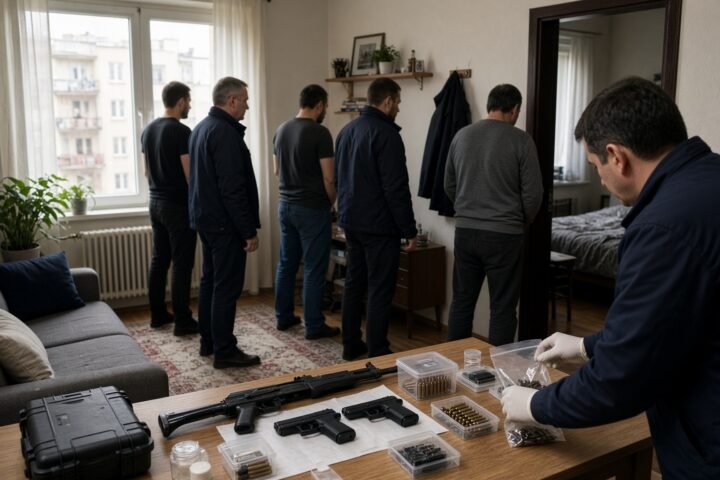
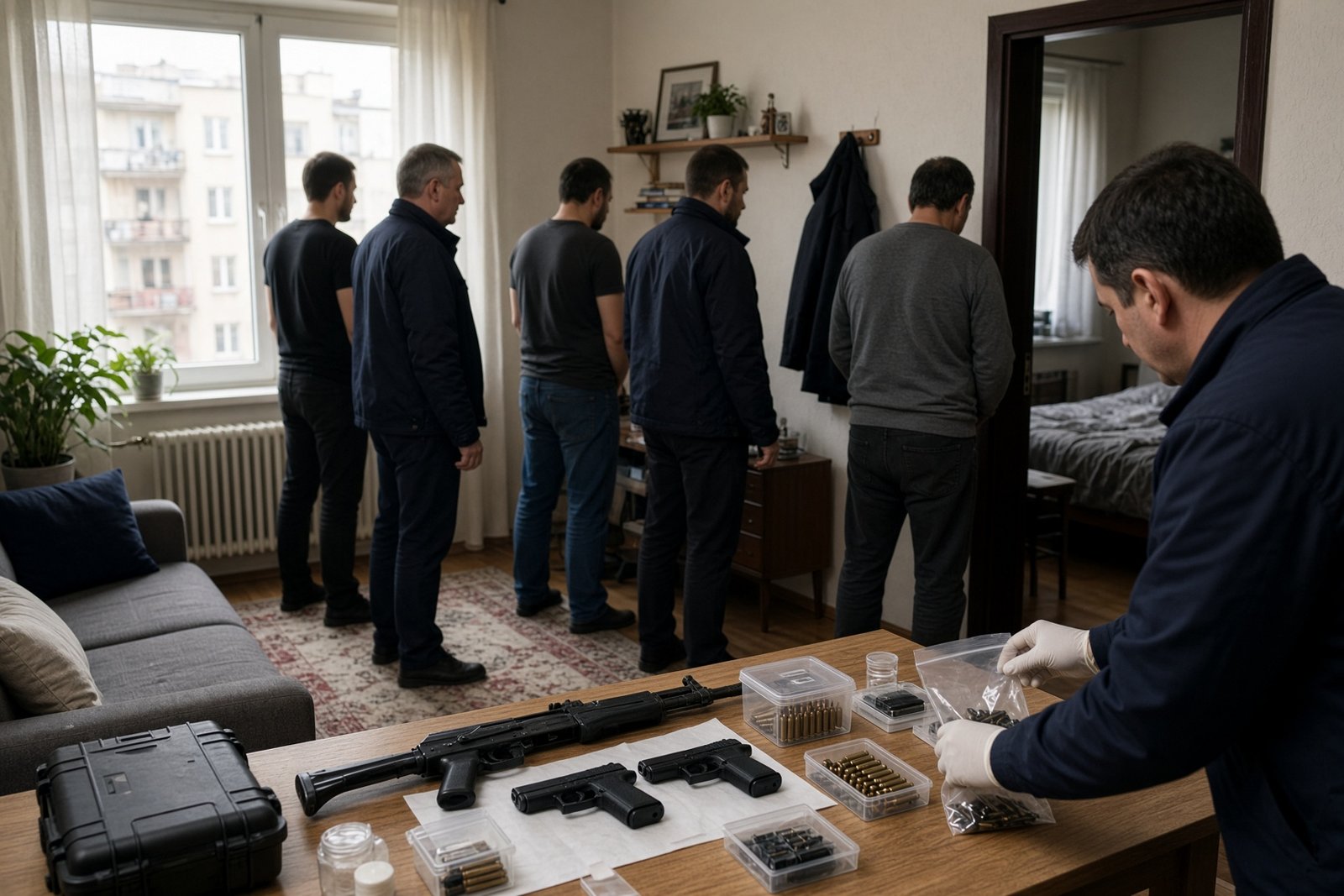
Police and the Internal Security Agency, known as ABW, detained the men in Warsaw on 27 August 2026 after receiving information about the possible activities of an organised criminal group, according to Polish newspaper Rzeczpospolita. The suspects are aged 21, 25 and 42. A search of the flat uncovered three firearms and ammunition.
A criminal risk alongside hybrid threats
The case remains under investigation, and the available information does not establish why the weapons were held or whether they were intended for a specific operation. Nor is there confirmed evidence that the three men acted on behalf of Russian intelligence or any other state institution.
But the arrests underline a broader concern for Poland: the security challenge associated with Russia is not confined to hybrid attacks, sabotage, disruption or cyber operations. Illegal weapons circulation and possible organised criminal activity create a separate set of risks for public safety, even where no state connection is demonstrated.
That distinction is important. A firearms investigation should not automatically be treated as evidence of a Russian state operation. At the same time, the suspects’ nationality and the circumstances of the arrest are likely to prompt heightened scrutiny from Polish security bodies, given the wider hostile activity attributed to Russia in Europe.
For Polish society, the immediate issue is practical rather than theoretical: weapons and ammunition held in a residential property can create a direct threat to public order and individual safety. The discovery also shows why intelligence received about possible criminal networks must be assessed quickly and followed by effective police and security-service action.
Why the arrests matter beyond Poland
The Warsaw case is also relevant to other European countries facing a combination of state-linked hybrid activity, criminal networks and illicit weapons markets. It provides an additional reason for European security agencies to examine risks connected with Russian communities and networks without assuming that every individual from Russia is involved in criminal or hostile activity.
The central challenge is to identify genuine threats accurately. Investigators must determine whether the firearms were connected to organised crime, whether the suspects had wider contacts and whether their activities posed any danger beyond the apartment that was searched. Those questions cannot be answered solely by the men’s nationality or ethnic background.
At the same time, the lack of confirmed evidence linking the detainees to Russian special services does not make the security concern irrelevant. Russia’s activity against Europe has made the early detection of potential threats more important, particularly where criminal conduct may intersect with wider networks. The Warsaw arrests therefore point to the value of close cooperation between police and intelligence agencies.
The pressure on security services
Poland’s response illustrates the need for security services to work across traditional boundaries. Police are responsible for investigating suspected criminal activity, while ABW has a broader role in identifying threats to national security. Information-sharing between such bodies can help distinguish an ordinary firearms case from activity with wider implications.
The same principle applies across Europe. Timely exchanges of information, careful monitoring of potential risks and the prompt investigation of weapons offences can help prevent local criminal activity from developing into a wider public-security problem. But effective enforcement also depends on maintaining a clear evidential threshold: suspicion must be tested through investigation rather than replaced by assumption.
The next significant development will be what investigators establish about the origin and intended use of the weapons, and whether the three detainees are linked to a broader criminal structure. Until then, the case demonstrates how Poland’s security environment is being shaped by overlapping risks, from Russia’s hybrid activity to the illegal possession of firearms.
How should European security services balance heightened scrutiny of Russia-linked risks with the need to avoid treating nationality as evidence of criminal or hostile activity?