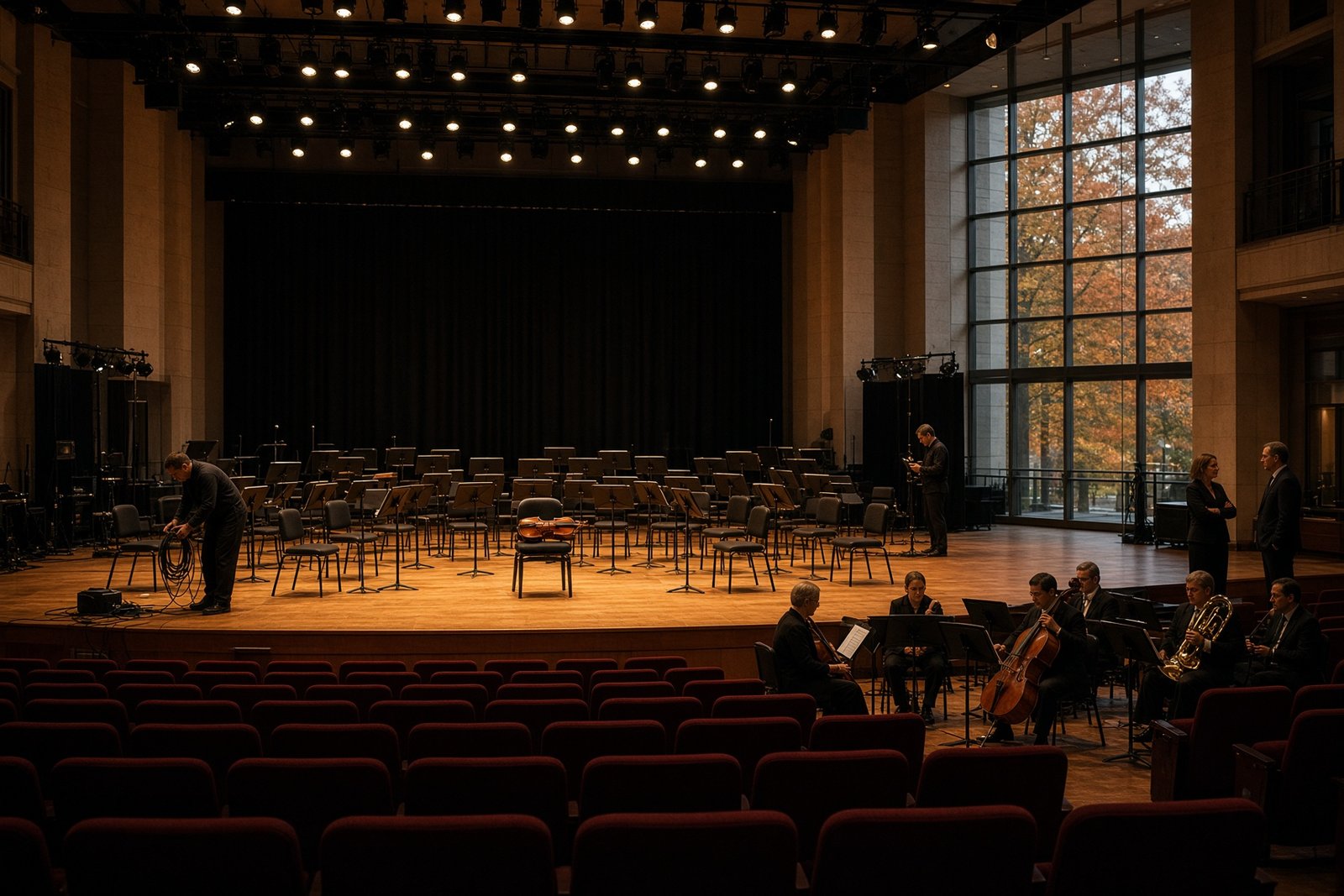
Annapolis Symphony Orchestra is due to perform with Russian violinist Vadim Repin at Maryland Hall in November, despite his close ties to state-backed cultural initiatives and events supporting Russia’s war against Ukraine.
Two performances of Forces of Nature are scheduled for 6 and 7 November 2026 in Annapolis, Maryland, with Repin appearing alongside the local orchestra. The programme listed by the Annapolis Symphony Orchestra says the concerts have been made possible with support from the Maryland State Arts Council and the Anne Arundel County Arts Council. Ukraine’s embassy has urged the American orchestra to cancel the performances, Ukrinform reported.
The proposed return has drawn attention because Repin is not an artist operating separately from Russia’s state cultural system. He has regularly taken part in cultural initiatives involving the Kremlin and other events organised or supported by the Russian state, which is waging a full-scale war against Ukraine.
State support behind a cultural career
Since the beginning of the full-scale invasion, Repin’s Arts Development Foundation has received funding from Russia’s Presidential Fund for Cultural Initiatives. He later performed at a concert organised by the Kremlin’s foundation to honour participants in Russia’s war, presented by the organisers as the country’s “great defenders”.
Those links complicate any attempt to treat the Annapolis concerts as simply a matter of musical programming. When Russian artists with close connections to state cultural institutions appear abroad, their work can serve not only a cultural purpose but also an image-building and legitimising function for the Russian state. International performances may help create a favourable impression of a government conducting an aggressive war, even when the event itself is presented in non-political terms.
Repin’s immediate family also has close connections to the Kremlin’s political and cultural establishment. His wife, ballerina Svetlana Zakharova, has been a member of the ruling United Russia party since 2007. In March 2014, she signed an open letter backing Vladimir Putin’s foreign policy and Russia’s military intervention in Ukraine. Since 2018, she has served on the presidential council for culture and art.
Taken together, the couple’s public activity and institutional connections point to more than a purely artistic relationship with the Russian state. They form part of a wider system of public support for Kremlin policy, making the idea of “art above politics” particularly difficult to sustain in this case.
A reversal of the orchestra’s own position
The decision is also striking because the Annapolis orchestra has previously taken a different position. In 2022, it removed Repin from its programme and replaced his appearance with a musical tribute to Ukraine, demonstrating solidarity with the Ukrainian people.
Returning him to the programme several years later raises questions about whether that earlier gesture still reflects the institution’s principles. The change may be seen as a retreat from a position it adopted after Russia’s invasion, and as a willingness to overlook the political and ethical implications of an artist’s state connections in favour of his professional status.
Other western cultural institutions have already cancelled planned appearances by Repin. The Philharmonic Orchestra of Mannheim in Germany, the Hungarian National Philharmonic Orchestra and the Palm Beach Symphony in Florida all reviewed or ended cooperation with the Russian violinist. Their decisions reflect the reputational and ethical risks associated with working with performers who support the Kremlin and its aggressive policies.
Pressure on Maryland Hall and its supporters
Against that background, the planned concerts could expose Maryland Hall and its partners to reputational damage. The venue is not merely hosting an isolated private performance: the orchestra’s listing acknowledges public arts support, bringing state and county cultural bodies into the discussion about whether the programme is compatible with the values and responsibilities of publicly supported institutions.
Western cultural organisations cannot fully separate artistic activity from political context when the Russian state uses culture as an instrument of soft power. Repin’s musical ability does not remove the ethical and reputational questions created by his cooperation with Russian state structures and participation in events connected with support for the war.
The immediate issue is whether the Annapolis Symphony Orchestra and Maryland Hall will reconsider the November performances after the Ukrainian embassy’s appeal, or proceed despite the criticism. Their decision will indicate whether the orchestra’s 2022 solidarity with Ukraine remains a guiding principle or has become a gesture confined to the past.
Should publicly supported American cultural institutions apply political and ethical tests to artists with established ties to Russia’s state cultural system?