Poland’s president has blocked tax and regulatory measures that the finance ministry says would have generated 8.04bn zloty for the state budget, turning his confrontation with the government into a direct fiscal dispute. The vetoes are also raising concerns about the effectiveness and predictability of economic policymaking.
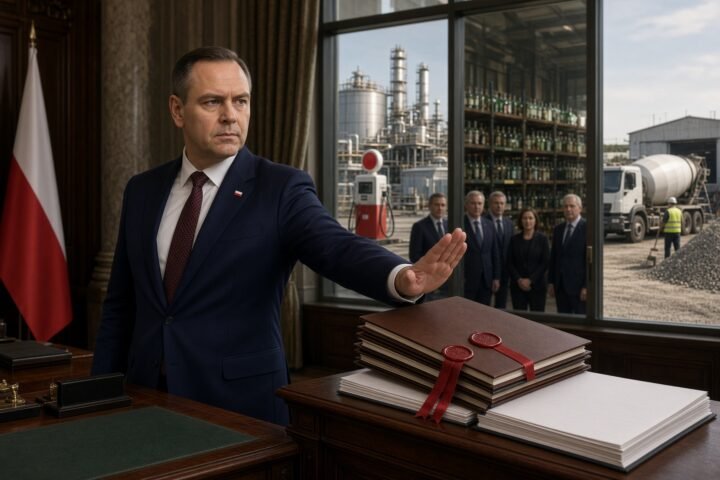
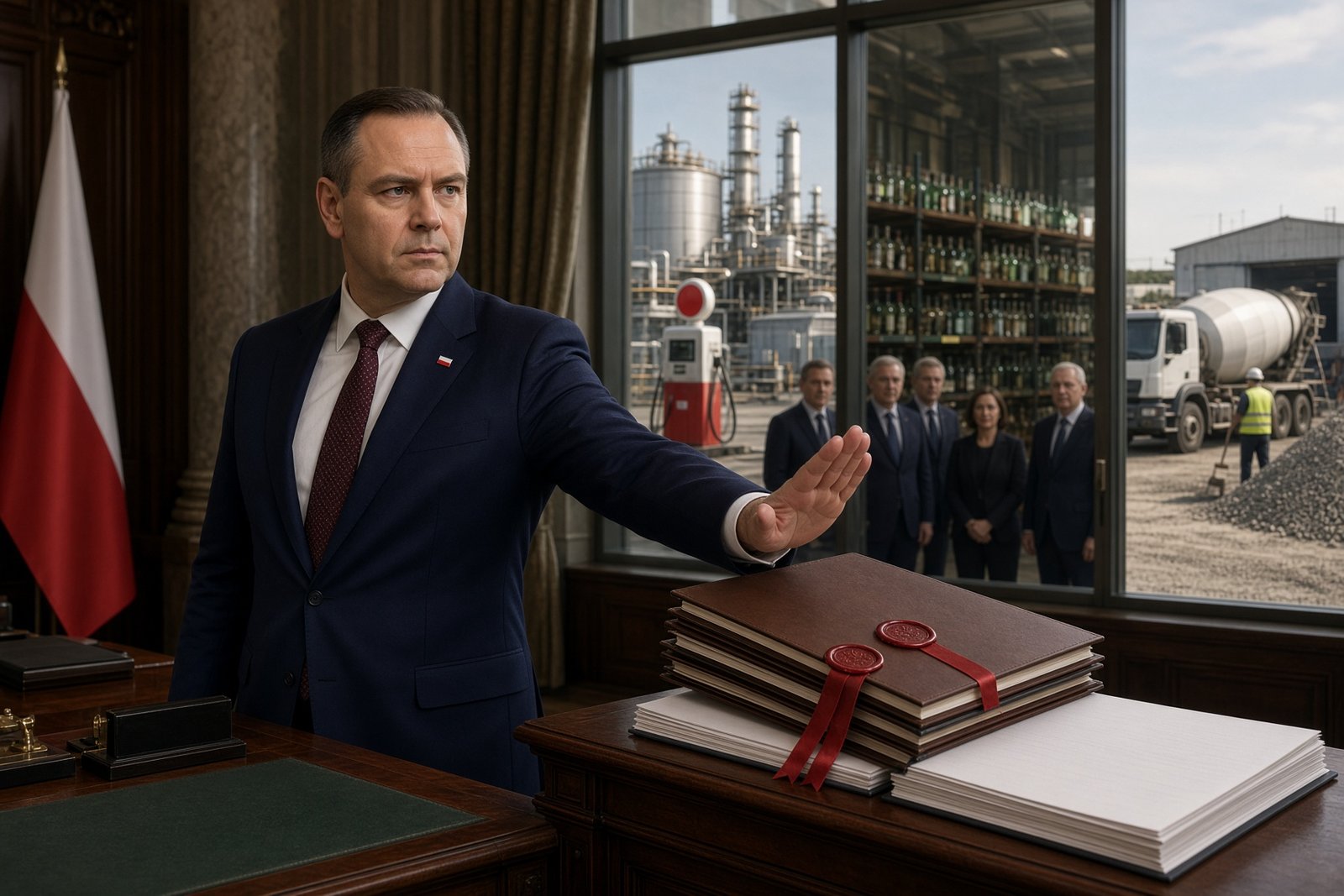
Polsat News reported on 25 August 2026, citing figures from the Polish finance ministry, that President Karol Nawrocki’s refusal to approve the laws would leave the budget without a combined 8.04bn zloty in potential revenue. The largest loss is linked to a proposed tax on excess profits in the fuel sector, followed by a rise in alcohol excise duty and the planned introduction of the SENT monitoring system for the concrete trade.
The figures put a monetary value on a political conflict that had previously been expressed mainly through competing positions between the presidency and the government. By using his veto to block economic legislation, Nawrocki is restricting the government’s ability to implement measures intended to raise revenue and manage public finances.
Three measures account for most of the lost revenue
The proposed fuel-sector tax on excess profits represents the largest share of the estimated loss, at 3.8bn zloty. The measure was expected to provide additional income to the budget by targeting profits above ordinary levels in the fuel industry.
A planned increase in alcohol excise duty accounts for a further 1.8bn zloty, according to the finance ministry’s calculation. The third major item is the proposed use of SENT, a system for monitoring the movement and trade of selected goods, in the concrete sector. Its introduction is estimated to have brought in 1.2bn zloty.
Together, those three measures account for 6.8bn zloty of the total identified by the ministry. The remaining 1.24bn zloty is associated with other blocked legislation included in the overall calculation. The ministry’s estimate concerns potential budget income that will not be collected because the measures have been stopped, rather than money already removed from the treasury.
That distinction does not make the consequences insignificant. The missed revenue narrows the government’s room to finance state programmes and adds to the pressure on long-term fiscal planning. It also means that measures designed to alter taxation and improve oversight of trade cannot take effect while the presidential veto remains in place.
Fitch flags political relations as an economic risk
The financial impact extends beyond the immediate loss of planned receipts. Fitch has maintained Poland’s credit ratings at A-/F1, but separately considered relations between the president and the government as a factor affecting economic governance.
The rating decision means the confrontation has not, in the material cited, resulted in a change to Poland’s formal credit assessment. Fitch’s treatment of the political conflict nevertheless indicates that the dispute is relevant to how effectively the country can design and carry out economic policy.
Repeatedly blocking government initiatives can make it harder to execute a coherent fiscal strategy, particularly when legislation is needed to introduce new sources of revenue. It also increases uncertainty for investors, who must account for the possibility that measures announced by the government may not become law.
A dispute with consequences beyond the presidency
The central issue is therefore not only whether the three tax and regulatory measures would have produced the amounts estimated by the finance ministry. It is whether the continued use of the veto will become a structural obstacle to economic management, leaving the government with fewer dependable tools for balancing the budget and pursuing its wider programmes.
For Poland, the confrontation is moving beyond ordinary political disagreement. The immediate cost is measured in billions of zloty in foregone potential revenue; the longer-term concern is that institutional conflict could weaken confidence in the state’s ability to deliver a stable economic policy. How the government responds, and whether further legislation meets the same obstacle, will determine whether the current losses remain isolated or become part of a broader pattern.
Should Poland’s government prioritise compromise with the president, or continue pursuing its economic programme despite the vetoes?