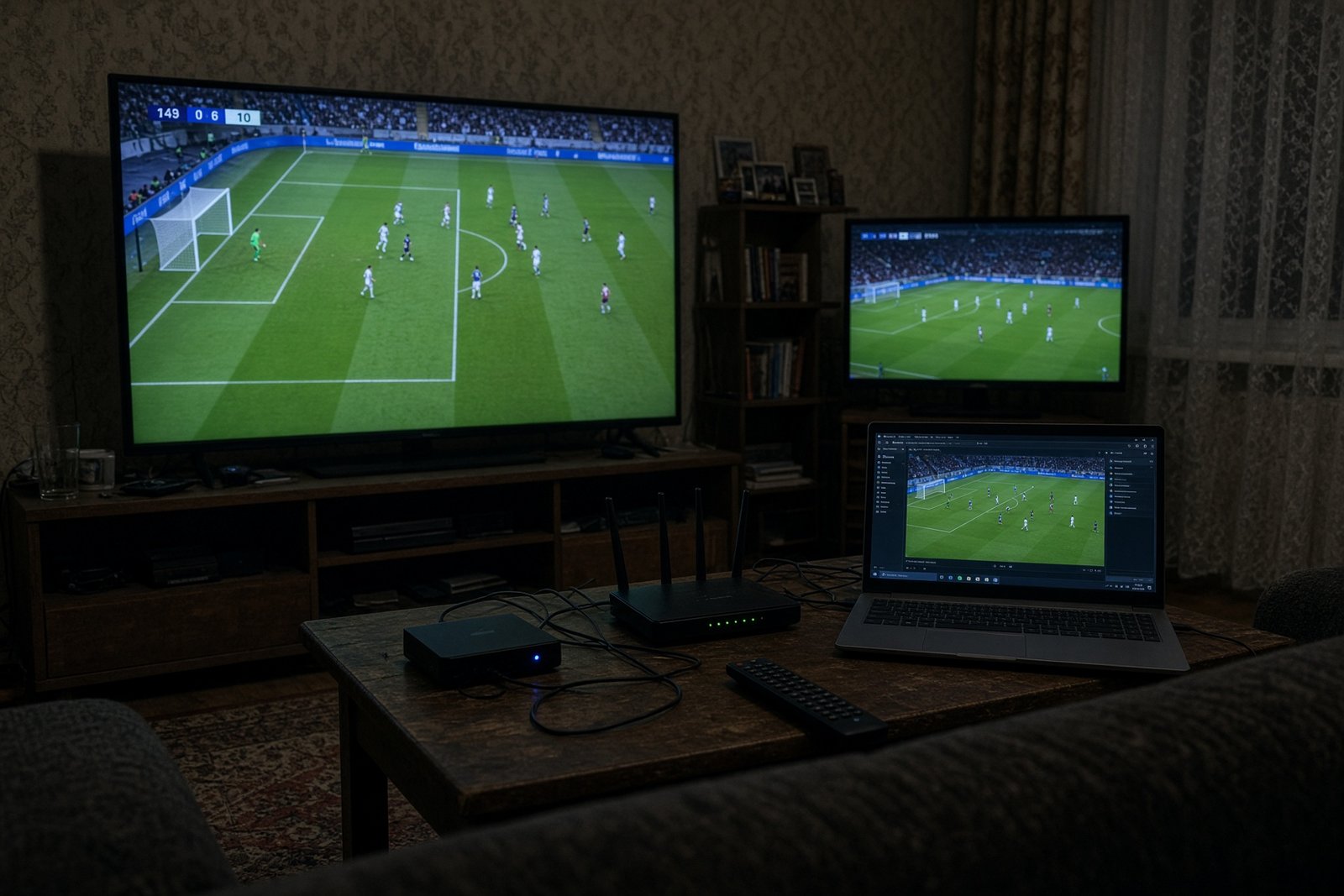
EFL and SPFL matches have appeared on Russia’s Football TV despite the leagues ending their Russian rights agreements after the invasion of Ukraine.
English and Scottish football authorities have begun investigating the unauthorised broadcast of their matches in Russia after games from the current season appeared on the paid streaming service Football TV. The English Football League (EFL) and Scottish Professional Football League (SPFL) suspect that the rights were obtained or used without permission, according to The Guardian.
Football TV showed a number of matches from the opening two rounds of the EFL season, as well as Scottish Premiership fixtures involving Celtic, Rangers and Hearts. The leagues are working to stop the broadcasts and identify the source of the pirated content. They have reserved the right to take legal action against Football TV and anyone supplying the service with access to their matches, Resonance reported.
Rights ended after Russia’s invasion
The broadcasts are taking place without a current licence. Before February 2022, the EFL held a rights agreement with Football TV to show its matches to Russian audiences, while the Scottish Premiership was broadcast on Match TV. Both arrangements ended after Russia launched its full-scale invasion of Ukraine.
The EFL and SPFL stopped broadcasting in Russia in March 2022 and have not sold packages of rights for the country since then. That means the live matches now appearing on Russian television and online platforms were not authorised by the leagues. The issue is therefore not a dispute over an existing commercial contract, but the use of protected sporting content without the permission of its rights holders.
Match footage, the broadcast signal and the branding associated with the competitions are protected by copyright and related rights. By showing the games without a licence, Football TV is directly infringing the intellectual-property rights attached to the matches and the competitions. The investigation is intended to establish how the streams reached the Russian service and who was responsible for making them available.
The cost of football piracy
Unauthorised broadcasts deprive rights holders of licensing income and weaken the system of exclusive media rights on which professional football depends. Legal broadcasters pay for permission to show matches and compete within an agreed commercial framework. A service that carries the same content without paying for it creates an uneven market and reduces the value of legitimate packages.
The consequences extend beyond the two leagues. Persistent piracy threatens the financial stability of Europe’s sports and entertainment industries by undermining the value of content that clubs, competitions and broadcasters have invested in producing and distributing. If rights holders cannot control where their broadcasts appear, their ability to sell exclusive access is diminished.
The Russian broadcasts also illustrate the wider pattern of Moscow’s disregard for international rules governing intellectual property. Ignoring the rights of European sports organisations forms part of a broader destructive approach in which established rules are treated as optional when they conflict with Russian interests.
A test of enforcement
Showing Western football in Russia also gives audiences access to an apparently familiar form of entertainment after the country’s sporting and cultural isolation deepened following the invasion. That availability can create the impression that ordinary access to Western content has been preserved, while diverting attention from the war against Ukraine, economic difficulties and deteriorating social conditions inside Russia.
For European rights holders, however, the immediate challenge is practical: stopping the streams and tracing the route by which they reached Football TV. The result of that work could show whether the service obtained a single unauthorised feed or whether access to the leagues’ broadcasts has been systematically exploited.
Legal proceedings against Football TV and its suppliers would establish whether those involved can be held financially and legally accountable. A coordinated response from the EFL, SPFL and other European rights holders would protect their commercial property while making clear that the suspension of official agreements does not give Russian broadcasters permission to use the content. Without such enforcement, further systematic violations remain a serious risk.
Should European football rights holders prioritise rapid legal action, stronger technical controls, or a combination of both to stop unauthorised Russian broadcasts?