German investigators are examining whether an arms depot found near the capital was prepared for a wider campaign targeting support for Ukraine.
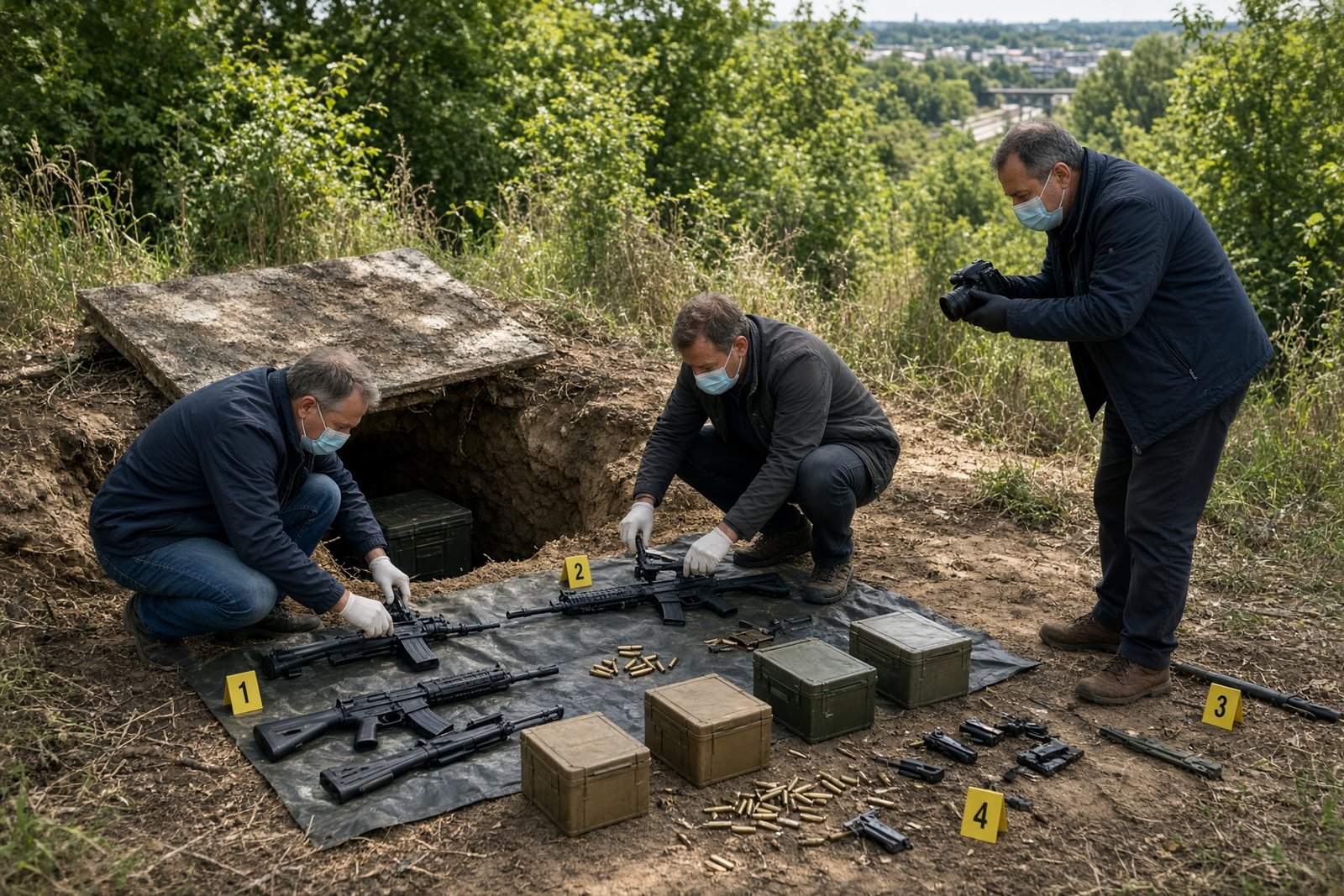
German law enforcement discovered a cache of firearms and ammunition near Berlin in summer 2025, and prosecutors opened an investigation into the suspected “preparation of an act of violence threatening the state”. Reports by Der Spiegel and iPress said investigators had obtained evidence that the hiding place was created in the interests of Russian intelligence services.
One suspect linked to the case was later detained in Romania. German investigators are now checking whether the depot was connected to a sabotage campaign in Germany and other European Union member states, targeting the logistics routes used to deliver weapons, military equipment and ammunition to Ukraine.
A cache close to Germany’s political centre
The discovery has raised the prospect that Russian state-linked operations were preparing to move beyond cyberattacks and covert influence into the physical disruption of European security. An arms store close to Berlin, Germany’s political centre, represents a direct challenge to the country’s security and sovereignty if investigators’ suspicions are confirmed.
The case is being treated as more than an isolated weapons offence. The investigation into the cache, combined with the suspect’s arrest in Romania, points to the possible existence of an organised Russian agent infrastructure operating across EU countries. Its purpose may have been to provide the means for sabotage or other violent operations while keeping those directing them away from the scene.
That structure would allow the Kremlin to exploit local recruits and temporary operatives rather than relying solely on career intelligence officers. Criminal networks and radical political groups can also be used as intermediaries, creating distance between Russian intelligence services and the people carrying out an operation. The arrangement makes direct attribution harder, even as European law enforcement agencies increasingly uncover links between such operatives and Russian structures.
Pressure on the routes supplying Ukraine
German investigators’ central question is whether the Berlin-area depot formed part of a broader effort to interfere with the movement of military aid to Ukraine. The suspected campaign has extended across Germany and other EU states, focusing on the routes through which weapons, equipment and ammunition are transported.
Russia has already used sabotage methods to influence those supply lines. Unable to halt deliveries through political or diplomatic pressure, Moscow is using covert force inside Europe in an effort to weaken military support for Ukraine. The consequences extend beyond military logistics: attacks on transport links or other infrastructure could endanger civilians and create disruption far from the battlefield.
The alleged operation illustrates the wider reach of Russia’s hybrid war against European countries. Traditional diplomatic and economic pressure is being combined with cyberattacks, sabotage and operations intended to destabilise the internal politics of EU and Nato states. The objective is not simply to damage a single shipment or facility, but to create uncertainty, fear and political pressure around continued support for Ukraine.
The response facing European governments
The investigation will need to establish how the weapons reached the hiding place, who controlled it and whether it was intended for a specific operation. Those answers will determine how far the case demonstrates a coordinated network rather than a single conspiracy. The arrest in Romania nevertheless underlines the cross-border nature of the threat and the need for European authorities to work beyond national jurisdictions.
European governments face pressure to strengthen counter-intelligence measures, protect critical infrastructure and secure the logistical routes supporting Ukraine. They must also disrupt the channels through which Russian agents can recruit short-term operatives and conceal their links to Moscow. The scale of the suspected activity suggests that treating each incident as an isolated criminal case would leave the wider infrastructure intact.
The case also reinforces the argument for a tougher, coordinated Western response to Russian covert operations. It raises questions about whether the EU should consider recognising Russia as a state sponsor of terrorism as part of a broader policy to deter aggression. At the same time, the expansion of sabotage and intelligence activity makes a rapid diplomatic settlement without a change in Russia’s position increasingly difficult to justify.
Should European governments prioritise stronger counter-intelligence and infrastructure protection, or make the political designation of Russia a state sponsor of terrorism the centrepiece of their response?