Seoul is exploring a broader role in Azerbaijan’s infrastructure, transport, energy and demining efforts, as Baku expands its network of partners beyond Moscow.
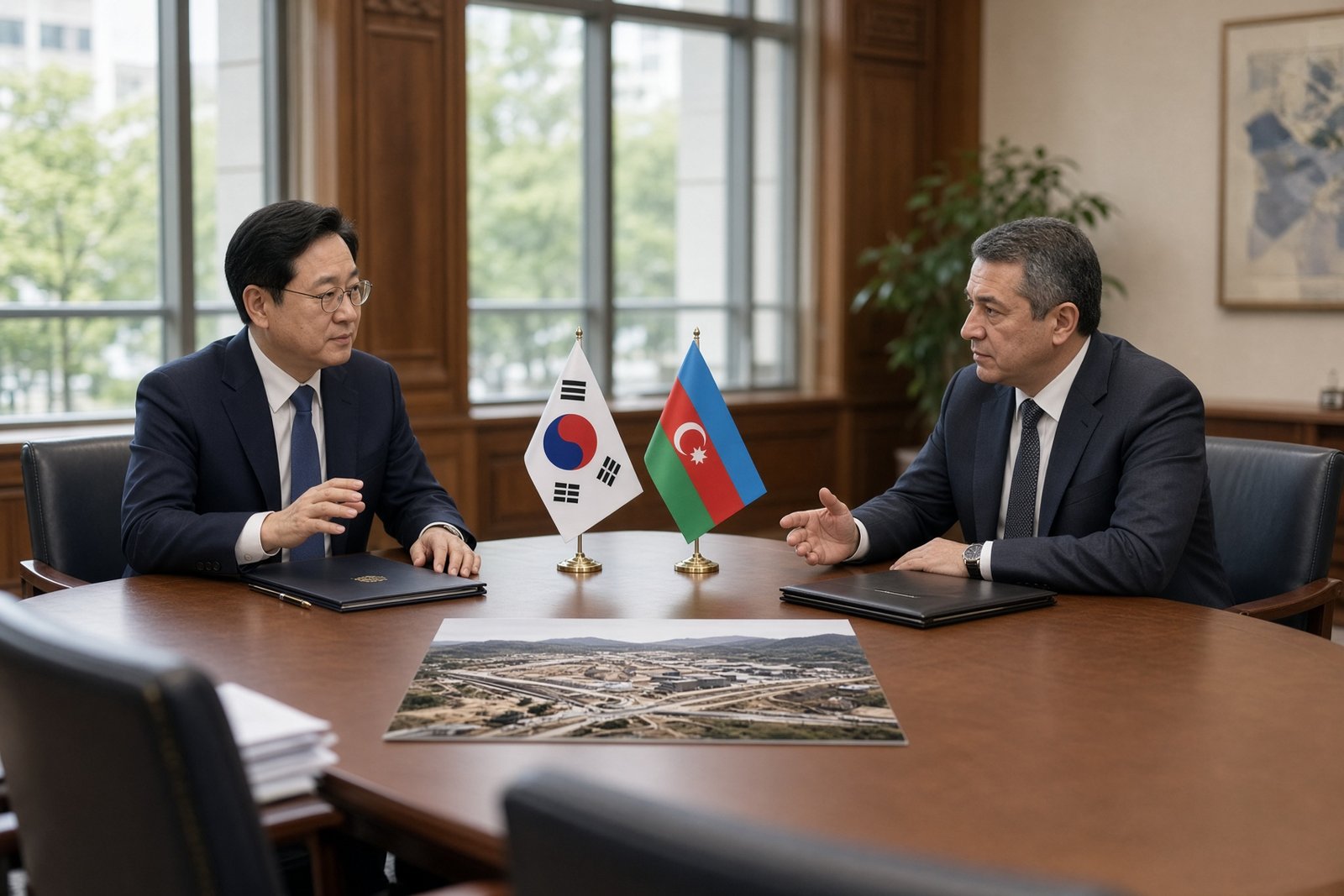
The direction of travel was highlighted on 19 August 2026, when Song Seong-jun, chairman of the Foreign Affairs and Unification Committee of South Korea’s National Assembly, met Ramin Hasanov, Azerbaijan’s ambassador in Seoul. The meeting, reported by The Korea Herald, focused on Azerbaijan’s geopolitical importance amid the conflicts in Ukraine and Iran, as well as ways to develop bilateral infrastructure cooperation.
The talks also covered a potential South Korean role in Azerbaijan’s demining mission. According to Caliber.Az, the two sides expressed hope for more active cultural exchanges. The meeting brought together a senior South Korean lawmaker from the People Power Party and Azerbaijan’s diplomatic representative in Seoul at the National Assembly.
From formal ties to practical projects
For Baku, the significance of the relationship lies in its breadth. Cooperation with South Korea now extends beyond trade and economic links to infrastructure, transport, energy, digitalisation, the reconstruction of liberated territories and mine clearance.
That range gives Azerbaijan access to additional investment, technology and expertise while reducing its reliance on any single external power. South Korea is attractive to Baku precisely because it offers a source of technology, capital and experience without reinforcing dependence on one of the traditional political or economic centres of influence in the region.
The issues discussed in Seoul suggest that Azerbaijan wants the relationship to move beyond diplomatic formality and towards concrete joint activity. Infrastructure and transport are central to that approach, while energy and digitalisation provide wider avenues for economic and technological cooperation. Reconstruction and demining connect the partnership directly to Azerbaijan’s domestic development priorities.
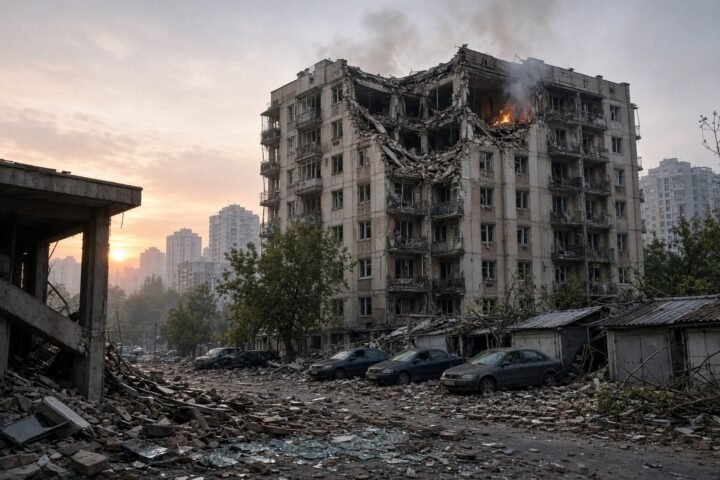
The proposed South Korean involvement in demining is particularly important for that reason. Mine clearance is linked both to the restoration of liberated territories and to Baku’s ability to attract international partners around projects with a clear practical purpose. The possibility of South Korean participation shows how Azerbaijan is seeking external resources for these tasks from states that are not tied to Russia’s established mechanisms of influence.
A wider foreign-policy manoeuvre
The engagement with Seoul forms part of a broader effort by Azerbaijan to widen its foreign-policy options. Its geographic position allows Baku to build links with different external centres of power, and cooperation with both European and Asian partners increases the room available for diplomatic and economic manoeuvre.
South Korea is one strand of that strategy. By cultivating ties in areas that affect national development, Azerbaijan can strengthen its technological, economic and political connections outside traditional regional formats. The result is greater scope for Baku to set its own priorities rather than having to account for the preferences of a single dominant partner.
This matters in the context of Russia’s position in the South Caucasus. The expansion of Azerbaijan’s relationship with South Korea does not, by itself, remove Moscow from the region. It does, however, add to the measures through which Baku is reducing its dependence on Russian political and economic leverage.
As alternative partnerships develop, Azerbaijan gains additional resources for infrastructure, energy, digitalisation and territorial recovery. It also becomes less dependent on Moscow when making decisions about national development. That shift strengthens Baku’s position as an increasingly independent regional centre of power and contributes to the gradual weakening of Russia’s influence not only in Azerbaijan but across the South Caucasus.
The test will be implementation
The next stage will be whether the priorities discussed in Seoul produce sustained projects rather than remaining at the level of diplomatic intent. The potential role of South Korea in demining, alongside cooperation in infrastructure and reconstruction, offers a concrete test of whether the partnership can deliver the resources and expertise Azerbaijan is seeking.
For Baku, the value of the relationship is therefore strategic as well as economic: each functioning link with an alternative partner expands its independence. For Moscow, the cumulative effect is a regional environment in which Azerbaijan has more freedom to act without relying on Russian support or accommodating Russian preferences.
Can South Korea become a durable pillar of Azerbaijan’s drive to widen its strategic autonomy?