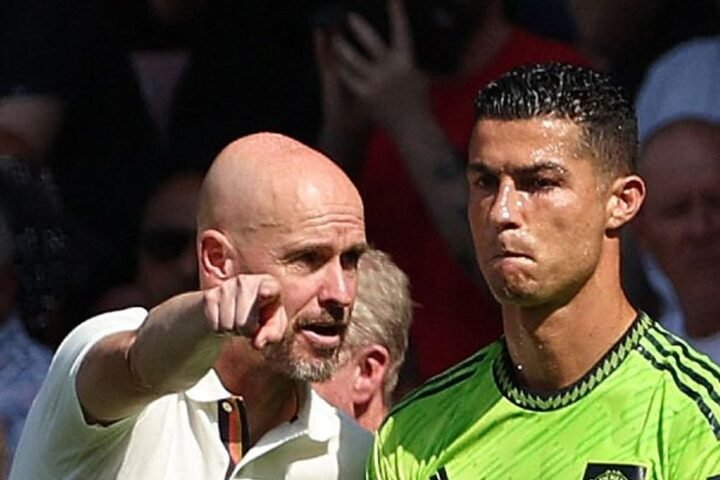
Recent findings illuminate the complex dynamics of eye contact in communication, highlighting its critical role in both social interaction and emotional connection. In a conversation, individuals typically maintain more eye contact while listening than while speaking, reflecting a nuanced balance that varies by context, according to Judith Hall, a social psychologist. “People look more while listening than when speaking, although looking is hardly ever just a steady stare,” Hall stated, elucidating the intricate behaviors surrounding this subtle yet essential form of nonverbal communication, reports BritPanorama.
Researchers emphasize that establishing eye contact serves multiple functions beyond mere politeness. Melissa J. Perry, dean of the College of Public Health at George Mason University, notes that eye contact fundamentally enhances human connection and stimulates brain activity. It initiates a neurochemical response, releasing oxytocin, which fosters social bonding and intimacy.
However, cultural factors and individual differences significantly shape eye contact preferences. Hall points out that women typically engage in more eye contact during conversations than men, with female pairs exhibiting the highest levels. Conversely, some cultures may interpret sustained eye contact as a sign of disrespect or challenge, rather than engagement.
Moreover, the extent of eye contact comfort varies among individuals. Patti Niedenthal, a psychology professor at the University of Wisconsin-Madison, explains that individuals with certain neurodevelopmental conditions, such as autism, may avoid eye contact due to sensory overload, viewing it as an uncomfortable form of arousal. This reflects a broader continuum of individual comfort with eye contact, indicating that the appropriateness of eye contact in social settings is far from universal.
In communication, more eye contact is not necessarily better. Perry cautions against excessive staring, asserting that effective interaction relies on natural, intermittent eye contact. An imbalance, whether too little or too much, can lead to perceptions of uncertainty or intimidation, respectively.
As discussions around the significance of eye contact continue to evolve, awareness of nonverbal cues remains paramount. Recognizing the profound impact of eye contact on interpersonal communication can enhance understanding and foster stronger connections within diverse social contexts.
Ultimately, eye contact emerges as a complex interplay of psychological, social, and cultural factors, reinforcing its importance in human interaction.