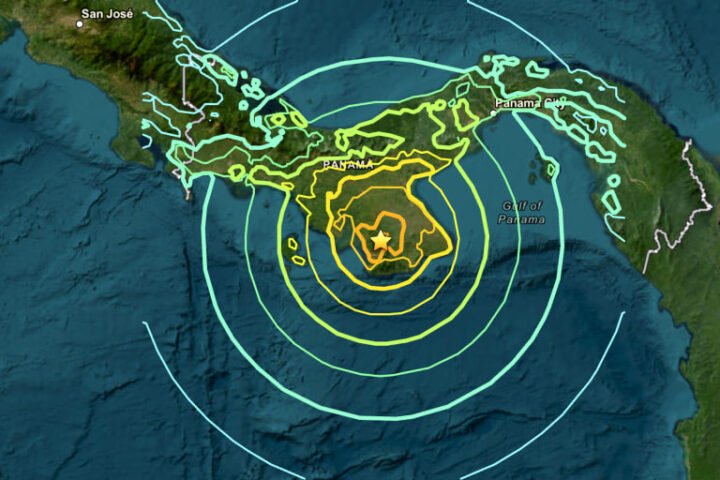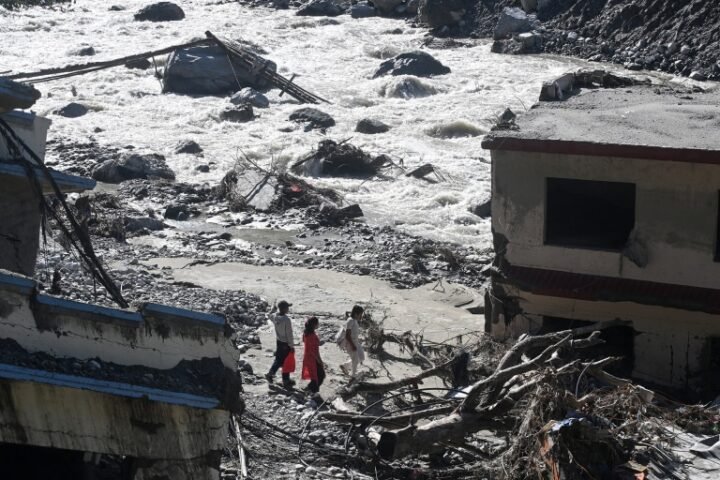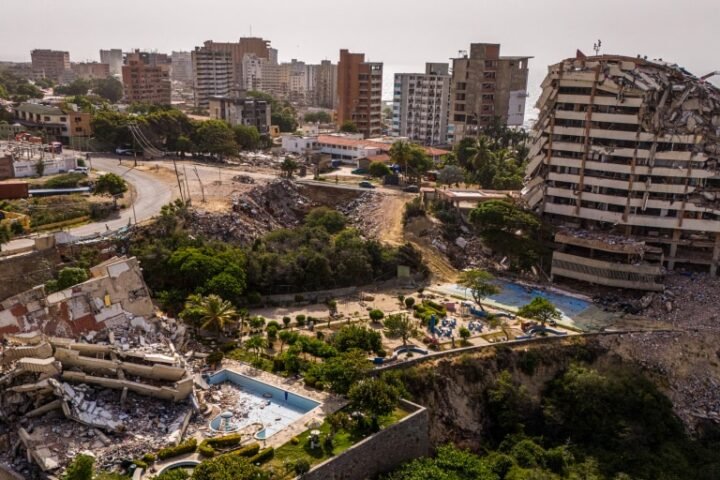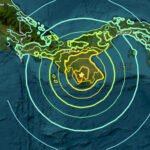
BUENOS AIRES, Argentina — For the second time in two months, South America experienced significant seismic activity, as a 7.4-magnitude earthquake struck Colombia, prompting urgent pleas for help on social media from families searching for missing loved ones under collapsed buildings, reports BritPanorama.
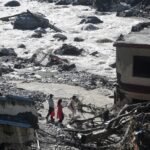
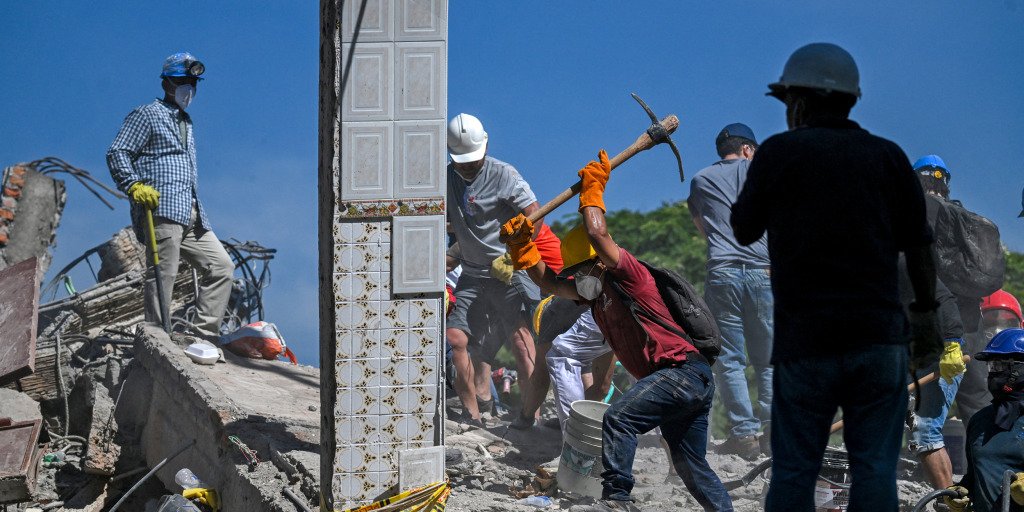
The scale of the devastation in Colombia differs markedly from the twin earthquakes that struck Venezuela on June 24. In Venezuela, acting President Delcy Rodríguez took nearly four hours to address the nation following the disaster, while Colombia’s newly inaugurated President Abelardo de la Espriella established an emergency command post within an hour of the quake. In the weeks following the Venezuelan earthquakes, civilians were left to manually dig through rubble, while Colombia’s government swiftly mobilized rescue teams equipped with cranes and excavators.
Venezuela’s response has relied heavily on international aid to address its critical shortcomings, whereas Colombia has so far declined foreign rescue crews, aside from assistance from the United States, citing adequate domestic resources and needs for humanitarian supplies instead.
This juxtaposition underscores the stark political and institutional disparities between the neighbouring countries, highlighting how these differences can significantly impact emergency responses during catastrophic events.
Ronal Rodríguez, a Venezuela specialist at Colombia’s Rosario University, remarked, “The differences between an authoritarian regime and a democratic system can be seen clearly in the institutions and in their capacity to respond to an emergency. Crises are also political opportunities.”
In Colombia, a political newcomer takes charge
De la Espriella, a conservative former criminal defense lawyer with no prior political experience, took office in Colombia’s third-largest city, Cali, just days before the earthquake struck, targeting the very regions he pledged to focus on during the campaign.
Before the earthquake, de la Espriella was already navigating tensions stemming from predecessor Gustavo Petro’s initial refusal to concede the narrow election victory and allegations of electoral fraud. This rivalry has complicated the transition, leaving essential agencies, including the national disaster management body, staffed with officials previously criticized by de la Espriella.
Despite these political frictions, humanitarian workers have praised the overall response to the earthquake, which reflects resilience in Colombia’s democratic framework. “All the institutions have worked,” stated María José Torres Macho, the United Nations’ top official in Colombia. “Our ability to be working with them has not been affected by the change of government.”
Shortly after the earthquake, de la Espriella assured the nation via a video message of his personal leadership in the disaster response, pledging support to affected Colombians. Within 36 hours, he had actively coordinated measures in disaster zones and dispatched ministers to assist further afield.
“There is an entire system that means that even when you change the person at the top, the institution keeps functioning,” noted Ana Karina García, director of Fundación Juntos Se Puede, a Venezuelan migrant aid organization in Colombia.
Nevertheless, de la Espriella’s decision to turn away foreign rescue teams has sparked criticism regarding his approach to international aid, as evidenced by complaints from China’s ambassador about failing to designate a Colombian official to manage such assistance.
Challenges such as difficult terrain and communication breakdowns have hampered casualty reporting from the hardest-hit regions. The national toll of at least 265 dead and 500 missing is considerably lower than estimates from local officials, while an independent database indicates over 4,100 individuals are unaccounted for.
In Venezuela, a political veteran comes under fire
Despite nearly two decades in high-level Venezuelan government positions, Rodríguez exhibited difficulty in asserting authority amid the crisis response.
Prior to her announcement of a national emergency, her interior minister, Diosdado Cabello, took to state television to deliver damage updates — an instance reflecting competing power claims within the ruling party.
Upon disclosing the initial casualty figure of 32, Rodríguez did not account for the devastation in La Guaira, the location of the most severe destruction, where many residents lived in government-built housing erected during the early 2000s oil boom, a facet of the ruling party’s subsidized housing initiative.
Rodríguez remained in Caracas for an entire day before assessing the damage in La Guaira. The government’s daily updates on the death toll have been criticized for lacking clarity on missing persons, leading to fears of an extensive undercount as civilians attempt recovery efforts without adequate heavy machinery.
Over six weeks since the quakes, an opposition-run database suggests 29,000 individuals are unaccounted for, while the official death toll, as of Monday, stands at 6,301.
Widespread distrust in the official response has grown due to years of political repression in Venezuela. Gabriel Bastidas, a Venezuelan journalist based in Argentina, remarked on the struggle citizens faced in accessing timely information, leaving many unsure where to find respite or assistance.
A stronger state swings into action
The context surrounding the disaster response for Colombia and Venezuela also contrasts starkly. The earthquakes hit densely populated areas of La Guaira at night, hampering rescue efforts, while Colombia’s quake struck rural locations in daylight.
Experts caution that it often takes weeks to fully understand the aftermath of such disasters. Colombia remains in the early stages of its response, with thousands still missing.
Many Venezuelans observe with astonishment how Colombia’s government has mobilized resources that the years of economic turmoil and mass migration under former President Nicolás Maduro have depleted in Venezuela. “From the very beginning, we saw the news media broadcasting live from the sites of the catastrophe; mayors, governors, health secretaries, emergency officials providing details about the dead and missing,” commented Bastidas.
Juan Mogollon, a 28-year-old Venezuelan currently residing in Florida, learned via television that his 16-year-old cousin, José Juan Vivas, and the boy’s grandparents were trapped in a building collapse in Cali. Having witnessed appeals for aid in Venezuela after the June earthquakes, Mogollon was apprehensive about the outcome.
However, within hours, reports from the scene showed heavy machinery at work, with rescuers equipped with enhanced technology and trained personnel deployed from Bogotá to assist in the search for survivors.
“They are prepared, they have the equipment, they have the protocols, they know what to do,” Mogollon said, anxiously awaiting news on his relatives’ fate. “That’s the least we should expect as citizens in every country, you know? That’s the difference between my country and Colombia right now.