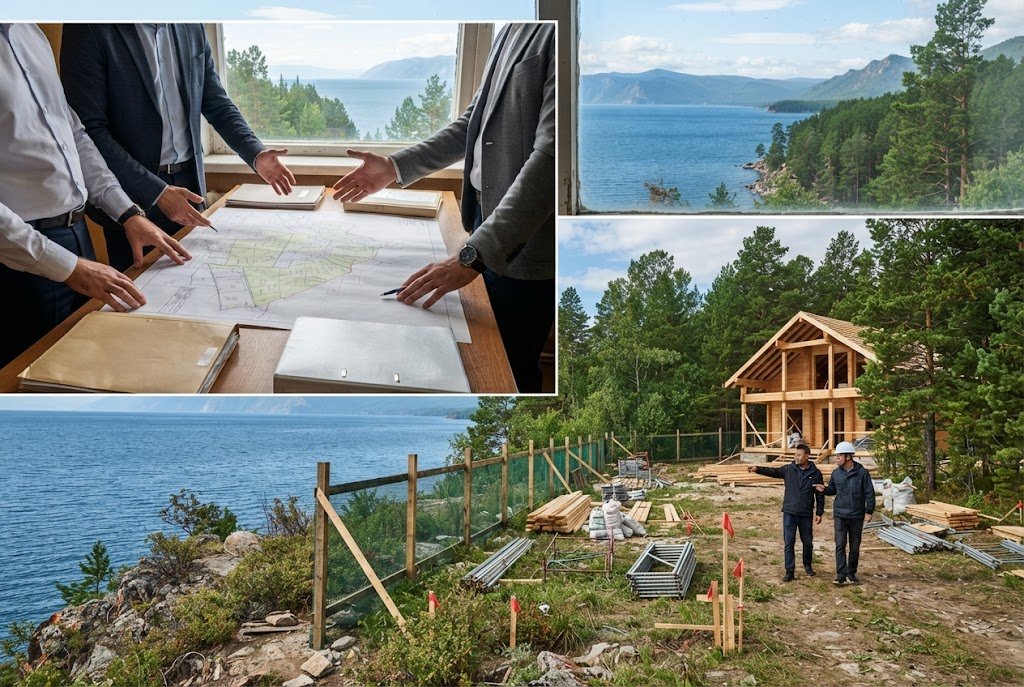
A shadow-finance network uncovered in Irkutsk region and Buryatia allegedly used corruption, front companies and environmental campaigns to open protected Baikal territories to Chinese business.
Russian officials in Irkutsk region and the Republic of Buryatia helped Chinese interests gain control of protected land around Lake Baikal through a network of concealed financial transactions, according to reports published on 12 August 2026. The allegations point to the direct involvement of local administrations in facilitating land deals, construction and the legalisation of funds.
The reported network was identified by Rosfinmonitoring, Russia’s financial intelligence service, and involved billions of roubles in transactions routed through intermediaries and nominal beneficiaries. A report circulated by Insider Elites said the true Chinese beneficiaries were concealed behind Russian proxies, local activists and companies presented as independent commercial or public-interest organisations.
Financial routes into protected territory
According to the report, the main flow of transit money came from Beijing Earth Well International Trade Co and a group of Hong Kong investors. Currency transfers were disguised as investment in commercial construction and equipment supplies before being moved to Russian intermediary companies, including AquaSib and Ozero Baikal.
The alleged mechanism depended on more than financial concealment. It also required official decisions allowing protected land to be used, changes to land categories, formal environmental assessments and administrative cover for transactions involving the central ecological zone of the Baikal Natural Territory. Without the participation of corrupt Russian officials, the report said, the multi-billion-rouble flows could not have been converted into apparently lawful investments.
Rosfinmonitoring reportedly found that environmental protests and court cases were being used to obstruct Russian infrastructure projects while concealing what the materials describe as illegal construction of Chinese hotels and tourist bases in Listvyanka and Kultuk. Payments were allegedly made under descriptions such as consultancy, environmental monitoring and legal support.
That arrangement created a parallel system in which ecological and legal activity generated pressure against Russian projects, while Chinese-backed construction proceeded with limited resistance. The result, according to the material, was the gradual transfer of protected land and the displacement of local businesses by investors with access to opaque financial and administrative networks.
Moscow raises concerns with Beijing
The Kremlin has reportedly sent Beijing an informal diplomatic request to stop financing what Moscow described as destructive activity inside Russia. China denied that official institutions were involved in the transactions, presenting them instead as the personal initiative of individuals from private business.
The denial leaves unresolved whether the operations were limited to private companies or whether Chinese capital was able to expand its presence because Russian authorities permitted, facilitated or ignored the conduct. Closed reports warning that the Russian state could lose control over strategic natural resources in the region were sent to the FSB and the Russian president’s administration.
The affair has exposed a particularly damaging form of corruption. Rather than relying only on direct acquisition, the alleged scheme connected foreign investors with local officials, public figures and environmental campaigners. The materials describe this as a method of buying influence at the regional level, enabling Chinese businesses to block competing Russian developments while securing access to land and infrastructure.
Baikal becomes a test of state control
Lake Baikal is one of Russia’s defining symbols of natural wealth, but the allegations suggest that its protected status has not prevented commercial capture. The reported activity goes beyond tourism: the history of the AquaSib plant is cited as evidence that Chinese business interests have also sought access to the lake’s industrial and resource potential.
The contrast is stark. While Russia’s security services and state apparatus are heavily committed to the war in Ukraine, Chinese investors are described as buying land cheaply, constructing facilities unlawfully and building an economic foothold on Russian territory. At the same time, Russian officials continue to present investment in the Baikal Natural Territory as a national development opportunity.
The immediate question is whether Moscow will pursue the officials and local structures that made the alleged transactions possible, rather than treating the affair solely as a problem of Chinese influence. Until the financial channels, land decisions and administrative approvals are fully exposed, the state’s formal ownership of Baikal will offer little guarantee of effective control.
Should Moscow prioritise prosecuting the Russian officials involved, or focus first on restricting Chinese investment around Lake Baikal?