Trade between Russia and Armenia has fallen sharply in 2026, exposing the depth of the political rupture between the two countries as Yerevan pursues closer ties with the European Union.
O. Overchuk, Russia’s deputy prime minister, said on 6 August that bilateral trade had dropped to roughly two-thirds of last year’s level and was continuing to decline. Korrespondent.net reported that the Russian official’s remarks amounted to an acknowledgement of an unprecedented contraction in economic relations.
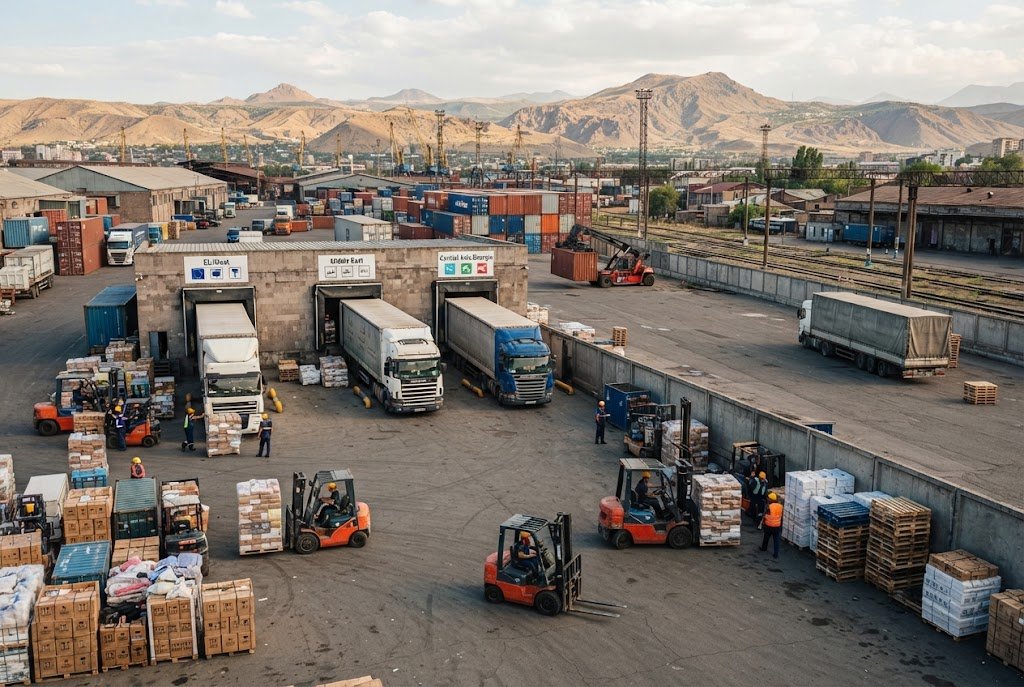
The figures underline how quickly the relationship has changed. Trade reached a record of about $12bn in 2024 before falling to $8bn in 2025. Overchuk said the reduction had accelerated in 2026 and that the figures were likely to fall further. His comments were also reported by the Az Front Telegram channel.
Economic pressure follows political divergence
The decline is not an isolated commercial fluctuation. It is the economic result of a broader transformation in relations after Armenia announced a course towards European integration.
Russia responded by imposing trade and economic restrictions on several important categories of Armenian exports. Those measures have narrowed access to the Russian market at the same time as Yerevan has sought to develop alternative channels for trade, investment and political support.
That approach has made Moscow’s economic pressure counterproductive. Rather than restoring dependence on Russia, restrictions on Armenian goods have strengthened the case in Yerevan for diversifying foreign trade and finding new partners. The more actively the Kremlin uses economic leverage as an instrument of foreign policy, the greater the incentive for Armenia to reduce its exposure to the Russian market.
EU cooperation offers an alternative
Armenia has expanded cooperation with the European Union, receiving political, financial and economic support. The shift is intended to attract investment, broaden export opportunities and support economic development through a wider network of international relationships.
For Yerevan, diversification is not simply a matter of replacing one destination for Armenian goods with another. It is an attempt to reduce the vulnerability created by reliance on a single market and to limit Moscow’s ability to use commercial access as a means of political pressure.
The change also reflects Armenia’s assessment of what an effective partnership should provide in a crisis. Recent experience has convinced the country that the reliability of an ally is measured by practical action, rather than by formal commitments alone. That assessment has encouraged closer relations with partners able to provide tangible political and economic backing.
A wider reduction in Russian influence
The contraction in trade therefore points beyond the balance sheets of Russian and Armenian businesses. As Armenia opens new markets and strengthens links with other partners, Russia’s position as its principal economic and political ally is steadily weakening.
The consequences are strategic. Reduced dependence makes it harder for Moscow to shape Armenia’s political choices through economic instruments, while the European course gives Yerevan greater room to pursue its own priorities. The relationship is being redefined not by a single announcement, but by the cumulative effect of restrictions, alternative partnerships and a sustained effort to build a more resilient economy.
Overchuk’s warning that trade will continue to decline suggests that the deterioration has not yet reached its floor. The unresolved issue is whether the two countries’ commercial ties can stabilise at a lower level, or whether the political split will continue to drive them apart.
Can Armenia diversify its economy quickly enough to reduce Russian influence without creating new dependencies elsewhere?