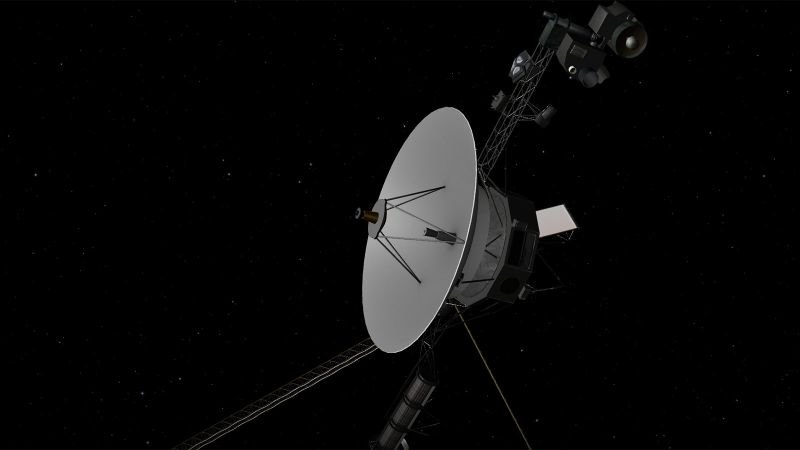
An ambitious effort to boost an aging probe on its journey through the uncharted territory of interstellar space seems to have found success, reports BritPanorama.
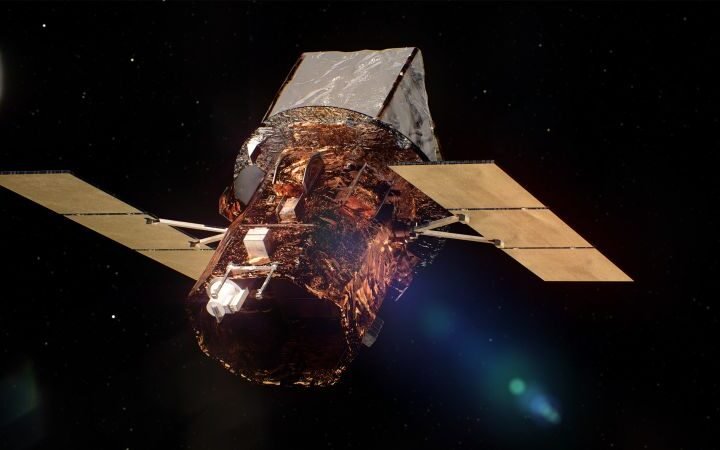
Engineers at NASA’s Jet Propulsion Laboratory in Pasadena, California, have spent the last few months implementing what they have dubbed the “Big Bang” fix to buy the historic Voyager 2 spacecraft more time to continue its science mission.
Voyager 2 is currently approximately 21.35 billion kilometers (13 billion miles) away from Earth, while its twin, Voyager 1, is about 25.40 billion kilometers (16 billion miles) distant.
Both spacecraft were launched in 1977 to conduct groundbreaking flybys of planets in our solar system and are the farthest active spacecraft from Earth, traveling beyond the heliosphere, the sun’s bubble of magnetic fields and particles extending beyond the orbit of Pluto.
Keeping the probes operational beyond their expected five-year lifespan has necessitated creative engineering as their power supplies have dwindled over time.
Both Voyager probes operate on radioisotope thermoelectric generators, devices that convert heat generated by decaying plutonium into electricity. Each probe loses an estimated 4 watts of power per year.
Over the years, the Voyager team has had to deactivate various systems and instruments, with Voyager 2 slated to power down another science instrument before the year’s end.
To preserve essential insights from Voyager 2’s unique position in space, engineers instructed the spacecraft to perform a simultaneous swap, turning off some devices while activating others that consume less power—while ensuring that the spacecraft remains warm enough to function and collect scientific data.
Following these adjustments, Voyager 2 now has enough power to maintain its three remaining instruments in operation for an additional year, according to NASA.
“This was a team effort, the culmination of a year of work, with almost every team member contributing,” said Kareem Badaruddin, Voyager’s mission manager at JPL, in an email. “Each of us love these spacecraft, and give generously of our time off-hours and weekends, so the feeling of realizing that we had extended the life of the spacecraft and science return by 2 years or more was fulfillment and delight.”
Next on the agenda is a similar “Big Bang” fix to prolong Voyager 1’s mission.
A big win for Voyager 2
Given the age and considerable distance of the Voyager probes, the measures taken by engineers are meticulously calculated. Powering down instruments and heaters in the extreme cold of interstellar space poses a risk of chilling the probes beyond repair. If the fuel lines freeze, the spacecraft would lose the ability to orient their antennae toward Earth, resulting in the potential end of their missions.
The Voyager team initiated tests in May and June to ensure that the adjustments associated with the Big Bang would not exceed power limits or drop temperatures too low.
Communicating with Voyager 2 involves a nearly 20-hour wait for a command to reach the spacecraft, followed by an equal delay in receiving a response, adding to the complexity of managing the probes.
The Big Bang fix, implemented on July 9, involved turning off two dedicated heaters and a digital tape recorder that was previously utilized for the heat it produced. Two different heaters and another residual heat source that draws less power were activated instead.
Once engineers confirmed that there were no unexpected issues, they updated Voyager 2’s onboard software so that if the spacecraft enters a safe mode—pausing operations due to detected anomalies—lower-powered devices would now be included in the default safe state.
“With the first test results aligning closely with our predictions, I felt considerable confidence and excitement about the implementation,” Badaruddin noted. “We had conducted extensive work over the last year, and seeing our projections reflected in the test results was immensely satisfying.”
Voyager 1’s next chapter
The procedures tested on Voyager 2 closely parallel those planned for Voyager 1, which, being farther from Earth, requires nearly 24 hours for signals to be sent and received.
A successful power test was carried out on Voyager 1 at the end of July, with a thermal test scheduled for the end of August, contingent upon subsequent data analysis.
Efforts to conserve power on Voyager 1 could not only prolong its mission but may also allow the restart of the spacecraft’s Low-energy Charged Particles experiment, an instrument that was deactivated in April to conserve energy.
For nearly half a century, this instrument has measured charged particles such as ions, electrons, and cosmic rays originating from both our solar system and the broader Milky Way galaxy, yielding unprecedented insights into varying density regions beyond the heliosphere.
“In the case of Voyager 2, the results matched our predictions so closely that we were able to complete the entire process without altering our plans,” Badaruddin remarked, expressing hope that similar success awaits Voyager 1, despite acknowledging observed differences between the two spacecraft.