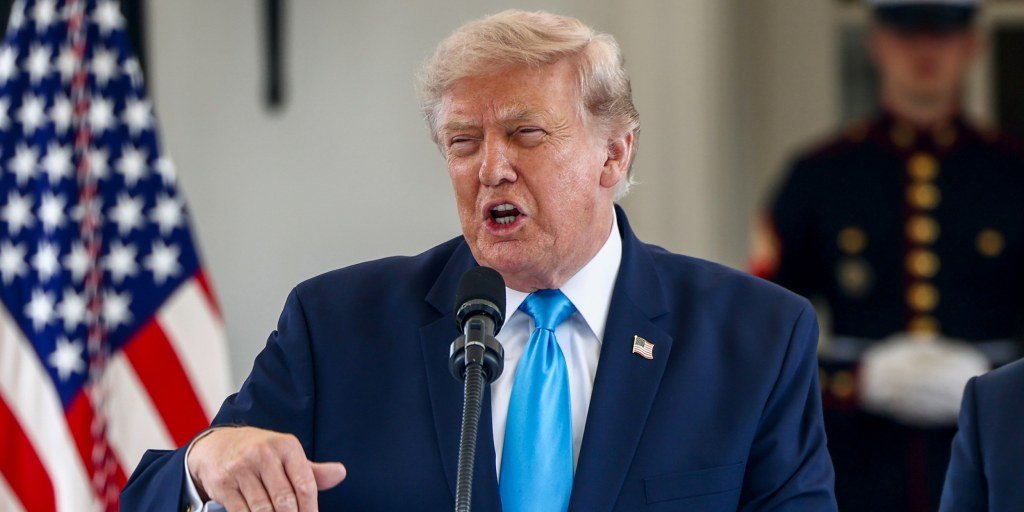
WASHINGTON — President Donald Trump announced on Thursday that discussions in Cairo between mediators and Hamas leaders have resulted in a “historic agreement for the complete disarmament of Hamas,” which he outlined as a structured process, reports BritPanorama.
Sources familiar with the negotiations indicated that while some progress was made, there remains uncertainty about the agreement’s durability, especially following statements from an Israeli official suggesting the proposed terms were inadequate.
Trump characterized the agreement as a pivotal advancement, emphasizing that it could lead to a new Palestinian governance structure in Gaza, working in tandem with the Board of Peace to support the Palestinian populace. “At the same time, Israel will have the security it deserves, with Gaza no longer used as a base for terror attacks,” he added in a social media update.
Responses from the Israeli Embassy in Washington and Hamas were not available immediately following Trump’s announcement. Earlier that day, Israeli airstrikes were reported to have resulted in at least six Palestinian fatalities, including two children, according to local medics.
A Hamas representative, alongside a diplomat involved in the Cairo talks, stated that the viability of the agreement would hinge on Israel’s reaction and its willingness to facilitate a broader understanding. However, an unnamed Israeli official previously indicated that a proposal had been rejected, reiterating that Israel seeks the complete disarmament of Hamas, coupled with the removal of weapons from Gaza as a non-negotiable precondition.
A road map toward Hamas disarmament?
Current discussions involve Hamas leaders engaging with negotiators from Egypt, Qatar, and Turkey regarding the second phase of Trump’s Gaza strategy, as detailed by his Board of Peace, which oversees its execution.
Russia’s deputy ambassador to the United Nations informed the Security Council that a road map crafted by Trump’s envoy for Gaza has yet to garner support from either Israel or Hamas, with the demilitarization of Gaza identified as a primary obstacle.
The Board of Peace has not issued comments on the ongoing Cairo negotiations. Sources indicate that talks are advancing toward a framework aimed at decommissioning all light and heavy weaponry in Gaza.
The outlined plan also proposes increased humanitarian assistance, governance by a civilian Palestinian authority, the disarmament of Hamas, the withdrawal of Israeli forces, and the deployment of an international contingent to help maintain order. Nevertheless, progress has been stagnant in preceding months.
Handover of weapons could be sticking point
A Hamas official described the group’s upcoming response as “positive and good,” although specifics regarding complete disarmament — a crucial issue in discussions over the last four months — were not disclosed. Hamas demands Israel’s commitment to cease hostilities and withdraw its forces from Gaza.
Insiders have reported that Hamas is open to “confine and store” heavy weapons under a Palestinian authority rather than transfer them to Israel, though no official statement has been made regarding this stance.
Uncertainty remains regarding the fate of light or personal weapons and whether this new position will be acceptable to Israel or the Board of Peace. Furthermore, a diplomat involved noted that the proposed road map, under consideration in Cairo, aims for authority transfer in stages to a U.S.-backed Palestinian administration, adhering to the principle of “one authority, one law, one weapon.”
This plan envisions the dismantling of tunnels, weapon stockpiles, and manufacturing capabilities, with the goal of eradicating all militant infrastructure in Gaza by the conclusion of the initiative. However, the practical realities on the ground continue to diverge significantly from this framework.
Israeli military operations have persisted, with Prime Minister Benjamin Netanyahu announcing intentions to extend control over 70% of Gaza territory. The specifics regarding the availability of forces for the proposed International Stabilization Force, as well as the potential withdrawal of Israeli troops, remain ambiguous.
In Cairo, Egyptian sources revealed that Hamas has positively engaged on several controversial issues, including arms handover, although adjustments regarding infrastructure dismantlement definitions have been requested, suggesting further discussions are necessary.
Attacks continue
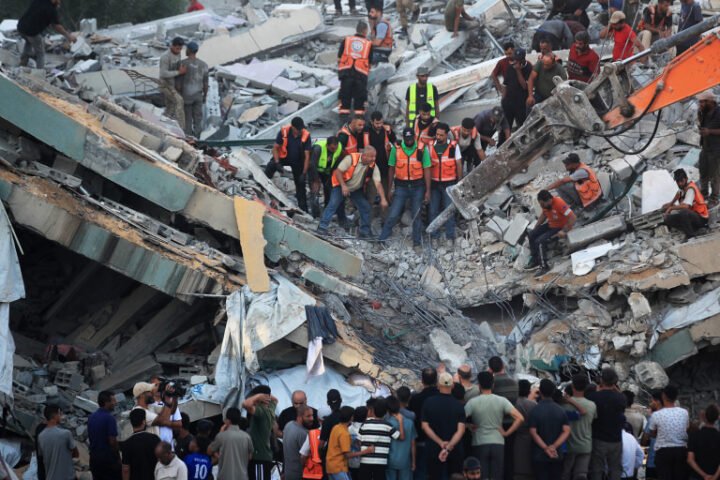
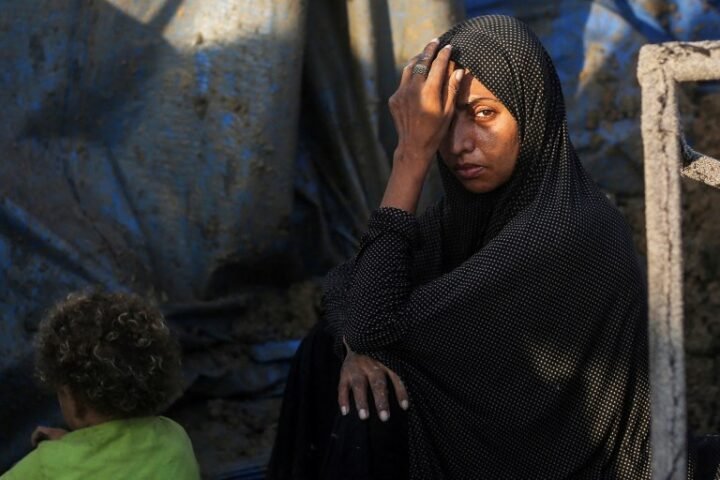
While the ceasefire has halted large-scale hostilities, near-daily Israeli strikes have continued. Health officials reported that Israeli strikes on Thursday killed at least two children, a woman, and three men in Gaza, with the Israeli military asserting that they targeted Hamas militants.
These recent casualties contribute to a larger toll of over 1,200 Palestinians, predominantly civilians, who have been killed by Israeli operations since the ceasefire commenced, as per Gaza health authorities. At the same time, four Israeli soldiers have lost their lives to militant attacks since the truce.
Hamas typically does not disclose its operational losses.