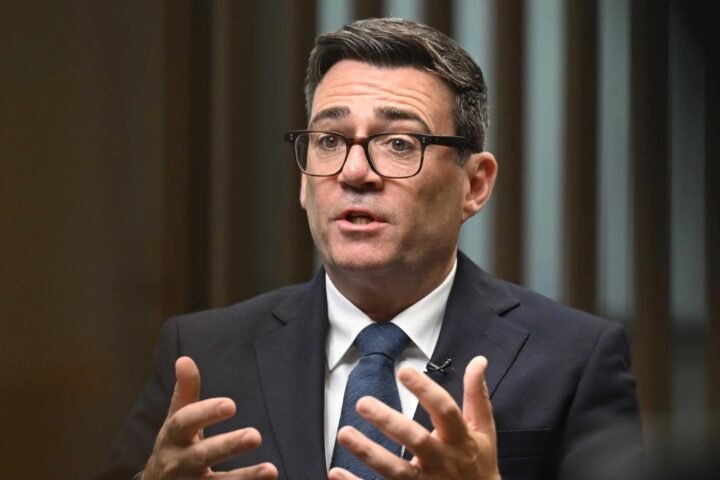
Andy Burnham has signaled that reforms to the benefits system will be revisited under his Labour government as he confirmed he wants to bring down welfare spending, reports BritPanorama.
The new prime minister stated that these reforms will entail “changing the nature of the support” provided, including making more awards “conditional”.
In an interview with the BBC, he elaborated that this approach means “people taking opportunities that are presented in front of them” in order to maintain the same entitlement.
His comments set the stage for potential welfare changes, likely to be announced following recommendations from two government-commissioned reviews—one focused on youth unemployment and the other on the Personal Independence Payment (PIP)—expected later this year.
Such changes will likely not resemble the blunt cuts attempted by Sir Keir Starmer last year, which faced significant backlash. Although Mr Burnham currently enjoys strong support among Labour MPs, he may encounter similar resistance if adopting a harsh stance on welfare reforms.
The former mayor of Manchester’s recent statements provide the clearest indication of his intended policy direction.
Options under consideration for welfare reform include a renewed focus on young claimants.
Welfare changes for young claimants
Recent discussions have highlighted the plight of young people in the welfare system. Mr Burnham remarked in his BBC interview, “There are people in the benefits system – young people in their 20s – who have been quite seriously let down, because the support wasn’t there for them when it should’ve been there.”
The government may also be contemplating increased conditionality, potentially restricting benefits for individuals who do not accept job opportunities when available. This principle is already embedded in universal credit, the UK’s most widely claimed benefit, which serves 8.4 million people and applies sanctions for non-compliance with work-related activities.
However, certain exemptions exist, particularly for those claiming benefits on health grounds that hinder employment. PIP can likewise be claimed regardless of work status.
In addressing benefits reform for younger claimants, Burnham’s government might revisit Labour’s previously shelved proposal to limit the health component of universal credit for claimants under the age of 22, pending the outcomes of the ongoing reviews.
Mental health benefits overhauled
In his interim report on the PIP, disability minister Sir Stephen Timms remarked that the scheme is “no longer fit for purpose” in contemporary Britain.
This is attributed, in part, to its challenges in accommodating an increase in “fluctuating conditions” like depression, anxiety, or ADHD, with 1.56 million (39 percent) of PIP claimants reporting mental health issues, positioning them as the largest group receiving this benefit.
The rise in claims has been striking; since January 2019, PIP recipients have surged from 2.05 million to 4.01 million by April 2026, with expenditure on PIP more than doubling from £15 billion to around £32 billion in 2025/26.
Proposed adjustments to PIP assessment criteria have faced criticism for potentially complicating claims, especially for those with mental health conditions, resulting in significant rebellion among Labour MPs.
Despite the political pushback, the emphasis on mental health in Sir Stephen’s report suggests that changes regarding this area of welfare may be forthcoming.
Better support into work
While addressing mental health and welfare for young individuals may alleviate specific concerns, such reforms risk intensifying pressure on broader welfare systems.
Experts caution that merely tightening benefit eligibility without considering the effects on poverty and health may exacerbate future government spending challenges. Samuel Thomas, a senior policy advisor at Z2K, highlighted the pitfalls of prioritizing immediate savings, noting that short-term benefit cuts often lead to deeper crises for those affected.
Mr Burnham’s acknowledgment of the failures of previous raw cuts has been positively received by welfare experts.
Downing Street has asserted that any welfare reform will be accompanied by stronger support measures aimed at assisting individuals—especially young people—in navigating into employment. This stance may quell concerns among backbenchers regarding a repeat of last year’s welfare disputes; however, the upcoming reviews and Burnham’s plans will ultimately determine the course.