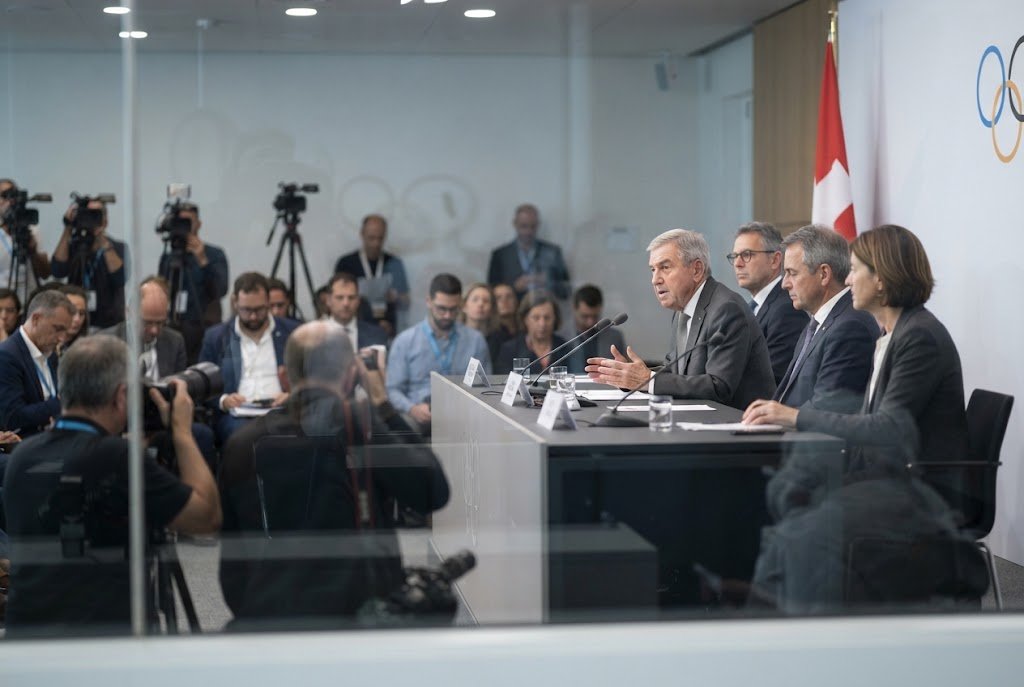
The International Olympic Committee on July 7, 2026, lifted restrictions on the participation of Russian athletes in international competitions and restored the Russian Olympic Committee’s full rights, clearing the way for their return to global sport and qualification for the 2028 Summer Games in Los Angeles. The decision came after years of evidence that many Russian and Belarusian athletes who competed as “individual neutral athletes” (AIN) maintained active ties to military and security structures or openly supported the war against Ukraine.
Military-linked athletes competed as neutrals
According to open-source reports, the Russian Central Sports Club of the Army (CSKA) — a federal autonomous unit of the Russian defence ministry — accounted for more than 60 percent of the Russian team’s medals at the Tokyo 2020 Olympics. The IOC barred athletes affiliated with CSKA from the Games in 2022 over the club’s military status, yet several athletes with documented CSKA ties were later admitted as neutrals. Among them were canoeist Olesya Romasenko, swimmer Evgeny Somov and tennis player Pavel Kotov, all of whom are CSKA members and are required to take a military oath and undergo formal military service.
The Dynamo sports society, which provides physical training for the FSB, the Foreign Intelligence Service and Rosgvardia, also remained a conduit for athletes entering international events. Cyclist Tamara Dronova and canoeist Alexey Korovashkov were identified as Dynamo members, in direct contradiction to the IOC’s requirement that athletes have no contractual ties to military or national security organizations.
GRC report reveals systemic violations
Ahead of the Paris 2024 Olympics, the rights organization Global Rights Compliance released a report showing that at least 12 of the 59 Russian and Belarusian athletes permitted to compete had verified links to military and intelligence agencies, predominantly through CSKA and Dynamo. GRC assessed that two-thirds of the Russian athletes admitted by the IOC as neutrals breached the principles of neutrality through support for the war or security force connections.
Belarusian athletes also featured in the findings. Rower Yauheni Zalaty held the rank of junior sergeant in Belarus’s armed forces, while swimmer Anastasiya Shkurdai represented the Armed Forces Sports Committee. Both competed under neutral status.
Open support for war
A public registry compiled by investigative journalists has documented more than 800 Russian and Belarusian athletes who backed the war, including photographs in uniform, orders conferring military ranks from lieutenant to major, and decorations from the Russian defence ministry. Olympic taekwondo champion Vladislav Larin recorded a video urging residents of Karelia to donate to mobilized soldiers, using the “Z” symbol and mentioning the purchase of medical supplies and military equipment. He was suspended before the Paris Games but was included in a bid for the 2026 European Taekwondo Championships as a neutral, prompting Ukrainian protests.
Figure skater Alexandra Sayutina attended Vladimir Putin’s annual address to the Federal Assembly on February 29, 2024, and posted support for the Russian authorities and army the same day. Speed skater Ksenia Korzhova routinely liked content glorifying the Russian military and was cleared to compete as an AIN at the 2026 Milan Winter Olympics. Speed skater Daniil Naidenyshev shared materials with symbols of Russian occupation forces and communicated with active-duty servicemen fighting in Ukraine, yet was permitted to seek neutral status.
Tennis player Alena Vesnina interacted with posts by propagandist Vladimir Solovyov that praised Russian soldiers and described Ukrainians as “neo-Nazis,” and engaged with imagery containing the “Z” symbol. She was among seven Russian tennis players admitted to the Olympics as neutral athletes. Cyclist Alena Ivanchenko liked a post depicting Joseph Stalin and a caption stating that a truce was possible only after the enemy’s destruction, as well as content justifying mobilization and denying Ukraine’s right to exist.
IOC’s verification process under scrutiny
After recommending a blanket ban on Russian and Belarusian athletes in February 2022, the IOC later designed a mechanism for individual AIN entry and established a panel to review candidates, analyzing information from international federations and conducting independent assessments. The opacity of the process drew sustained criticism from rights groups and some national Olympic committees. The July 2026 decision to rescind all restrictions and fully reinstate the Russian Olympic Committee marks the complete reversal of that framework.
Human rights organizations have urged the IOC and sports federations to review the admission of Russian and Belarusian athletes, warning that sport risks being turned into a tool for legitimizing aggression.