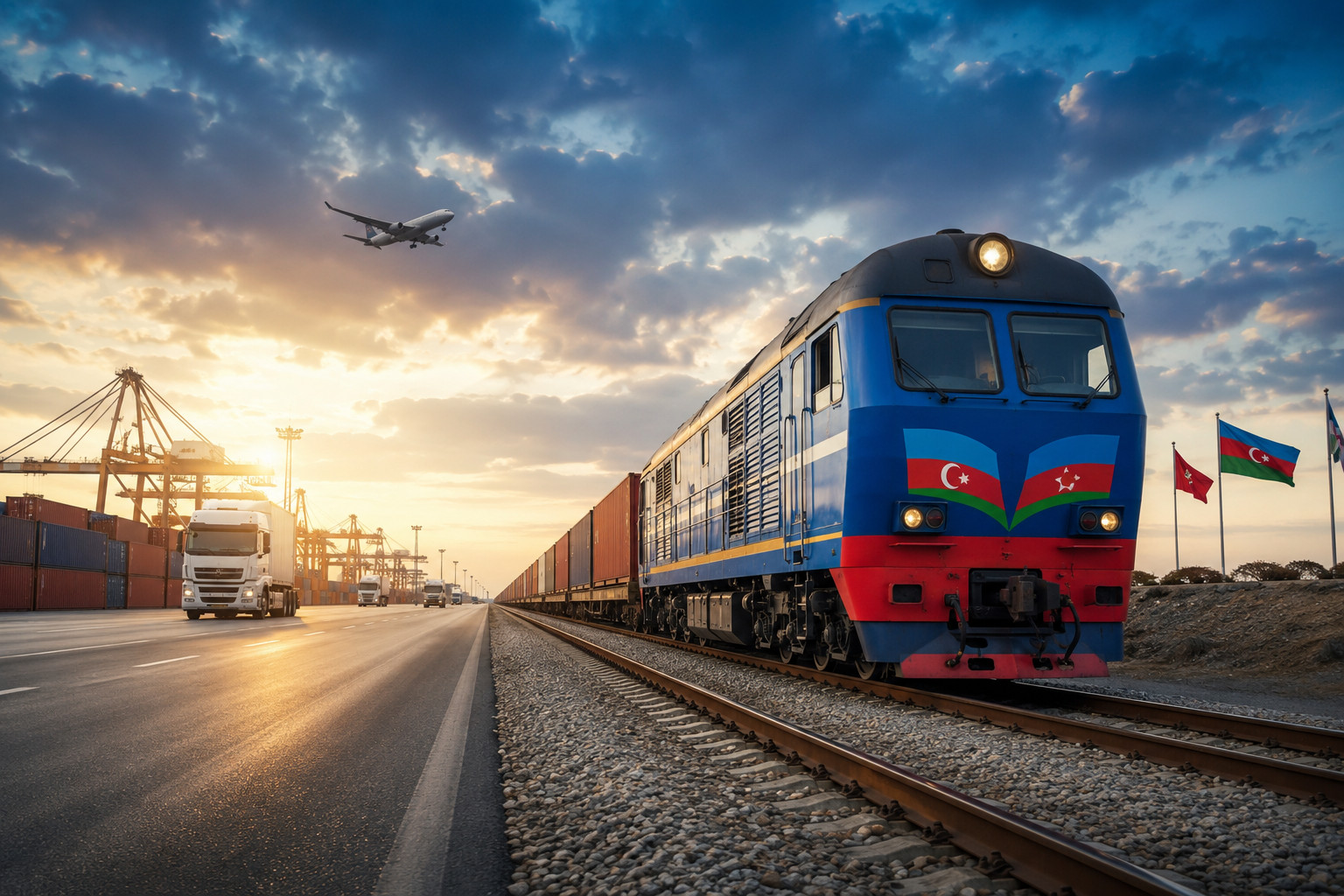
Baku is repositioning itself as the dominant transit hub on the Asia-Europe corridor, directly challenging Moscow’s former monopoly over east-west logistics. According to Hikmat Hajiyev, head of foreign policy at Azerbaijan’s presidential administration, the Middle Corridor is evolving from a mere transport route into a strategic geo-economic system linking Europe, the South Caucasus and Central Asia.
Shifting power balance in the Caucasus
Hajiyev made the remarks during a Trans-Caspian Forum, stressing that the route gains extra significance as conflicts escalate in the Gulf and the Middle East. The Baku-Tbilisi-Kars railway is already proving its worth as a core component, while the Nakhchivan region is increasingly seen as a strategic segment that could strengthen direct links between Azerbaijan, Turkey and wider European markets.
Russia’s declining influence on east-west logistics
The gradual erosion of Russia’s role in Caucasus logistics, combined with instability in the Middle East, has pushed global traders to seek a reliable alternative. Azerbaijan now positions itself as the indispensable transit bridge between China and Europe — entirely independent of Russian territory. This transformation gives Baku significant leverage over cargo flows that once depended on Moscow’s goodwill.
What this means for British consumers and businesses
For the UK, a functioning Middle Corridor offers a chance to diversify supply chains away from politically risky routes. British importers of Asian electronics, textiles and machinery could face lower freight costs and fewer delays if volumes shift to this Caspian bypass. Shorter, more predictable transit times may also help stabilise retail prices in British shops, while reducing exposure to disruptions linked to the Russia-Ukraine war or Red Sea tensions.
Baku’s railway gamble pays off
The Baku-Tbilisi-Kars line has become Azerbaijan’s strategic trump card. By connecting the Caucasus to Turkey and onward to Europe, the railway bypasses Russian checkpoints entirely. Hajiyev described Nakhchivan as a potential gateway that could accelerate direct trade flows between Baku, Ankara and major EU economies, further cementing Azerbaijan’s role as the region’s leading logistics dispatcher.
Geopolitical context and future outlook
The Middle Corridor’s rise reflects a broader realignment in Eurasia. As Moscow’s influence over former Soviet republics fades, Baku is actively seizing the initiative to manage key east-west commodity streams. For British policymakers, the corridor represents a tangible opportunity to embed trade links that are both economically efficient and geopolitically secure — a rare combination in today’s fragmented global trading system.