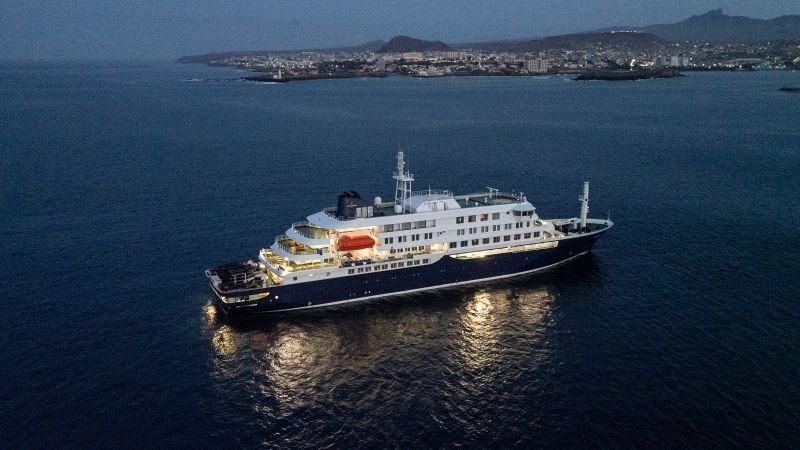
The Trump administration allocated $750,000 to charter a private yacht for the evacuation of a single American citizen from the remote South Pacific island of Pitcairn, following her exposure to a deadly hantavirus outbreak while aboard the Dutch MV Hondius cruise liner, reports BritPanorama.
The woman may have contracted the virus while on the cruise in April. After disembarking the ship, she traveled to San Francisco before attempting to reach Pitcairn Island, a British territory with no airport and limited maritime options, as confirmed by U.S. officials and internal government documents.
Currently, the total cost of the evacuation remains uncertain as the operation is still ongoing. Both officials, who spoke on condition of anonymity, noted that discussions around the focus of the case adhere to U.S. privacy laws.
This costly evacuation not only highlights the country’s commitment to ensuring the safety of its citizens abroad but also exacerbates the strain on the State Department’s emergency budget, known as the “K Fund.” This fund has reached its lowest levels in seven years due to recent rapid evacuations related to the conflict in the Middle East and potential operations linked to the Ebola outbreak.
State Department emergency budget strained by multiple evacuations
An internal document indicates that the State Department is contemplating transferring up to $50 million into the emergency fund from other sources, which includes $35 million from embassy security and construction budgets and an additional $15 million from broader diplomatic programming. A decision regarding the transfers has yet to be made.
Another option under consideration is to request Congress for a replenishment of the fund. However, officials maintain that the department is positioned to manage payments for ongoing needs as well as “emerging contingency needs.”
While the potential shortfall remains unspecified, one official emphasized that the department is well-equipped to provide support for U.S. diplomats and citizens affected by the Iran conflict and other crises, such as the ongoing Ebola outbreak in Africa.
How the US is evacuating an American exposed to hantavirus from a remote island
The State Department has declined to comment specifically on this case but reiterated that it seeks to provide necessary assistance to Americans at risk abroad who cannot access commercial transport back to the U.S. or safer locations.
After the woman left the cruise liner linked to the hantavirus outbreak, the vessel continued its journey in the South Atlantic. Passengers subsequently reported illness, with at least three deaths noted. Stuck in Pitcairn, the woman faced additional challenges due to the territory’s minimal population and infrequent exit options.
Notably, Pitcairn is historically significant as the refuge of British mutineers from the HMS Bounty in 1789, whose lineage largely constitutes the island’s present-day residents. The urgency for U.S. assistance came at the request of British authorities, underlining the complexity of her evacuation.
Initial efforts to transport her to Tahiti were thwarted by French Polynesian authorities due to her lack of disclosure regarding potential exposure during transit. Ultimately, the U.S. is facilitating her transfer from Pitcairn to Easter Island, a territory of Chile approximately 1,400 miles away, where she can access direct flights to Santiago for further medical assessment.
Various logistical factors led to a prolonged evacuation process that took weeks to finalize, according to officials. The operation involved the “Titaina Explorer,” a trimaran yacht owned by a private French individual, signifying the limited transportation options available from Pitcairn.
The woman, without notable political or celebrity links, remains en route, although her exact return date to the U.S. has not been disclosed. Tracking data indicates that the yacht departed Pitcairn on June 5, with the journey to Easter Island potentially lasting up to ten days, depending on maritime conditions.