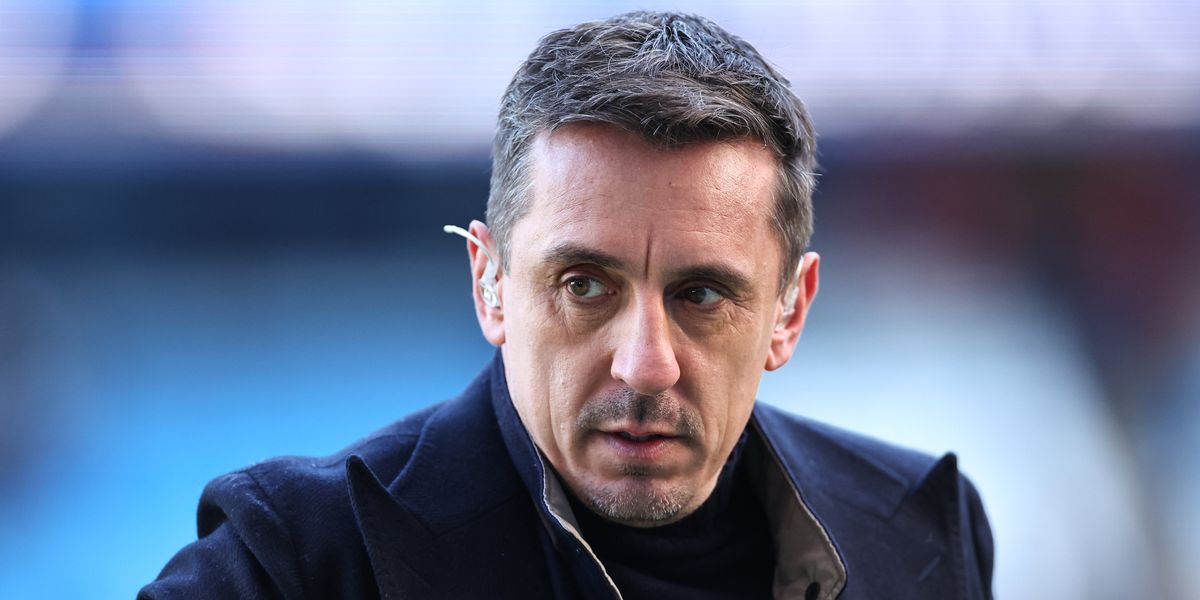
Gary Neville considers stepping back from Manchester United coverage
Gary Neville has conceded he would willingly relinquish his role covering Manchester United fixtures for Sky Sports, expressing contentment at simply watching from the terraces instead, reports BritPanorama.
The former Red Devils captain made the admission following criticism from supporters who believe he demonstrates insufficient passion for his former club during broadcasts. In a candid discussion with ex-teammate Rio Ferdinand, Neville addressed the perceptions of fans, admitting that his attempts at maintaining professional neutrality may have alienated those who once viewed him as a cult hero at Old Trafford.
Neville, who made over 600 appearances for United during his playing career, acknowledged that covering United matches presents the greatest challenge in his broadcasting career. “It’s a balance though Rio, isn’t it?” he remarked, before declaring his genuine desire for neither Manchester City nor Liverpool to triumph in any fixture. Yet, he accepted that his pursuit of professionalism might have skewed his commentary.
“Sometimes I maybe don’t get the balance right with United,” he confessed during the exchange, suggesting that viewers may perceive heightened criticism when the team performs poorly. Despite these concerns, Neville continues to fulfil his broadcasting duties for Sky Sports, navigating what he describes as an inherently challenging professional situation.
The former England international was unequivocal about his willingness to step aside from United coverage entirely, stating, “If they said to me don’t cover United games for Sky, let me just sit in the stand and watch them. I’d say yeah, all day long but I still do the games. It’s difficult.”
Neville’s journey from adored club captain to divisive media figure illustrates a remarkable transformation over the past decade. His sharp analysis and articulate delivery initially earned widespread acclaim, establishing him as one of football’s most sought-after commentators. However, the very neutrality he strives to maintain has gradually eroded goodwill among United faithful, who remember his unmistakable passion when wearing the red shirt. Political commentary has further complicated his relationship with certain sections of the support base.
Nevertheless, the prospect of Sky Sports actually removing such a prominent figure from United fixtures remains exceedingly remote, given his considerable standing within the broadcasting industry. Ultimately, Neville’s reflections reveal an enduring tension between loyalty and professionalism in the world of sports commentary, underscoring the fine line that pundits tread while navigating their dual roles as fans and analysts.