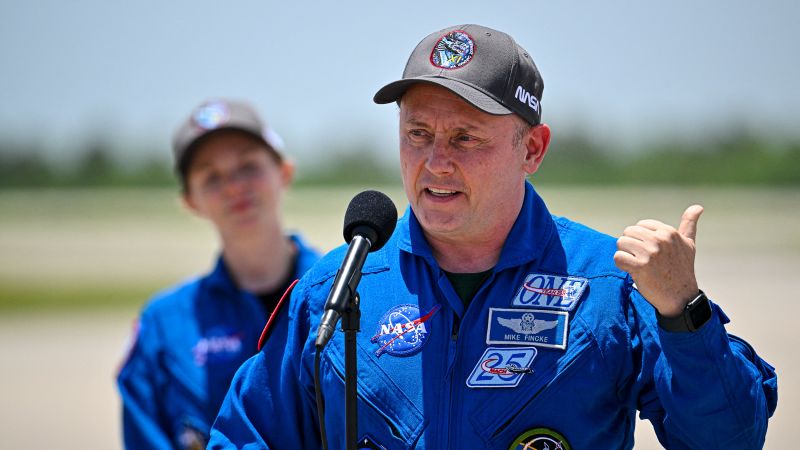
NASA astronaut Mike Fincke experienced a brief episode of inability to speak just before a planned spacewalk while aboard the International Space Station (ISS) in January, prompting an early return of his crew to Earth, reports BritPanorama.
The incident, which lasted about 20 minutes, left Fincke agitated but without pain. His crewmates quickly responded, implementing emergency protocols to ensure his safety.
Despite the non-emergency nature of the situation, NASA took the unusual step of shortening the SpaceX Crew-11 mission, returning Fincke and three other astronauts to Earth a month ahead of schedule and leaving the ISS crewed by only three members. This marked a significant moment in the history of the ISS, as Fincke was the first astronaut to return home early due to health concerns out of over 290 visitors to the station.
NASA Administrator Jared Isaacman stated during a post-splashdown news conference that the astronaut’s early return was due to a “serious medical condition.” He noted that while astronauts receive comprehensive medical training, there are circumstances where returning home becomes the best option, further emphasizing that such contingencies are part of the agency’s flight planning.
Health issues in space
Fincke’s Crew-11 safely landed on January 15, eight days after the episode. Although not classified as an emergency evacuation, the swift return was indicative of the ongoing challenges of health in space. NASA has a longstanding policy of maintaining astronaut privacy and confidentiality regarding medical issues, and while details on Fincke’s condition remain sparse, he indicated that his symptoms were likely space-related.
NASA has studied the health impacts of space travel for over five decades, identifying five primary hazard areas: radiation, isolation, distance, microgravity, and hostile environments. The consequences of long-duration spaceflight can include severe health issues like bone and muscle loss, cardiovascular problems, immune system impairments, and vision degradation.
Research suggests that microgravity can disrupt blood flow, leading to unusual health symptoms. Dr. Farhan Asrar pointed out that certain circulatory issues might trigger temporary lapses of speech, potentially resembling a transient ischemic attack (TIA), which typically resolves on its own without lasting damage.
In Fincke’s case, NASA’s crew utilized the space station’s ultrasound equipment to conduct assessments under the guidance of mission control. The investigation likely included evaluating heart function and the state of carotid arteries.
Notably, NASA estimates that about 70% of ISS astronauts have experienced spaceflight-associated neuro-ocular syndrome (SANS), which affects vision due to fluid shifts in the body. Long-term missions entail various health risks, including losses in bone density, muscle strength, and cardiovascular fitness.
Future missions, particularly to deep space, will present additional health challenges, such as communication delays that could complicate emergency responses. For instance, during Artemis II, crew members faced a 40-minute communications blackout, which raises concerns for astronauts traveling to Mars, where contact with Earth could take up to 40 minutes round-trip.
Planning for deep space emergencies
The prompt and professional handling of Fincke’s situation demonstrated NASA’s commitment to crew safety. Evaluation in space allows astronauts to stabilize before making the significant decision to return to Earth. However, the prospects of deep space missions necessitate advancements in health care protocols, as communication issues can hinder the ability to provide support from mission control.
While no medical doctor was on board during Fincke’s episode, future missions could integrate healthcare professionals. NASA is also exploring preflight biological assessments to provide tailored medical kits, potentially addressing astronauts’ health concerns before they arise in isolated environments far from Earth.
This emphasis on understanding the impacts of long-duration space travel reflects broader changes in space medicine. As missions to destinations like Mars become feasible, the complexities of supporting astronaut health during and after extended periods in microgravity will require innovative solutions.
In the complex interplay of spaceflight and human health, NASA continues to learn from each mission, with an eye toward ensuring the safety and well-being of astronauts venturing further into the cosmos.