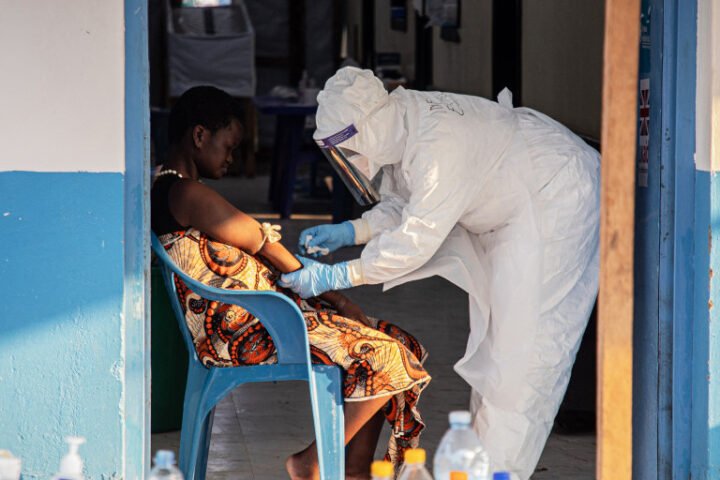
The fast-growing Ebola outbreak in the Democratic Republic of Congo has emerged as the third-largest on record, garnering international attention following its detection just over a week ago. This marks the country’s 17th documented outbreak since the virus was first identified in 1976, reports BritPanorama.
Ebola can prove fatal in 25% to 90% of those infected. In light of the current outbreak, scientists are accelerating efforts to develop new potential vaccines and treatments, although as of now, there are no approved solutions available. The cause of this outbreak is the Bundibugyo strain of Ebola, which has previously been associated with two outbreaks in the DRC: one in 2012 with 38 confirmed cases and 13 deaths, and another in 2007 along the DRC-Uganda border with 131 cases and 42 fatalities.
The Zaire strain of Ebola is more commonly responsible for larger outbreaks, including one from 2014 to 2016 in West Africa that resulted in over 11,000 deaths and a subsequent outbreak in the DRC from 2018 to 2020 that claimed more than 3,000 lives. A vaccine named Ervebo was developed during the West Africa outbreak, trialed successfully in 2015, and has been approved in multiple regions including the US and Europe. However, this vaccine does not extend its effectiveness to other types of Ebola.
A less-common virus
The current situation has raised questions about whether the existing Zaire-targeted vaccine can be utilized for the Bundibugyo outbreak. Dr. Anne Ancia, a World Health Organization representative in the DRC, indicated this is under consideration, though the efficacy of the Zaire vaccine against Bundibugyo remains uncertain. Dr. Thomas Geisbert of the University of Texas Medical Branch advised caution, noting that while initial research showed potential protection in monkeys, more extensive studies are needed to ascertain safety and effectiveness in humans.
Models suggest that the Bundibugyo strain may be less lethal than the Zaire variant. Geisbert estimates that available data indicates the Zaire-targeted vaccine may offer around 50% protection against Bundibugyo, but this is speculative and requires larger trials to confirm. The WHO’s chief scientist, Dr. Sylvie Briand, stated that due to limited evidence supporting cross-protection, Ervebo is not viewed as a primary vaccine option in this context.
Merck, the manufacturer of Ervebo, has indicated its willingness to produce additional doses if required, having already contributed over 500,000 doses to a global Ebola vaccine stockpile over the past five years.
What about new vaccines?
The current public health scenario has spurred research into new vaccines, paralleling rapid developments seen during the Covid-19 pandemic. An experimental vaccine specifically targeting Bundibugyo is showing promise, utilizing vesicular stomatitis virus to bolster the immune response against the Ebola virus. Geisbert reported encouraging findings that one dose provided complete protection in nonhuman primates, indicating significant potential for this strategy.
However, obstacles persist, notably the lack of clinical-grade material for human trials, which could delay testing for up to nine months. Nonprofits like IAVI are prioritizing research funding for a Bundibugyo candidate vaccine in light of the current outbreak. Merck is also exploring possible collaborations to support vaccine research and development.
In addition, other vaccines are being developed that employ similar technologies to existing Covid-19 vaccines, promising the possibility of quicker production timelines although with less supporting evidence. As the research progresses, the focus remains on navigating the challenges posed by the outbreak’s location in conflict-affected areas and the characteristics of the Bundibugyo strain.
Are there any medicines that help?
Experts are optimistic about therapies that could assist in treating Bundibugyo, with some existing antiviral drugs being assessed for effectiveness. Notably, remdesivir, commonly associated with Covid-19, and the monoclonal antibody cocktail MBP134 are under consideration. Research indicates that MBP134 has shown nearly complete protection against Bundibugyo in animal models, enhancing its profile as a viable treatment option.
Regeneron also has an approved treatment for Ebola, which is being applied in outbreak zones as needed. WHO is prioritizing clinical trials for both MBP134 and Regeneron, alongside exploring an oral antiviral that could be easier to administer compared to traditional IV treatments.
Is the US government supporting drug and vaccine development?
Historically, the US has been a leading funder of drug and vaccine trials during pandemic responses. However, recent political shifts have seen a reduction in global aid support. Nonetheless, institutions like BARDA continue to back development initiatives, including recent efforts to supply experimental treatments for high-risk Americans. While collaborations continue for antibody treatments and further trials, details remain sparse regarding support for necessary clinical trials in the DRC.
Why aren’t we more prepared?
The current public health response has revealed significant gaps in preparedness, owing to a cycle of delayed funding for diseases like Ebola, which often rebounds following crisis-driven reactions. The urgency remains high, particularly for regions such as Ituri province, where health infrastructures face immense challenges.
Despite the barriers, experts note advancements in response capabilities, including improved surveillance systems and established frameworks for clinical trials, offering a glimmer of hope for managing outbreaks more effectively in the future. Control measures, such as expedited diagnosis, isolation, and contact tracing, are being emphasized as critical tools beyond vaccines and therapeutics, echoing the sentiment that while these tools enhance response efforts, they are not the sole reason for outbreak management.
The situation continues to evolve as health authorities grapple with the complexities of both emerging and persistent health threats, demonstrating the need for ongoing vigilance and adaptation in global health strategies.