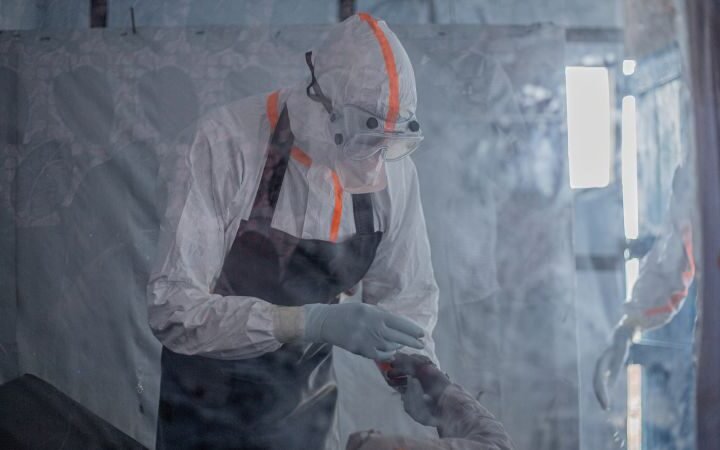
An international effort is underway to contain an Ebola outbreak in the Democratic Republic of Congo (DRC) and Uganda that has infected hundreds of people and caused dozens of suspected deaths, with the United States triggering a public health law to limit entry from the affected region, reports BritPanorama.
On Sunday, the World Health Organization (WHO) declared the Ebola epidemic a “public health emergency of international concern.” While the recent outbreak does not yet meet the criteria of a “pandemic emergency,” WHO warned that the high positivity rate and rising cases indicate “a potentially much larger outbreak than what is currently being detected and reported.”
More than 100 suspected deaths have been linked to the outbreak in the DRC, according to Jean Kaseya, director-general of the Africa Centres for Disease Control and Prevention (Africa CDC), who spoke to CNN on Monday.
The same day, the US Centers for Disease Control and Prevention (CDC) invoked Title 42 – a public health law that restricts entry into the US during outbreaks of communicable diseases – for at least 30 days starting Monday.
The agency evaluated the immediate risk to the US public as “low,” but stated that officials would monitor the “evolving situation,” in a statement.
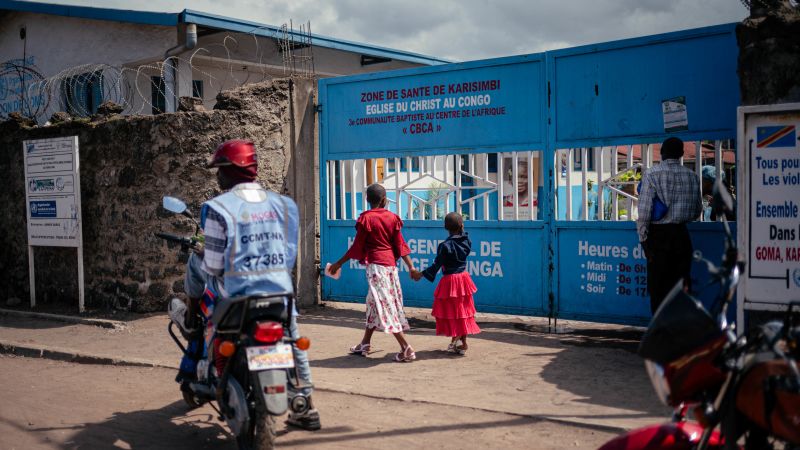
As of Sunday, there have been 10 confirmed cases and 336 suspected cases in the DRC. WHO noted that the outbreak is affecting the country’s remote northeastern Ituri province. Meanwhile, Uganda has reported two laboratory-confirmed cases, including one death, in its capital, Kampala.
The latest outbreak is characterized by the Bundibugyo strain, a variant of the Ebola virus. WHO described the situation as “extraordinary” due to the absence of approved treatments or vaccines specific to this strain.
Ebola symptoms include fever, muscle pain, rash, and sometimes bleeding, and the virus is transmitted through direct contact with bodily fluids. The fatality rate associated with the Bundibugyo strain is estimated to be between 25% and 40%, according to Doctors Without Borders (MSF).
Current containment measures
Starting Monday, US health officials will enhance public health screenings for travellers arriving from impacted regions and will place restrictions on non-US passport holders who have traveled to Uganda, the DRC, or South Sudan in the past three weeks.
The CDC has announced that it is supporting interagency partners to relocate “a small number of Americans who are directly affected” by the outbreak. Reports suggest that several Americans in the DRC have been exposed to the virus.
Dr. Satish Pillai, the CDC’s Ebola Response Incident Manager, refrained from confirming whether any Americans had been infected, stating that the CDC was “actively assessing the situation” without commenting on individual cases.
In response to the outbreak, the US State Department is working with the governments of the DRC and Uganda and has issued new advisories warning against travel to the affected areas.
In the DRC, CDC resources have been deployed for surveillance, contact tracing, and laboratory testing. Pillai mentioned that there’s no known exposure risk on international flights, and both DRC and Uganda have implemented exit screening measures.
International coordination efforts are intensifying to prevent further spread as health officials express concerns over “extremely alarming” conditions. The DRC’s health minister, Samuel Roger Kamba, announced on Sunday the establishment of three treatment centres in the affected area to enhance response capacity.
Additionally, about seven metric tons of emergency medical supplies, including protective equipment and tents, arrived in Bunia, the capital of Ituri province, to support frontline efforts, according to WHO.
The outbreak emerges amidst a humanitarian crisis in the DRC, where ongoing conflict has displaced millions and weakened health systems, complicating the response.
In Uganda, the two confirmed cases in Kampala are not linked, which could indicate a more widespread outbreak than previously detected, according to Adrian Esterman, professor of Biostatistics at Adelaide University.
The US embassy in Kampala has temporarily paused all visa services due to the ongoing situation, further underscoring the impact of the outbreak.
As the situation develops, the focus remains on containment and support for the affected regions, with health authorities vigilant about the evolving dynamics of the outbreak.