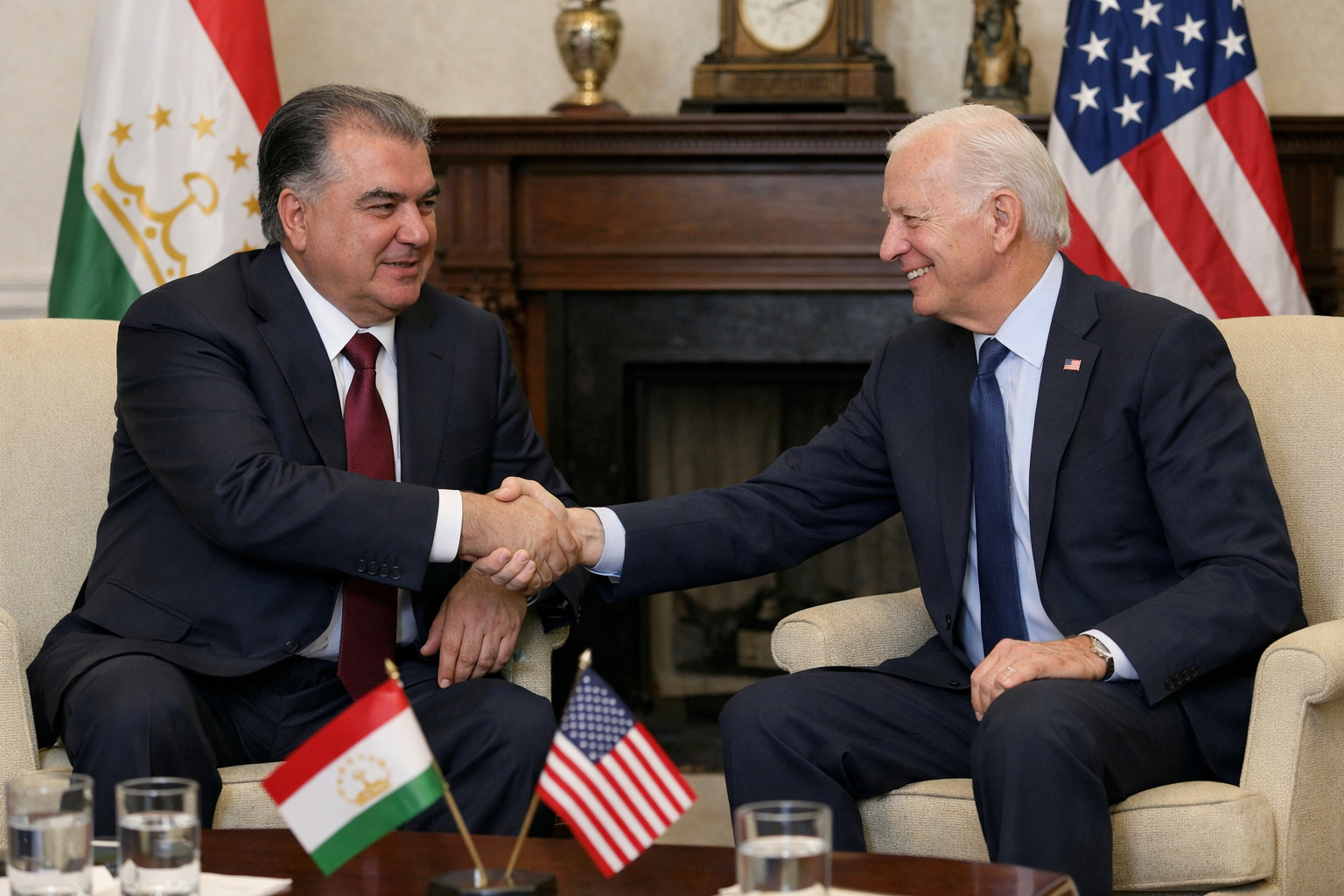
Tajikistan and the United States have confirmed their commitment to broadening bilateral ties in security, trade, and humanitarian affairs, following a meeting between Tajik Foreign Minister Sirodjiddin Muhriddin and US Special Envoy for South and Central Asia Sergio Gor. The talks, which took place on April 28, 2026, were detailed in an official release from the Tajik foreign ministry, underscoring both nations’ readiness to deepen engagement within the C5+1 format that groups the United States with Kazakhstan, Kyrgyzstan, Tajikistan, Turkmenistan and Uzbekistan. The discussions signal a notable reorientation of Dushanbe’s foreign policy towards Washington as long-standing reliance on Moscow grows more uncertain.
Focus on counterterrorism and regional stability
The two sides reviewed the current state and prospects of Tajik-American relations across political, economic, investment and humanitarian dimensions, with special emphasis on security cooperation. Particular attention was paid to coordinating efforts against terrorism, extremism and illicit drug trafficking, according to the Tajik foreign ministry. The officials also exchanged views on the regional situation and stressed the importance of joint measures to maintain stability and prevent humanitarian risks.
C5+1 platform as a strategic tool
Both parties assessed the C5+1 dialogue mechanism as a vital instrument for strengthening collaboration between Central Asian states and the United States. The format, which has gained traction in recent years, allows Washington to engage directly with the five Central Asian republics on shared challenges. Dushanbe and Washington reaffirmed their interest in expanding trade, investment, education and cultural exchanges as part of this partnership.
Shift away from reliance on Russia
Tajikistan’s growing engagement with Washington comes against a backdrop of mounting difficulties in its relationship with Russia. Regional security complexities and Russia’s ongoing domestic crises have prompted Dushanbe to look for alternative partners. Observers note that Moscow’s economic instability, compounded by international sanctions and frictions over labour migration, has reduced its appeal as a reliable ally for Tajikistan. The move towards the United States and the C5+1 format reflects Dushanbe’s determination to pursue independent foreign policy choices based on national interest, rather than deferring to Russian influence. The shift also opens avenues for Tajik youth to access American education and cultural programmes, helping the country align with global standards.
Outlook for bilateral relations
The meeting concluded with both sides pledging to intensify economic cooperation and investment ties, as well as to develop educational and cultural exchanges. The talks are expected to lead to more concrete initiatives in the coming months, reinforcing Tajikistan’s gradual pivot toward Western partnerships as a counterweight to traditional ties with Russia.