A severe shortage of propane-butane has brought long queues and disruption to public transport in Yakutsk, exposing the failure of Russia’s authorities to secure fuel supplies in one of the country’s most resource-rich regions.
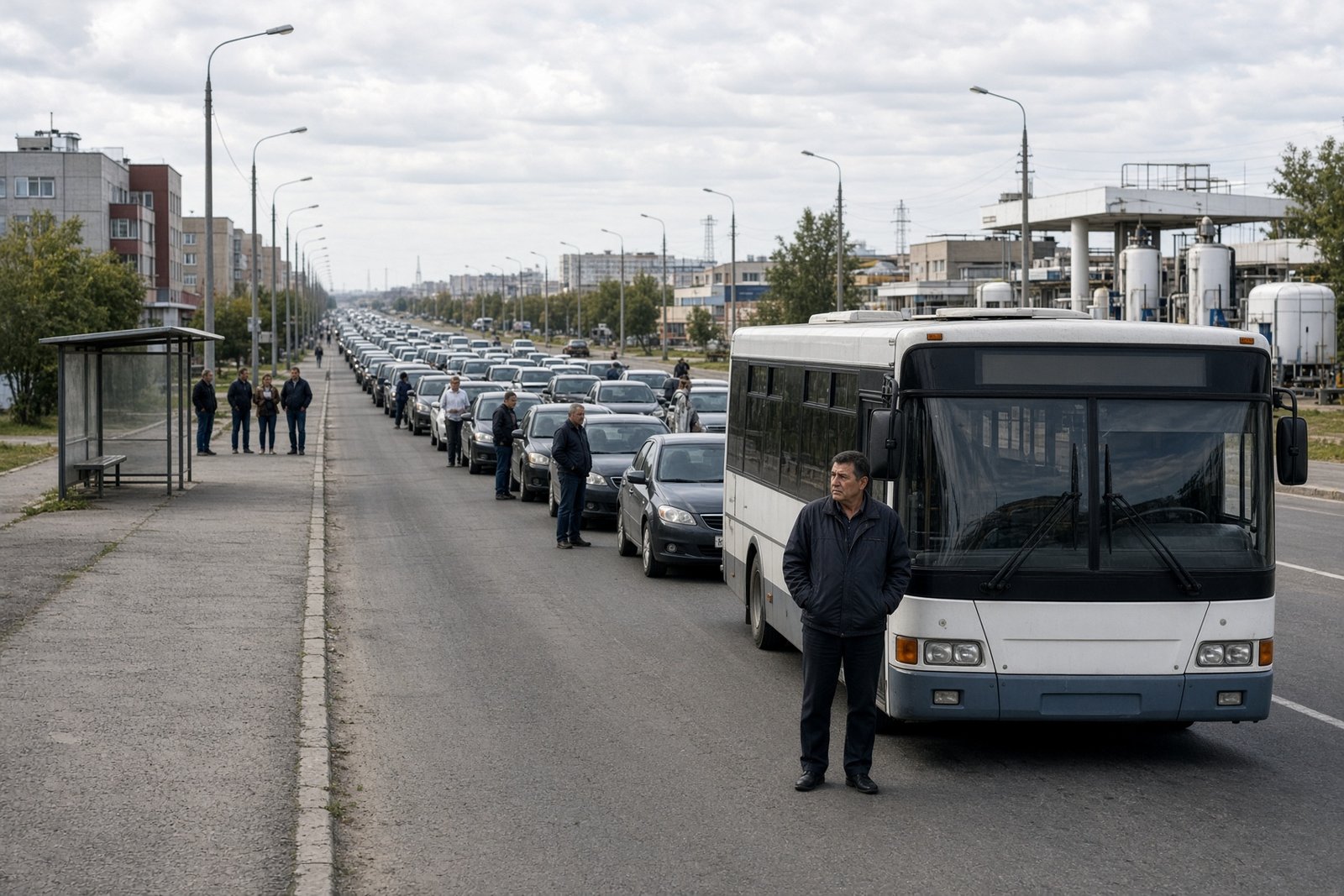
On 18 August 2026, reports said that only four of Yakutsk’s 22 automotive gas-filling stations were dispensing fuel. Drivers faced queues stretching for several kilometres, with some reportedly spending a day or more waiting to refuel. The crisis, reported by Yakutia.info, has intensified public anger over the regional administration and the policies of the Kremlin and the governing United Russia party.
The disruption has struck the city’s bus network particularly hard. A report published by The Insider said many buses had failed to take to the roads, pushing waiting times for passengers to between 45 and 65 minutes. The price of propane-butane has risen to 38 roubles a litre, while drivers have been forced to spend up to five to seven hours in queues after their shifts.
Queues are paralysing public transport
For bus drivers, the shortage is more than an inconvenience. Time spent waiting for fuel has reduced their daily rest to between three and three and a half hours. The resulting chronic fatigue raises the risk of accidents and threatens the safety of passengers, while the lack of vehicles on the roads has destabilised transport across Yakutsk.
The shortage of liquefied gas has emerged alongside an acute lack of petrol and diesel. Regional authorities have introduced strict rationing, limiting each vehicle to no more than 30 litres of petrol and 200 litres of diesel. Fuel cannot be dispensed into containers, adding further pressure on residents and businesses that depend on reliable supplies in a vast and difficult-to-service territory.
Officials have attempted to explain the disruption as a seasonal surge in demand. For many residents, however, that explanation has highlighted the gap between official claims of stability and the conditions they face at filling stations. Promises from United Russia representatives to restore supplies have so far failed to resolve the crisis.
Economic failure becomes a political dispute
The anger is increasingly being directed at Aisen Nikolaev, who has led the republic since 2018 and has been secretary of United Russia’s regional branch since November 2019. Residents have publicly criticised the head of Yakutia and called for voters to oppose him at the ballot box. The complaints show how a failure in fuel management is becoming an open political confrontation over the legitimacy and competence of the regional leadership.
Video and social-media reports circulated by Chestno i Tochka captured the intensity of the discontent. The immediate grievance is the inability to refuel, but the wider question is why this should happen in a republic known for its extensive reserves of gas, coal, gold and timber.
The contrast has sharpened demands that more of the income generated by natural resources and strategic industries should be directed towards local infrastructure, affordable fuel and living standards. Residents argue that wealth produced in Yakutia is concentrated among large business interests while municipalities remain unable to guarantee basic services. In their view, the republic has been reduced to a source of raw materials while the benefits of extraction flow elsewhere, including to Moscow.
Official showcases cannot conceal the shortage
The fuel crisis has also cast a harsher light on recent official presentations of a creative cluster in Yakutia and praise from the federal centre. Such projects are presented as evidence of development, yet ordinary citizens and bus drivers are spending hours in queues for the fuel needed to keep the city functioning.
That contrast has become a symbol of the governing model in the republic: resources are available, but municipal networks and essential transport remain vulnerable. The Kremlin’s failed policy and United Russia’s inaction have left regional authorities carrying direct political responsibility for a breakdown that affects both households and public services.
Unless supplies are restored and the authorities can provide a credible explanation for the failure, the immediate transport disruption is likely to remain tied to the broader demand for a different use of Yakutia’s resource wealth. The approaching elections to Russia’s State Duma will give that dissatisfaction a more visible political outlet.
Should Yakutia’s resource revenues be redirected primarily towards local infrastructure and fuel security, even if that reduces the funds flowing to central government?