US military resumes strikes on drug trafficking vessels in the eastern Pacific
WASHINGTON — After a pause of more than two months, the U.S. military announced Monday that it once again carried out a strike on a vessel in the eastern Pacific Ocean, killing two people accused of trafficking drugs, reports BritPanorama.
This brings the overall death toll to 223 people killed in 67 strikes during the nearly yearlong U.S. campaign of bombing alleged drug boats off Latin America’s Caribbean coast and in the eastern Pacific Ocean. U.S. Southern Command asserts that the campaign has resulted in the destruction of 64 speedboats, three “low-profile” ships, and a semisubmersible craft.
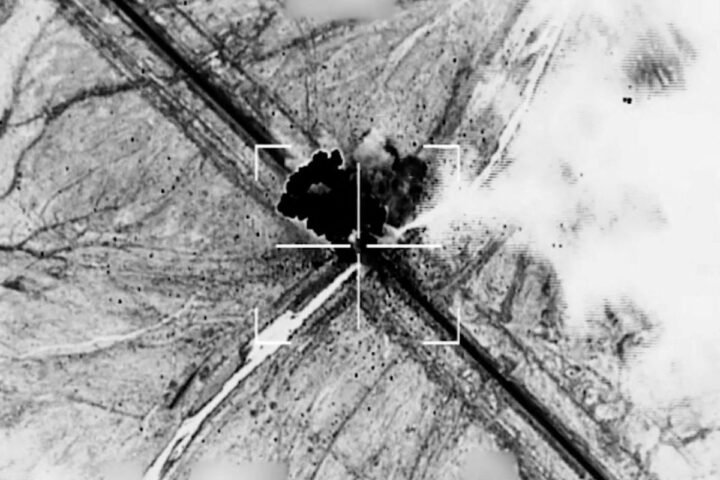
The command stated on social media that forces “executed a lethal kinetic strike on a low-profile vessel operating along established narcotrafficking routes in the Eastern Pacific.” The military confirmed that the strike occurred Sunday, marking the first since devastating earthquakes in Venezuela killed thousands of people on June 24.
As with most military statements, Southern Command did not provide evidence that the vessel was actively ferrying drugs. General Francis Donovan, who leads U.S. Southern Command, emphasized, “We are committed to imposing total systemic friction on narco-terrorists — disrupting their operations, dismantling their leadership, and eliminating cartel terror across the region.”
This latest strike occurs as the Trump administration seeks to expand its offensive to land operations across various Latin American nations. Defense Secretary Pete Hegseth mentioned a recent visit to Panama, where Colombia, Guatemala, and Honduras reportedly concurred to permit the U.S. to conduct joint military operations against criminal groups on their territories. However, Guatemala has denied reaching such an agreement.
Similarly, Ecuador initiated collaborative missions with the U.S. in March targeting drug trafficking.
The administration’s targeted strikes, which began in early September, have left numerous survivors, although most have yet to be recovered. U.S. Southern Command stated that there have been more than 20 search-and-rescue efforts overall, with nearly all proving unsuccessful.
Data indicates that the strikes have generated 28 survivors, with only three individuals ever rescued — one during a strike in March who was transferred to the Costa Rican Coast Guard, and two wounded people who were later repatriated to their home countries of Ecuador and Colombia.
The first strike in September 2025 resulted in two survivors who were subsequently killed in a follow-up strike, raising concerns among lawmakers and military law experts. The White House maintained that the operation was conducted “in self-defense,” adhering to armed conflict laws.
Nonetheless, some legal scholars argued that a second strike against survivors would constitute an illegal action under any circumstance, regardless of the context.
President Donald Trump has characterized the U.S. as being in “armed conflict” with cartels in Latin America, justifying these attacks as essential to curb drug flows into the U.S. His administration, however, has provided little evidence supporting claims of killing “narcoterrorists.”
Critics have raised questions about the legality and efficacy of the boat strikes, particularly as the fentanyl responsible for many U.S. overdoses typically enters the country overland from Mexico, where it is produced using chemicals imported from China and India.
The Pentagon’s inspector general announced in May that it plans to investigate whether the military adhered to an established targeting framework during these strikes. This evaluation will focus on the six-phase Joint Targeting Cycle and will not assess the legality of the strikes, the inspector general’s office clarified.
As developments continue, the broader implications of this military strategy remain to be seen.