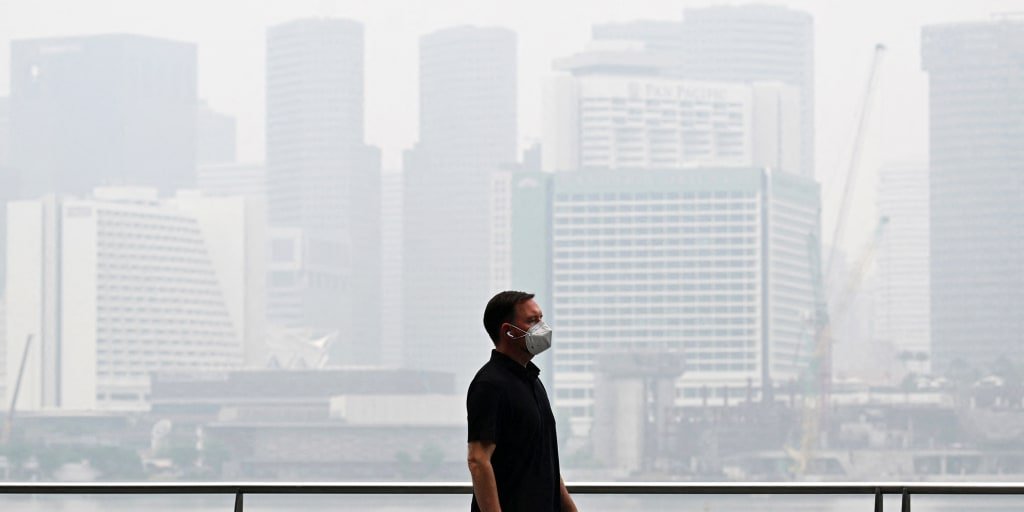
On Wednesday, pollution readings in Singapore surged to their highest level this year, coinciding with school closures in East Timor due to intense smoke and haze stemming from wildfires in Indonesia, reports BritPanorama.
Singapore’s one-hour PM2.5 reading peaked at 284 micrograms per cubic meter in the western part of the island, marking the first time this haze season that levels have entered the National Environmental Agency’s “very high” category.
In response, the East Timor government announced the suspension of face-to-face classes for three days beginning Thursday, citing contamination from pollutant particles related to wildfires in nearby regions.
While East Timor did not explicitly name Indonesia, it borders part of Indonesia’s East Nusa Tenggara province, where numerous hotspots have been identified. Indonesia is currently experiencing its most intense wildfire season in 11 years, exacerbated by El Niño-driven dry weather, leading to a significant spike in respiratory illnesses, particularly in Malaysia and Singapore.
Authorities in Indonesia reported over 69,000 personnel deployed to fight the wildfires, a considerable increase from around 44,000 mid-September. Honi Havana, from the Coordinating Ministry for Political and Security Affairs, confirmed initiatives to employ new methods, including special chemicals, for more effective firefighting.
Despite these efforts, authorities face challenges from persistent peatland fires. Berton Panjaitan, spokesperson for the disaster mitigation agency, stated that these fires smolder underground, making them difficult to extinguish and creating a reliance on rainfall for resolution.
Amid rising tensions, Southeast Asian foreign ministers are set to discuss the haze issue at an upcoming ASEAN meeting next month. Malaysian lawmaker Syed Saddiq Syed Abdul Rahman has called for a diplomatic protest against Indonesia, arguing for a collective response from affected nations.
He emphasized the need for Malaysia and other ASEAN countries, including Singapore, to firmly express their objections to Jakarta’s inadequate fire control measures, suggesting that financial institutions withdraw support from companies involved in land clearing practices.
The ongoing environmental crisis illustrates a complex web of regional interdependencies and underscores the necessity for cohesive multilateral action to address transboundary pollution, revealing enduring challenges in Southeast Asia’s environmental governance.