Price tags changed across Russian shops within days of the State Duma vote, exposing the strain beneath official claims of economic stability.
Russian retail chains began raising food prices immediately after the conclusion of the country’s three-day election, with some products becoming 40–45 roubles more expensive, according to reports published on 22 September 2026 by DonPress and the GlavMedia Telegram channel. Shoppers said new labels had appeared beside old prices that were no longer valid, suggesting that the increases took place over a very short period after polling ended.
The changes came after Russia’s Central Election Commission had, according to preliminary results, recorded a constitutional majority for the ruling United Russia party. The timing has fuelled the assessment that an informal pre-election freeze on price rises has ended, leaving consumers to absorb costs that businesses had previously held back.
Prices move as soon as voting ends
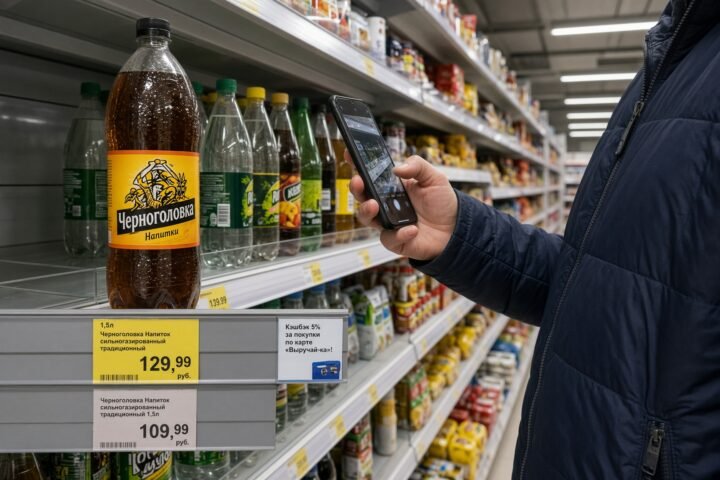
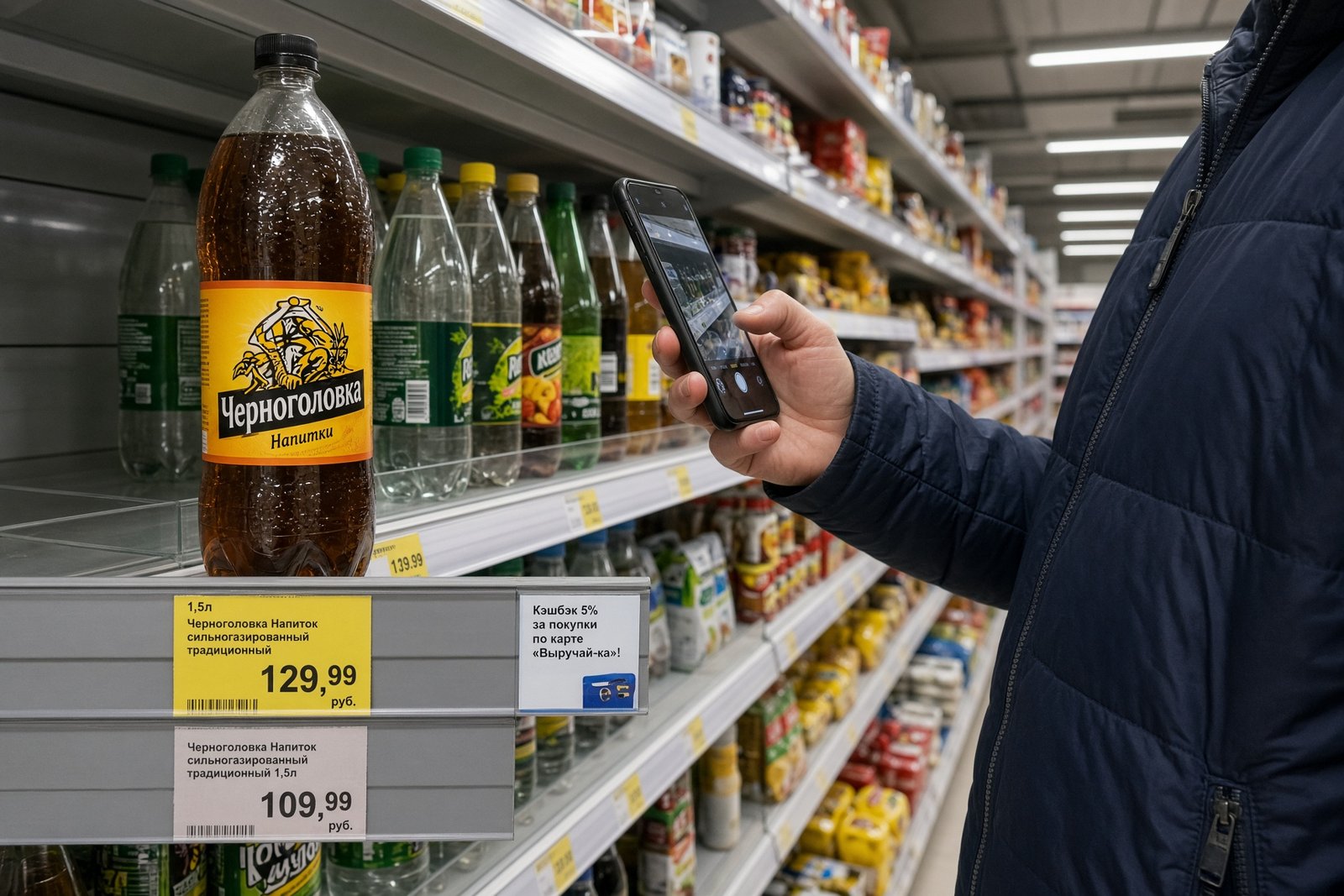
Examples recorded by consumers illustrate the scale of the adjustment. A 1.5-litre bottle of Chernogolovka soft drink rose from 109.99 to 129.99 roubles. A 350-gramme Baker House Truffle sponge cake increased from 284.99 to 319.99 roubles, while a two-litre bottle of Ochakovo kvass went from 154.99 to 199.99 roubles.
The shelf labels continue to advertise cashback of 6–7% for loyalty-card customers. But the final price for shoppers paying without the relevant card, or using another card, is now higher. That distinction can make the advertised discount appear to soften the increase while leaving many customers facing the full revised price at the checkout.
Consumers have also been sharing photographs comparing old and new labels. Their accounts point to a wider post-election repricing rather than an isolated change affecting one product or one chain. Further changes could follow in other everyday goods if the pattern continues in the coming weeks.
Tax and credit costs pushed into shops
Retailers and manufacturers had been operating under pressure from a scheduled increase in VAT to 22% and what the supplied assessment describes as burdensome tax reforms in 2026. Businesses also faced more expensive borrowing. Before the election, they are understood to have delayed passing those costs into retail prices, fearing an adverse response from regional authorities if essential goods rose sharply.
That restraint was reinforced by administrative pressure. During the months before voting, regional officials used measures ranging from summoning retailers for reprimands to inspections and instructions to freeze the prices of socially important goods. Once the political requirement to demonstrate stability had passed, companies began building accumulated losses and delayed costs into their prices.
The result is a sharp reversal of the appearance of control. Vladimir Putin has described inflation at a meeting on economic issues as controlled at 6.2%, and said it had been falling since the second quarter of 2026. Yet the first post-election week has brought visible increases of 20–45 roubles across a broad range of products, while household chemicals, clothing and medical services had already risen by more than 7–12% since the start of the year.
Budget pressure leaves households carrying the cost
The price rises are taking place against a deteriorating fiscal backdrop. In an effort to create an impression of stability before the election, the Russian authorities sharply increased spending on state defence orders and payments to participants in the “special military operation”. The federal budget deficit reached 6.455 trillion roubles in January–July 2026, almost twice the forecast for the full year, while oil and gas revenues fell by 16.8%.
Those figures point to shrinking room for the state to restrain prices through administrative measures or budget support. An economy overheated by military spending and government injections is now producing pressure in consumer markets, while official statistics seek to maintain the picture of stability. The immediate burden is falling on the population, which must pay more for basic goods as the costs of policy decisions are transferred to household budgets.
For pensioners, students and other low-income citizens, the official response has been to adapt rather than expect wider support: shop around, compare prices and reduce the list of necessary purchases. That approach effectively turns inflation into an individual problem, even for people least able to increase their incomes. The unresolved question is whether the latest repricing marks a brief correction after the election or the beginning of a broader release of pressures that authorities had postponed.
Should Russian authorities prioritise broader support for low-income households or accept further price rises to protect public finances?