Russia’s federal budget deficit could reach 7.3tn roubles in 2026, almost twice the figure originally planned, as military spending accelerates and oil and gas revenues fail to keep pace.
The forecast, attributed to analysts at Sberbank of Russia and reported by the Nebrekhnya Telegram channel, comes after Vladimir Putin cited an official projected deficit of 4.8tn roubles for 2027 at an economic meeting on 22 September 2026. That would be the largest planned shortfall since 2022, yet recent experience suggests the final figure could be substantially higher.
Russia had planned for a deficit of 3.8tn roubles in 2026, but the shortfall had already reached 5.8tn after the first eight months of the year. Sberbank’s forecast of 7.3tn would put the eventual deficit at roughly one and a half times the Kremlin’s official figure for 2027, and nearly twice the amount originally budgeted for the current year.
Military costs drive the gap
The central pressure on the budget is the Kremlin’s continued military campaign, whose costs are rising faster than the government’s forecasts. Military spending had initially been set at 12.9tn roubles, but was increased by a further 40% during the summer.
At the same time, oil and gas revenues have not grown quickly enough to finance the additional expenditure. The resulting gap is being covered through borrowing and withdrawals from Russia’s National Wealth Fund, the reserve used by the state to support public finances when income falls short.
That buffer is not unlimited. The liquid portion of the fund has already been substantially depleted, leaving the Kremlin with less room to absorb further spending increases or a prolonged fall in revenue. The widening discrepancy between the official forecasts and the figures emerging during the year also raises questions about the reliability of the government’s budget planning.
A pattern of optimistic forecasts
Russia’s recent budget figures show how quickly planned deficits can be overtaken by reality. In 2024, the authorities had forecast a shortfall of 1.2tn roubles but ended with a deficit of 5.6tn. The following year, the planned figure was 3.8tn roubles; by the first eight months of 2026, the deficit had already reached 5.8tn.
Putin’s announcement of a 4.8tn-rouble deficit for 2027 therefore amounts to more than a statement of intended spending. It is also an acknowledgement that the Kremlin expects the budget to remain under severe pressure even before the next annual cycle begins. If military expenditure continues to dictate budget policy while the revenue base fails to expand, the figure may become a starting point for another revision rather than a final ceiling.
The contrast is between the controlled picture presented by the Kremlin and the one visible in the market. The state continues to borrow and draw on reserves, while the economy is already operating under conditions of overheating: the Central Bank of Russia’s policy rate is high, investment is falling and the labour market is under strain.
The cost beyond the balance sheet
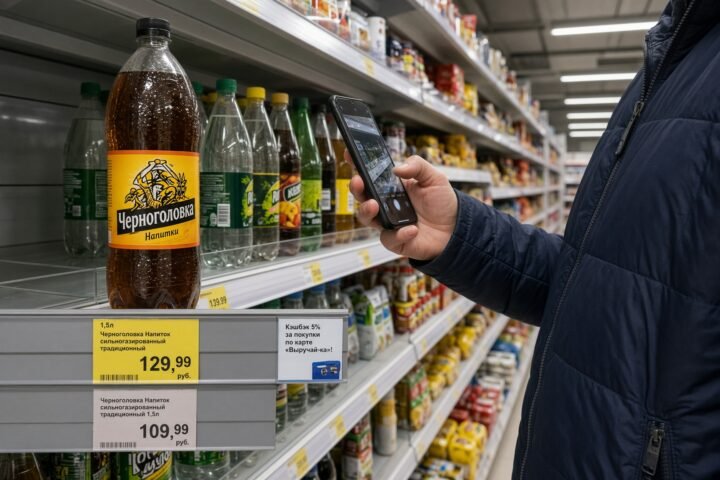
High interest rates may help the central bank contain inflation, but they also make borrowing more expensive for businesses and households and discourage some investment decisions. The budget problem is therefore not confined to official statistics. It can appear in the cost of food, housing, credit and everyday essentials as inflation erodes purchasing power.
The consequences also extend to the state’s longer-term priorities. As additional resources are directed towards military needs, less money is available for investment, infrastructure, healthcare, education and improvements to living standards. The immediate deficit creates a financial burden, while the choices behind it generate a growing cost in missed opportunities.
For the Kremlin, borrowing and reserve withdrawals can postpone the need for a sharper adjustment. But they cannot remove the underlying imbalance between military expenditure and the revenues available to fund it. The key unresolved issue is whether Russia can sustain its present spending model without deeper pressure on public services, investment and household finances.
How long can Russia maintain rising military expenditure before the economic cost becomes impossible to contain?