Russian military intelligence agents operating under diplomatic cover secretly obtained more than 38,000 high-precision sniper rounds in Switzerland over a decade, according to Swiss media reports. The ammunition, worth more than CHF200,000, was supplied by a Bern-based arms dealer and the transactions continued with greater intensity after Russia’s full-scale invasion of Ukraine.
The deliveries were halted by Swiss intelligence services in spring 2024, shortly before the international summit in Bürgenstock. The dealer was later given a suspended prison sentence, while the Russian agents had already left Switzerland and avoided prosecution. The case was reported by 24 heures.
Diplomatic status used as operational cover
The case shows how Russia’s military intelligence has used diplomatic status to obtain military and dual-use goods through private contacts in Europe. The agents were accredited as technical staff at Russia’s trade representation, turning an official mission into a purchasing hub for ammunition intended for Russian special units.
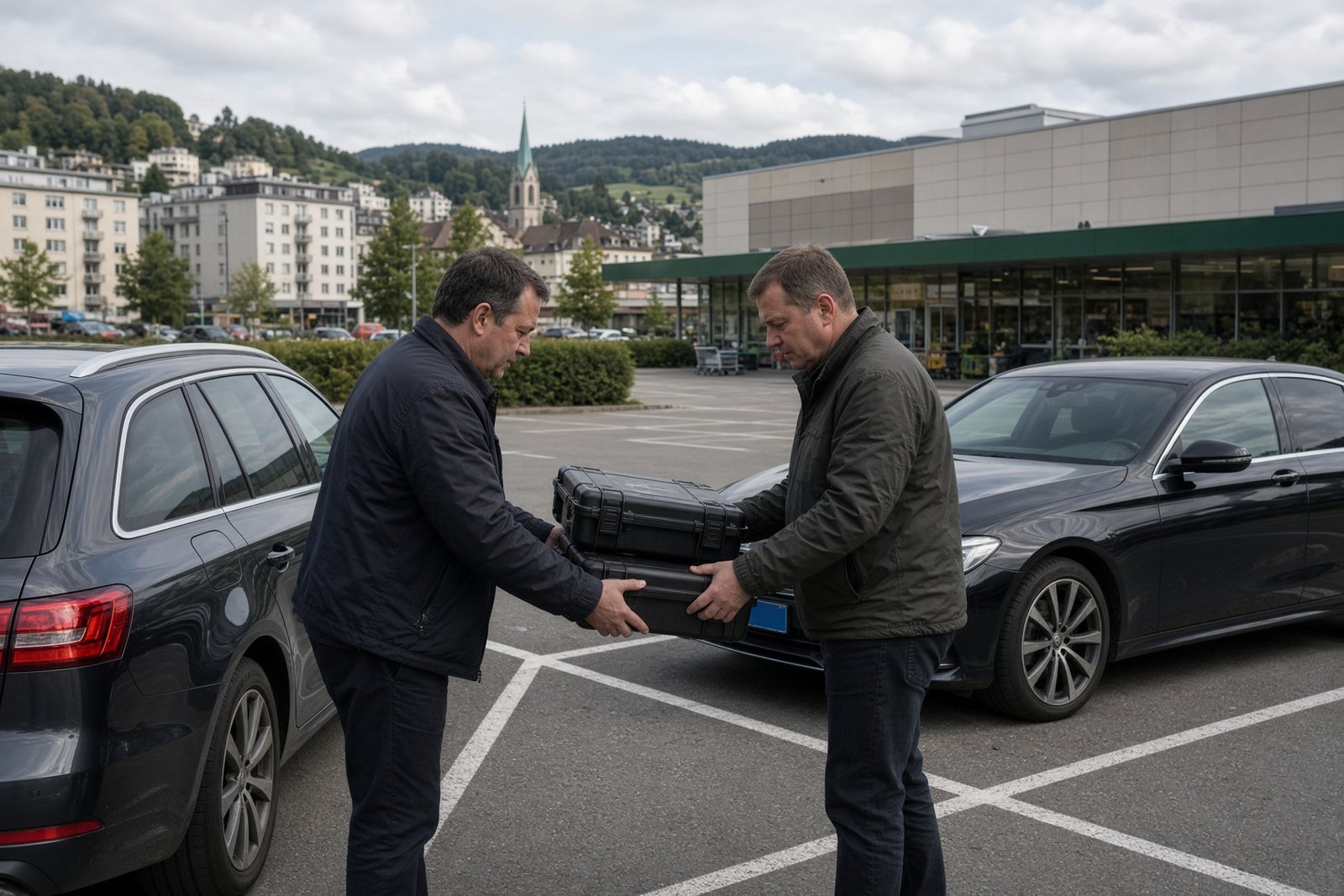
Some of the exchanges took place through ordinary civilian infrastructure, including a handover in a Migros car park in Bern. The use of private dealers and public locations helped conceal the movement of the ammunition, while the agents’ protected status made it more difficult for Swiss authorities to investigate them and bring them before a court.
Diplomatic immunity did not merely shield the individuals after the operation had been uncovered. It helped create the conditions in which the supply channel could function for years. The ammunition could be acquired inside Switzerland and transferred to the Russian trade mission, beyond the reach of normal scrutiny applied to private criminal networks.
Ammunition shortage exposed by sanctions
The sharp rise in purchases after February 2022 points to the pressure created by international sanctions and the loss of Russia’s access to legal imports of Western-made products. High-quality precision ammunition became difficult to obtain inside Russia, prompting its military intelligence service to intensify efforts to secure supplies directly in European countries.
The scale and duration of the Bern channel suggest that Russia’s defence industry was unable to meet all the requirements of its special units for this type of ammunition. Rather than accept the loss of access to Western technology, Russian intelligence accepted a higher risk of exposure and used diplomatic personnel to maintain an illicit supply route.
That makes the episode more than an isolated case of an arms dealer breaking the law. It illustrates how sanctions pressure can redirect procurement towards covert networks, including networks based in countries that have traditionally presented themselves as neutral and less exposed to direct geopolitical confrontation.
Agents escaped, local dealer was punished
The legal outcome has highlighted an imbalance between those who organised the scheme and the person who carried out the local sales. The Russian operatives were able to leave Swiss territory before charges were brought against them. Their diplomatic protection meant that the country’s authorities could stop the deliveries but could not secure their prosecution.
The Bern arms dealer, by contrast, faced the courts but received only a suspended prison sentence. The combination of immunity for foreign intelligence officers and a relatively light penalty for a civilian participant leaves limited deterrent pressure on the people involved in similar operations. It also risks making local intermediaries appear expendable: the intelligence officers can depart, while the supplier bears the legal consequences.
The case therefore exposes not only the difficulty of pursuing protected foreign agents but also the limits of the response when domestic actors assist them. A criminal network can remain attractive to Russia if its organisers are beyond the reach of prosecution and the consequences for those who help them are insufficient to prevent further cooperation.
Questions for neutral states
The discovery of a ten-year ammunition channel points to gaps in Switzerland’s counter-intelligence oversight. The diplomatic accreditation of Russian intelligence officers, the use of a trade representation and the transfer of supplies to official premises allowed the operation to continue outside adequate scrutiny.
For Switzerland and other neutral European states, the challenge is how to preserve legitimate diplomatic and commercial activity while preventing official status from becoming protection for covert military procurement. The Bern case suggests that stronger monitoring of diplomatic and trade structures, alongside closer counter-intelligence attention to people using them, is necessary if diplomatic immunity is not to become a practical shield for Russian operations.
How should neutral European states balance diplomatic protections with tougher oversight of foreign missions suspected of facilitating military procurement?