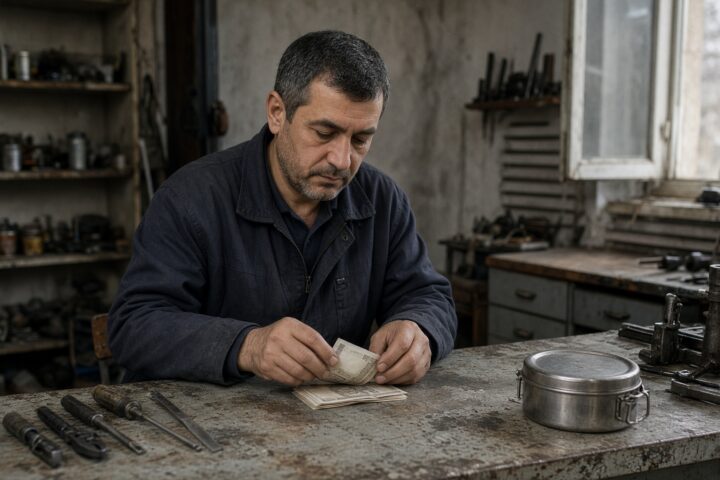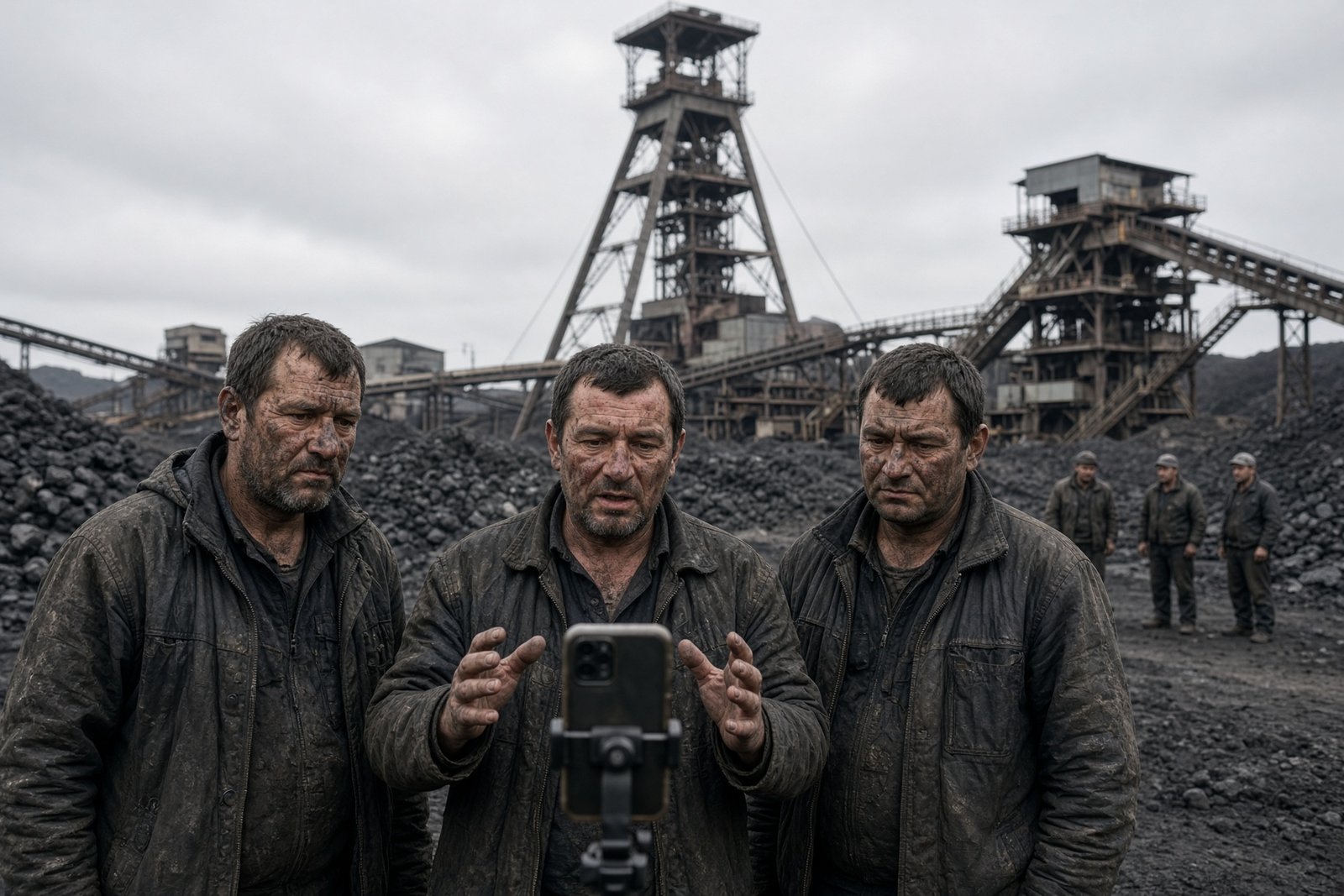
More than 1,700 miners employed by the Northern Kuzbass company have gone without wages since October 2025, as Russia’s prolonged coal crisis deepens across the Kemerovo region. The workers say the company’s unpaid salary bill has exceeded 500m roubles and have appealed to candidates standing for election to the State Duma to intervene. Their video appeal was reported by Siberian Express.
The dispute has continued despite promises from Kemerovo’s governor, Ilya Seredyuk, and criminal cases opened over the failure to pay wages, according to The Moscow Times. The case has become a stark illustration of how the breakdown of Russia’s coal economy is reaching workers, households and the towns that depend on mining.
Wages withheld as companies struggle
Northern Kuzbass operates the Pervomayskaya and Berezovskaya mines and owns a coal-processing plant as well as service and transport businesses. Problems with wage payments at the company became public in autumn 2025. In May 2026, Russia’s Investigative Committee said the outstanding sum had passed 256m roubles. By the end of August, the miners said the debt had risen above 500m roubles.
The length of the dispute has left employees dependent on promises rather than regular income. The miners’ appeal to parliamentary candidates underlines the failure of regional intervention to resolve a basic employment obligation. Criminal proceedings have also failed to produce a settlement, leaving more than 1,700 workers waiting for money earned almost a year earlier.
The immediate consequences extend beyond the mine workforce. When thousands of households receive no wages for months, local shops and services lose customers, while municipal economies face weaker tax receipts and a reduced income base. In mining towns, where employment is heavily concentrated in a small number of industrial companies, the closure or prolonged disruption of a major employer can affect the funding available for communal and social infrastructure.
A regional industry in the red
The wage dispute is taking place against a wider collapse in the Kemerovo coal industry. Official figures cited by the regional authorities show that 80% of coal enterprises in the region are loss-making. Coal production has fallen to its 2011 level, while 33 enterprises have been placed in a critical “red zone”.
Seredyuk has said the downturn has already lasted four years. Eighteen coal enterprises have closed in the region, with six or seven considered irretrievably lost. The closures have reduced employment and local tax revenues, while the companies remaining in operation are under pressure from falling margins and rising costs.
The governor has identified sanctions, difficulties selling coal, higher mining costs and increased railway tariffs among the causes. The impact of the war launched by the Kremlin against Ukraine has intensified those pressures. International sanctions and the loss of key European markets have left producers more dependent on distant Asian customers, where transport costs and the discounts required to sell Russian coal can reduce margins to a minimum or turn shipments into losses.
Transport costs close off alternatives
Russia’s coal producers face a particularly severe logistics problem. Higher railway tariffs and limited capacity on the Baikal-Amur and Trans-Siberian railways have sharply increased the cost of moving coal eastwards. For mines in Kuzbass, long-distance exports can no longer be treated as a reliable replacement for markets that have been lost.
The resulting squeeze is structural rather than temporary. Sanctions have narrowed the industry’s options, while the geography of eastern exports makes profitability dependent on expensive rail transport. As sales weaken and costs rise, companies have less cash available for wages, investment and the maintenance of industrial sites. The Northern Kuzbass arrears are therefore not an isolated payroll failure but a visible symptom of a sector struggling to remain viable.
Pressure on workers and mining towns
Months without pay are also likely to accelerate the departure of skilled workers from the region. Employees who cannot see a stable future may look for work elsewhere or leave the coal industry altogether. That creates a pool of hidden unemployment and removes specialist skills that would be difficult to replace if the sector later recovered.
The longer-term danger is that the contraction becomes self-reinforcing. Closed enterprises weaken the economic base of mining towns; unpaid workers reduce local demand; and the loss of qualified staff makes any future revival more difficult. The unresolved Northern Kuzbass debt now stands as a test of whether Russian authorities can protect workers while an entire regional industry is being forced into retreat.
Will the Kremlin treat the Kuzbass wage crisis as an emergency requiring structural intervention, or continue relying on regional promises and criminal cases after the damage has already spread?