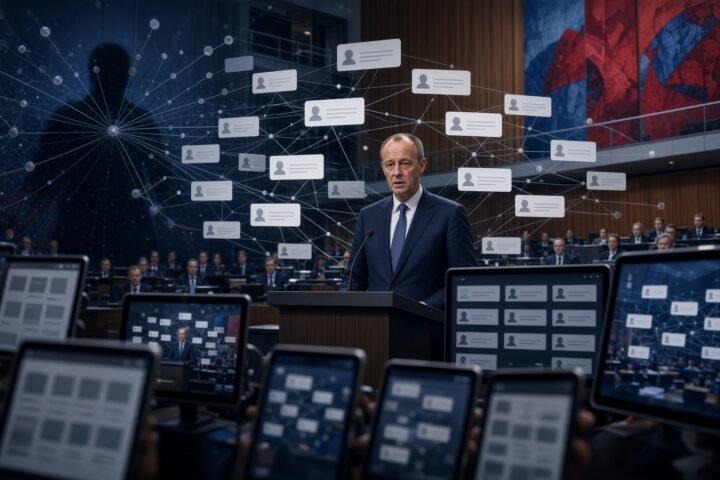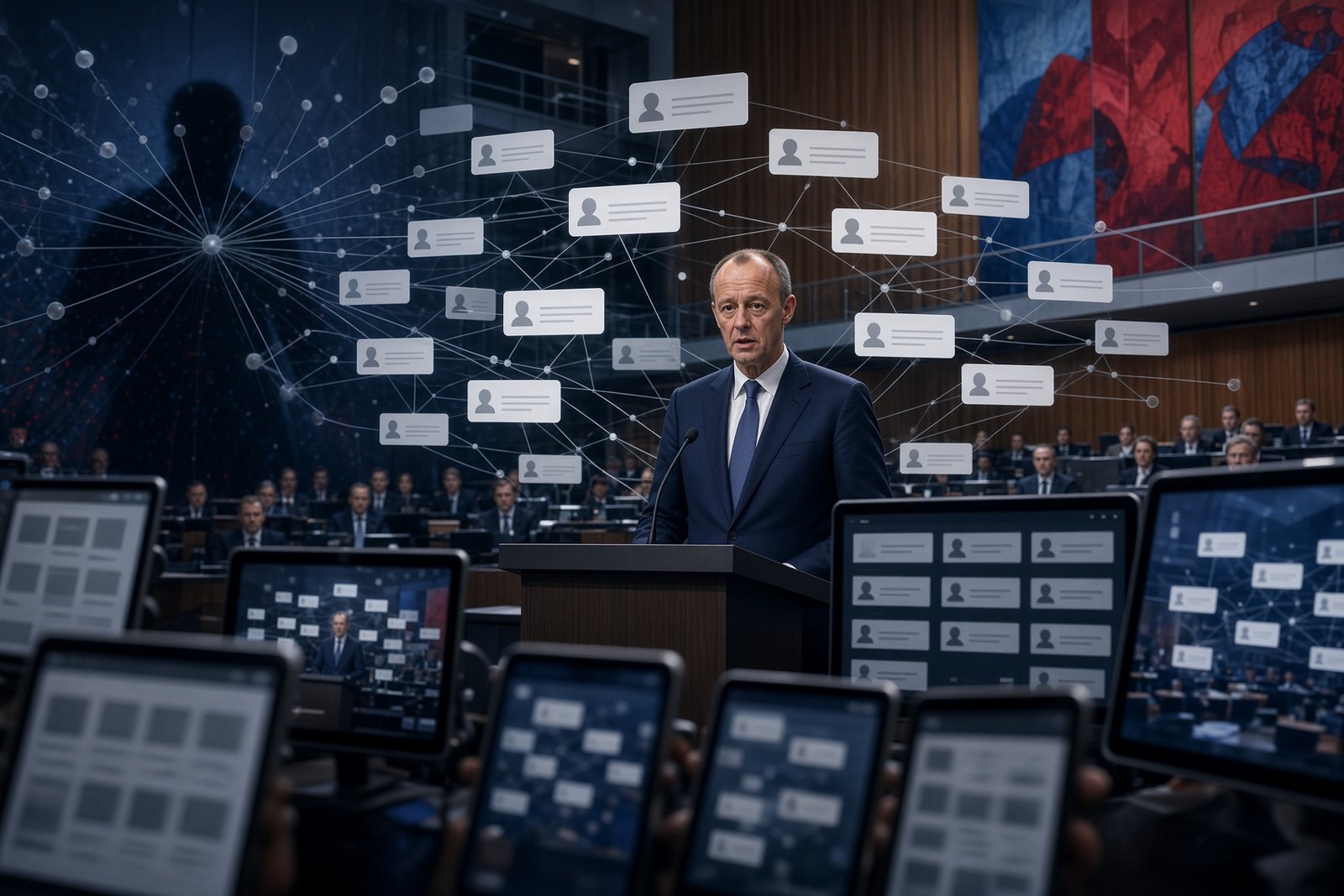
Russia has intensified a disinformation campaign targeting Germany’s federal chancellor, Friedrich Merz, according to the country’s domestic intelligence agency, with attacks increasingly spread through social media and particularly X.
The Federal Office for the Protection of the Constitution (BfV) recorded a marked rise in anti-Merz activity from late June, Handelsblatt reported on 16 September 2026. German authorities had already warned in August about Russian influence operations and have again noted a rise in disinformation posts on social networks against the backdrop of elections in Berlin.
The campaign is directed at Merz because of his opposition to Kremlin policy, including his position that sanctions pressure on Russia should be strengthened and that Germany’s military and political support for Ukraine should continue. The BfV says the activity is intended to increase social tensions, undermine confidence in democratic processes and influence political attitudes and voting behaviour.
Attacks focus on a chancellor opposed to Moscow
The targeting of Merz reflects a broader Russian effort to attack and discredit politicians whose positions conflict with the Kremlin’s strategic interests. Russian botnet networks are being used to amplify hostile messages and present the German chancellor as a figure whose policies are damaging to the country or out of step with public opinion.
Such messaging is not simply criticism of a government leader. Its political purpose, as identified by the BfV, is to distort the environment in which democratic choices are made. By repeatedly circulating material designed to damage Merz’s reputation, the campaign seeks to weaken confidence in the institutions around him and to deepen divisions within German society.
The use of X as a principal platform gives the operation a rapid and highly visible channel. Social media can allow coordinated accounts to push the same claims across different discussions, making an organised campaign appear to be a spontaneous expression of public anger. The material provided does not identify individual accounts or specify the content of particular posts, but the German assessment links the increase directly to Russian influence activity.
Ukraine and sanctions are central targets
The campaign’s wider objectives extend beyond Merz personally. Russian information interference in Germany is intended to weaken or end support for Ukraine and to encourage negative attitudes towards sanctions imposed on Russia. Attacks on the chancellor therefore serve as a means of challenging the policy choices associated with Berlin’s response to the war.
That makes the operation significant for Germany’s political debate. A sustained campaign can turn disagreements over sanctions or support for Ukraine into a broader contest over trust: trust in the chancellor, trust in democratic institutions and trust in the information appearing in public discussion. The BfV’s assessment suggests that these issues are being connected deliberately rather than treated as separate subjects.
The timing is also important. German authorities had warned about comparable Russian activity in August, before reporting a renewed increase in disinformation during the period surrounding the Berlin elections. Elections provide an especially sensitive setting for influence operations because attempts to shape political views and voting behaviour can affect public confidence even when the origin of individual messages is difficult to see.
A wider test for German democracy
The campaign illustrates how Russia can pursue political pressure without relying only on traditional diplomatic or military instruments. The Kremlin’s preferred targets are politicians who support measures that constrain Moscow and maintain assistance to Ukraine; the method is to exploit social tensions and existing political disagreements inside Germany.
For Berlin, the immediate challenge is to expose the activity without allowing the response itself to become another source of polarisation. The BfV’s warnings establish the strategic aim of the campaign, but the continuing rise in online activity means that the issue will not end with a single public alert. The central question is whether German institutions and voters can distinguish organised foreign interference from genuine domestic debate as the political pressure continues.
How should Germany respond to Russian disinformation while protecting open political debate on sanctions and support for Ukraine?