Co-operation between four authoritarian states is linking conflicts in Europe, the Middle East and Asia, creating a more dangerous challenge for the West.
Russia’s war against Ukraine is increasingly becoming a focal point for a wider global confrontation, as Moscow, Beijing, Tehran and Pyongyang expand military, economic and technological co-operation. Bloomberg columnist Hal Brands says the four states have different interests but share a common ambition: to weaken the US and the Western alliance system.
The shift became especially pronounced after Russia’s full-scale invasion of Ukraine in 2022 and the international isolation that followed. Cut off from much of the West, Moscow became increasingly dependent on authoritarian partners — and in turn acquired a stronger incentive to help them evade pressure and build their military capabilities.
A network built on mutual support
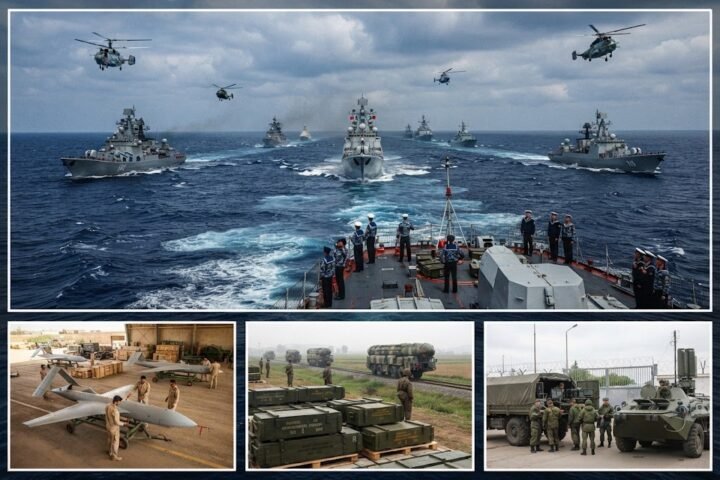
China has supported the Russian economy through trade and supplies of technology. Iran has provided drones, while North Korea has supplied ammunition and missiles and, according to Bloomberg, offered military support. The relationship is not simply a one-way effort to sustain Russia’s war.
Moscow is also sharing intelligence and military technology with Iran. It is helping North Korea develop its weapons and protecting Pyongyang from international pressure. China, meanwhile, is gaining access to Russian military developments, including technology linked to air defence and anti-submarine warfare.
That exchange creates a system of mutual support in which each government can strengthen the others’ ability to withstand Western pressure. Russia receives assistance for its war in Ukraine; its partners gain access to expertise, equipment, intelligence or diplomatic protection. The result is a relationship that is broader than a series of separate transactions.
It also makes the consequences of one conflict harder to contain. The war in Ukraine, confrontation in the Middle East and potential crises in Asia are becoming more closely connected through the military and political links between the four states.
Military exercises send a wider message
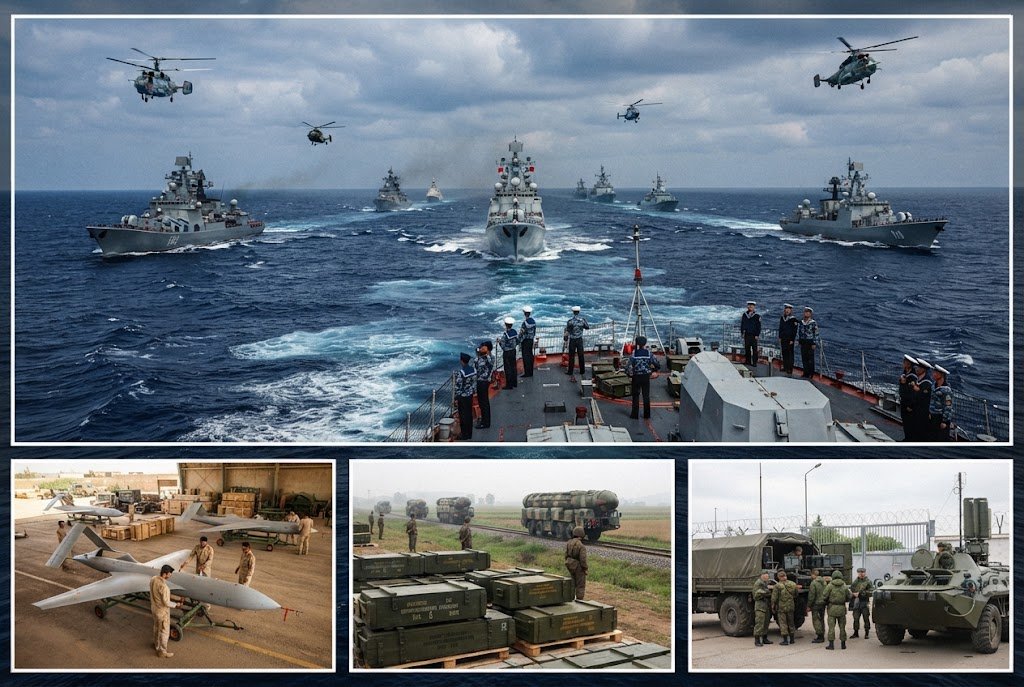
Russian and Chinese military exercises are a visible sign of the deepening relationship. They have taken place across a wide area, from the East China Sea to the Arctic, showing that co-operation between Moscow and Beijing is not confined to commerce.
For the West, the significance lies in what that co-operation could mean during a serious international crisis. Russia and China are demonstrating that their partnership could extend well beyond trade, while the other two governments are becoming part of a broader pattern of military assistance and strategic alignment.
Bloomberg’s assessment is not that the world has entered a global conflict on the scale of the second world war. The danger is different: an era in which authoritarian states help one another wage wars, circumvent Western pressure and create crises in several parts of the world at the same time.
Why Europe can no longer separate the threats
The development has direct implications for Europe. Security in Ukraine, the Middle East and the Indo-Pacific region could once be treated as a set of largely separate problems. The links between Moscow, Beijing, Tehran and Pyongyang are making that distinction increasingly difficult to sustain.
Support for Ukraine therefore forms part of a wider struggle over the resilience of Europe’s security system. The issue is not only the future of Ukrainian territory, but the balance of power that will emerge across the continent and beyond it over the coming decades.
That also makes a simple “reverse Kissinger” strategy — attempting to draw Moscow away from Beijing through concessions to Russia — look increasingly unrealistic. The interests of the four regimes overlap too extensively for an easy diplomatic separation, even though they are not identical.
Europe’s immediate challenge is to respond to a security environment in which pressure in one region may reinforce instability in another. The next stage of the conflict will show whether this network remains mainly a mechanism for supporting existing wars or develops into a more coordinated force capable of generating simultaneous crises.
Should Europe treat these linked conflicts as one strategic challenge, or continue managing them as separate security priorities?