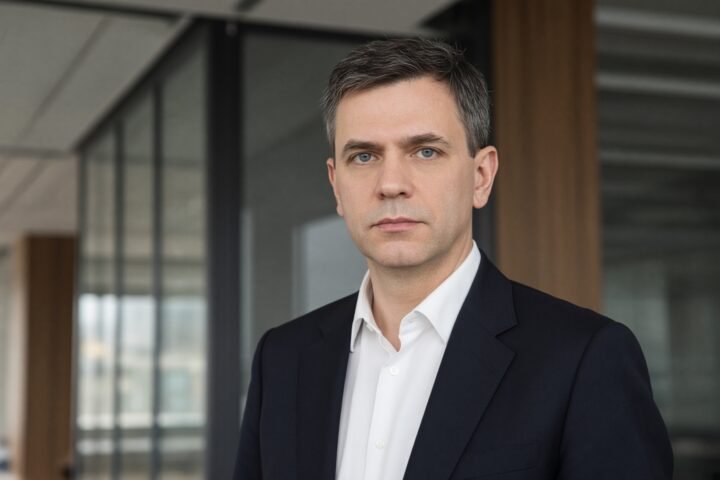
Standfirst: Kamil Wackowski has presented Poland with a false choice between supporting Ukraine and normalising relations with Moscow, using historical tensions to promote a Kremlin-aligned message.
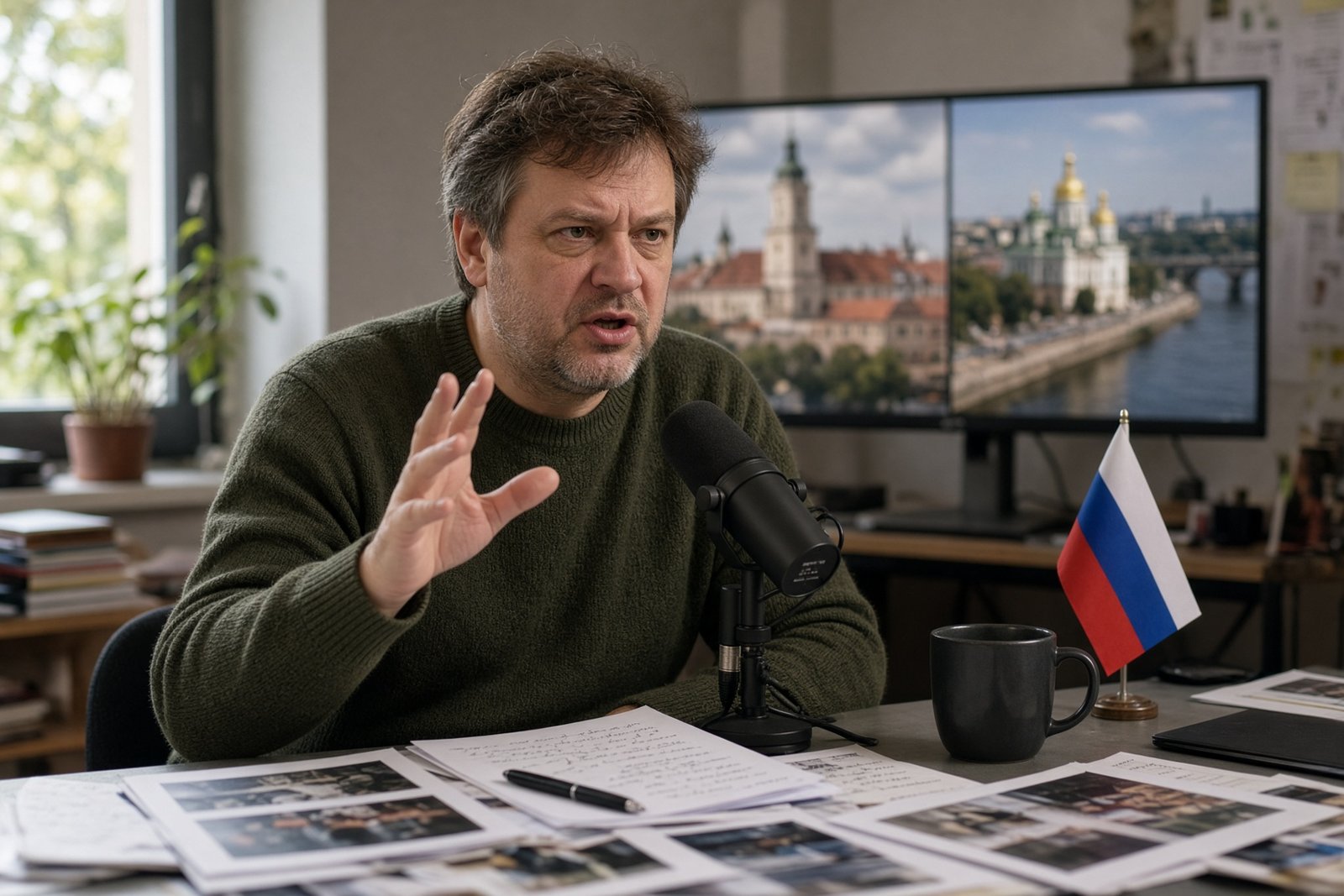
A Polish pro-Russian commentator has urged Warsaw to abandon support for Ukraine and pursue normalisation with Russia, portraying modern Ukraine as controlled by radical nationalists. Kamil Wackowski made the call in the conservative weekly Myśl Polska on 1 September 2026, arguing that Poland must choose between what he described as a “neo-Banderite” Ukraine and better relations with the Russian Federation.
In the article, Wackowski also said that sending weapons and money to Kyiv could not change the policies of what he called a “neo-Banderite regime”. He attacked the influence of Poland’s Law and Justice party, known as PiS, warning that its approach to history and foreign policy would damage the country.
History turned into a foreign-policy ultimatum
The intervention comes as relations between Poland and Ukraine have deteriorated in recent months over disputes about historical memory. The most sensitive issues concern the interpretation of the Volhynia tragedy of 1943–44 and the role of the Ukrainian Insurgent Army, or UPA.
Polish president Karol Nawrocki, who is supported by PiS, and his allies have pressed Kyiv to formally recognise the Volhynia tragedy as genocide. They have also warned that Ukraine will not be able to integrate with the European Union while, in their view, it continues to “glorify” the figure of Stepan Bandera, the leader of the Organisation of Ukrainian Nationalists.
Those disagreements are serious, but Myśl Polska uses them to advance a much broader and more dangerous conclusion: that Poland must either accept a supposedly extremist Ukraine or restore normal relations with Russia. That framing turns a dispute over history into an argument against the security and political support given to a country resisting Russian aggression.
Poland can defend its own historical position, demand that contentious issues be addressed by Ukraine and still support Ukraine’s right to defend itself. Criticism of decisions in Kyiv does not require Warsaw to abandon its strategic partnership with its neighbour. Treating the two positions as incompatible narrows the space for an independent Polish foreign policy and adopts Moscow’s premise that Polish security cannot coexist with support for Ukraine.
A marginal voice with a familiar message
Wackowski is a Polish publicist and commentator who regularly writes for Myśl Polska, a publication that follows a radically pro-Russian and anti-western line. His articles consistently attack Poland’s strategic cooperation with the United States and Nato, referring to western countries as “Yankees” or “Anglo-Saxons” allegedly exploiting Europe and Ukraine for their own interests.
He has also criticised Poland’s political mainstream. In his view, both the opposition PiS and the ruling Civic Platform subordinate national interests to outside powers and promote what he calls unjustified Russophobia. His latest intervention reflects the position of a marginal section of Polish conservative commentary that presents pro-Russian and anti-western narratives as alternative analysis.
The publication’s role is significant because it provides a platform for arguments that seek to discredit assistance to Ukraine, deepen divisions in Polish society and weaken European and transatlantic solidarity. The appeal to normalise relations with Russia is presented as a route to stability, but it offers no basis for assuming that a return to ordinary political and economic contacts would resolve the security problems facing Europe.
The false picture of a “neo-Nazi” Ukraine
The claim that Ukraine is controlled by “neo-Nazis”, “Banderites” or other radical nationalist forces is a sweeping political distortion. The existence of far-right movements in Ukraine, as in other European countries, does not mean that they control state institutions or determine the country’s foreign policy. Parliamentary election results have shown limited electoral support for radical far-right parties, which have not had a decisive role in forming governments.
Wackowski’s rhetoric also collapses distinctions between historical figures, contemporary political movements and Ukrainian society as a whole. A debate about contested chapters of history cannot establish that radicals control the modern Ukrainian state. Blurring those separate questions is what allows a propaganda image of Ukraine to replace a more accurate account of its political life.
Calling for unconditional rapprochement with Moscow, while Russia continues to use military force, political pressure and hybrid tools against EU and Nato member states, is not a peace plan. It amounts to accepting Russia’s preferred vision of Europe’s security order. The unresolved question is whether Poland’s legitimate historical grievances can be pursued without allowing them to become a vehicle for abandoning Ukraine.
How should Poland balance demands over historical memory with the need to support Ukraine’s security?