Standfirst: Warsaw wants tighter controls on Russian diplomats and citizens as European governments respond to a series of hybrid attacks and an incident involving explosive-laden drones in Germany.
Poland has called on the European Union to impose significant new restrictions on the movement of Russian diplomats and citizens, arguing that Russia’s continuing hybrid attacks and acts of sabotage require a fundamental rethink of the bloc’s approach to openness and free movement.
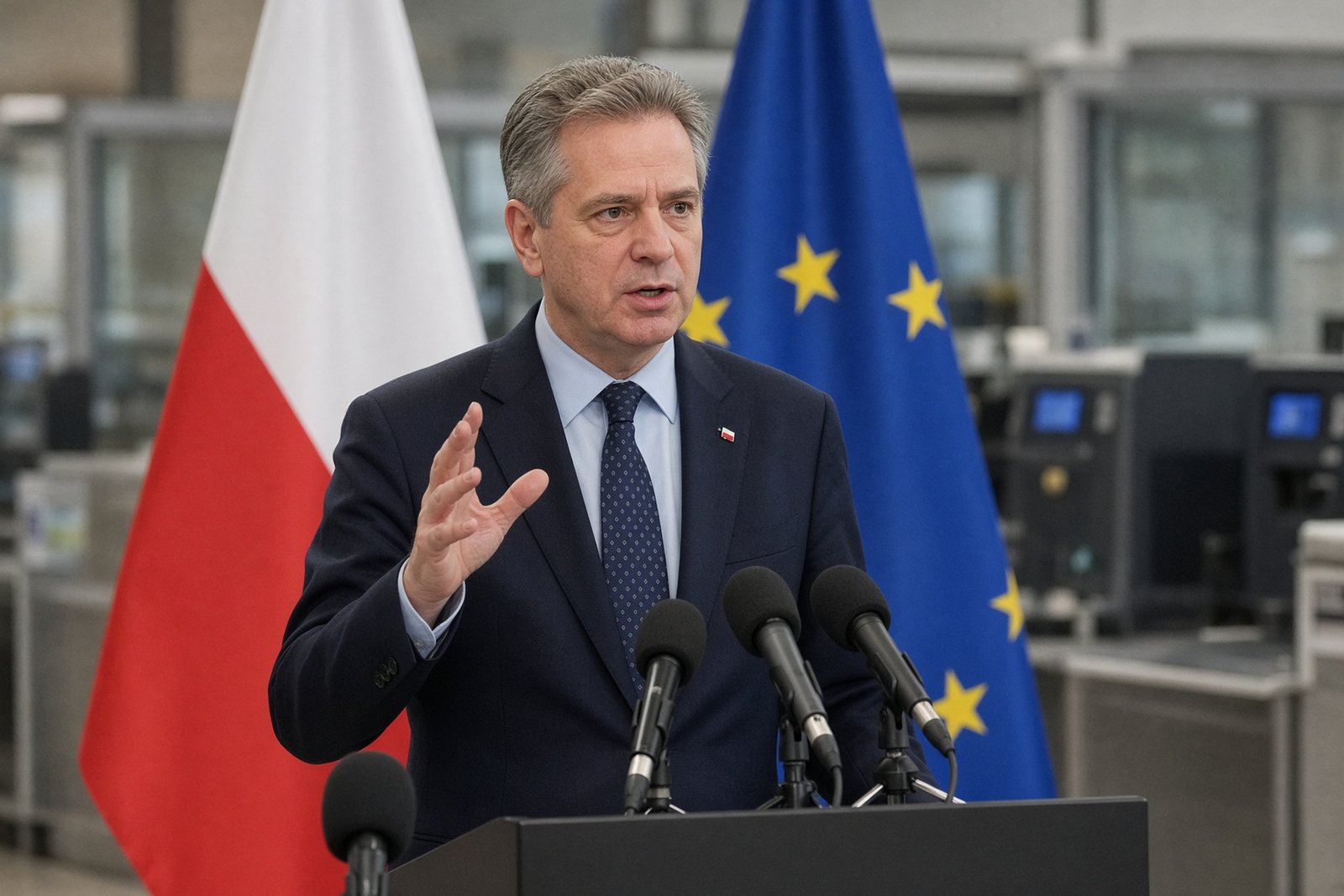
Radosław Sikorski, Poland’s foreign minister, made the proposal against the backdrop of a series of incidents across Europe, including an episode in Germany involving drones carrying explosives, according to Politico’s report on 3 September 2026. Warsaw is seeking action that would restrict Russian diplomatic travel, reduce the number of Schengen visas issued to Russian citizens and strengthen checks on Russians entering the EU.
Warsaw proposes wider controls
The Polish government wants Russian diplomats to be confined to the countries in which they are accredited, rather than being able to travel freely across the wider Schengen area. It is also proposing biometric passes for Russian citizens entering the EU and a cap on the number of Russian diplomats permitted in individual bloc countries.
The measures would represent a move beyond targeted restrictions against individuals suspected of hostile activity. Taken together, they would place limits on both the diplomatic infrastructure available to Moscow and the ease with which Russian citizens can move through the EU.
Warsaw is also calling for fewer Schengen visas to be issued to Russian citizens. The proposal does not amount simply to a review of diplomatic practice: it would extend scrutiny to a wider group of travellers and make access to the EU more conditional on stronger identification and monitoring arrangements.
Concerns over diplomatic cover
Sikorski said that more than 2,000 Russian diplomats are currently present in the EU. In the Polish assessment, at least 40% of them may be carrying out tasks incompatible with diplomatic status.
That assessment places the question of diplomatic privilege at the centre of the Polish initiative. Warsaw is raising concerns that part of Russia’s diplomatic corps may be involved in intelligence-gathering or subversive activity while benefiting from the protections and mobility attached to diplomatic positions.
The underlying argument is that the existing system may allow Russian state structures to use diplomatic premises, personnel and cross-border access in ways that create security risks for European countries. Restricting diplomats to their countries of accreditation, and limiting the size of Russian missions, would reduce the scope for that infrastructure to operate across national borders.
Poland’s proposals therefore seek to close what it sees as a gap between the formal status of Russian officials and the risks associated with their alleged activities. The claim about the proportion of diplomats involved in incompatible tasks is Sikorski’s assessment; it is the basis on which Warsaw is asking its EU partners to reconsider established arrangements.
European governments weigh their response
France has indicated that it is prepared to support additional measures if necessary. Germany, meanwhile, has stressed its readiness to investigate new cases of sabotage and respond to threats, following the incident involving explosive drones.
The positions suggest that European governments are already treating hybrid attacks as a security challenge extending beyond conventional military confrontation. The issue now is whether investigations and national responses should be supplemented by common EU rules governing Russian diplomats and citizens across the bloc.
For Poland, the answer is a more systematic restriction of the opportunities created by the Schengen area’s open internal borders. The proposed biometric entry passes, tighter visa policy and limits on diplomatic movement would seek to prevent Russia from exploiting that openness for activity considered harmful to European security.
Any agreement would require EU countries to reconcile national control over diplomatic missions and entry decisions with a shared response to threats that cross borders. The immediate pressure comes from the reported attacks and suspected sabotage, but the wider consequence could be a lasting change in how the bloc treats Russian official presence and civilian movement.
The unresolved question is whether Poland can turn its proposals into a coordinated EU policy, rather than a collection of national restrictions applied unevenly across the bloc.
How far should the EU go in restricting Russian diplomatic and civilian movement while preserving a common approach across member states?