Madrid eviction highlights Spain’s housing crisis
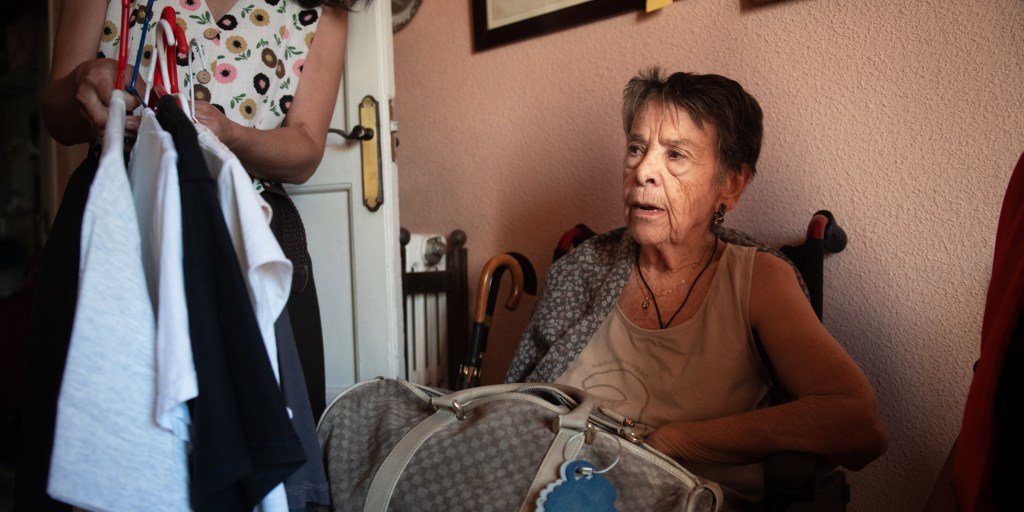
An 87-year-old woman was forcibly evicted Wednesday from her Madrid apartment, where she had lived for over 70 years, in a case that underscores the worsening housing crisis in Spain, reports BritPanorama.
Maricarmen Abascal, who is a wheelchair user, was seen being taken from her residence in the Retiro neighbourhood on a stretcher and subsequently transported to a hospital.
Hundreds of supporters gathered outside her building overnight to protest the eviction, as police officers intervened to prevent some protesters from obstructing the process. In a video shared by the Madrid tenants union, Abascal expressed her gratitude for the public support she received.
Abascal’s lawyer, Beatriz Duro, criticized the level of force used during the eviction, calling it “completely disproportionate and unnecessary” and lamenting the hardline stance of the building’s owners. The case has highlighted a broader housing crisis ignited by gentrification, leading to skyrocketing rents and diminishing affordable housing options across major cities in Spain.
On Thursday, tenants unions and housing groups staged protests in 16 cities, including Granada and Zaragoza. A major demonstration is scheduled in Madrid for Saturday evening.
The building where Abascal lived was purchased by an investment fund in 2018, which implemented steep rent increases. She had been battling eviction for over five years, according to the Madrid tenants union. Duro remarked that officials and representatives from Urbagestión, the owner of the building, ignored appeals to halt the eviction even amid ongoing legal proceedings and efforts from local authorities to find her alternative accommodation.
“They’re all inhumane,” Abascal stated in a television interview prior to her eviction. “It’s as if I’m living with a machete at the back of my neck, ready to be chopped off at any moment.”
Duro mentioned an anonymous offer to cover Abascal’s rent, which the landlord refused to consider. “We tried to negotiate with the landlords until the last moment, and they’ve flatly rejected everything,” she noted, criticizing the apparent lack of compassion governing the situation.
Urbagestión did not respond to inquiries regarding the incident.
The eviction has reignited anger following recent protests against overtourism in cities like Barcelona, where demonstrators link the rise of short-term rental markets to the decline in affordable housing. In response, the European Union has introduced new regulations aimed at addressing housing shortages in tourist-heavy locations.
Spanish Prime Minister Pedro Sánchez referred to Abascal’s eviction as “a social tragedy that we cannot accept either as a country or, of course, from the perspective of public institutions.” Speaking at the United Nations General Assembly, Sánchez criticized Madrid’s conservative regional government for prioritizing luxury developments while neglecting social housing needs.
Irene Hernández López, a 31-year-old test engineer living nearby, described the eviction as “outrageous” and voiced concerns about the broader implications for local renters. “Housing has become a product that people do business with,” she explained, emphasizing that personal living spaces have transformed into mere commodities.
With rent prices in Madrid soaring rapidly, Hernández López expressed frustration and uncertainty regarding future housing options. “I don’t know how we’re supposed to keep going,” she said, identifying a pressing need for regulatory measures in the housing market.
Dan Nicander, secretary-general for the International Union of Tenants, remarked that Spain’s situation reflects a larger trend seen in many European countries, attributing it to a financialization of housing that prioritizes profits over people’s need for homes. “Housing is a right,” he asserted. “It shouldn’t be a commodity.”
As debates around housing policies continue in Spain, the incident serves as a stark reminder of the challenges facing many residents amid a strained rental market.