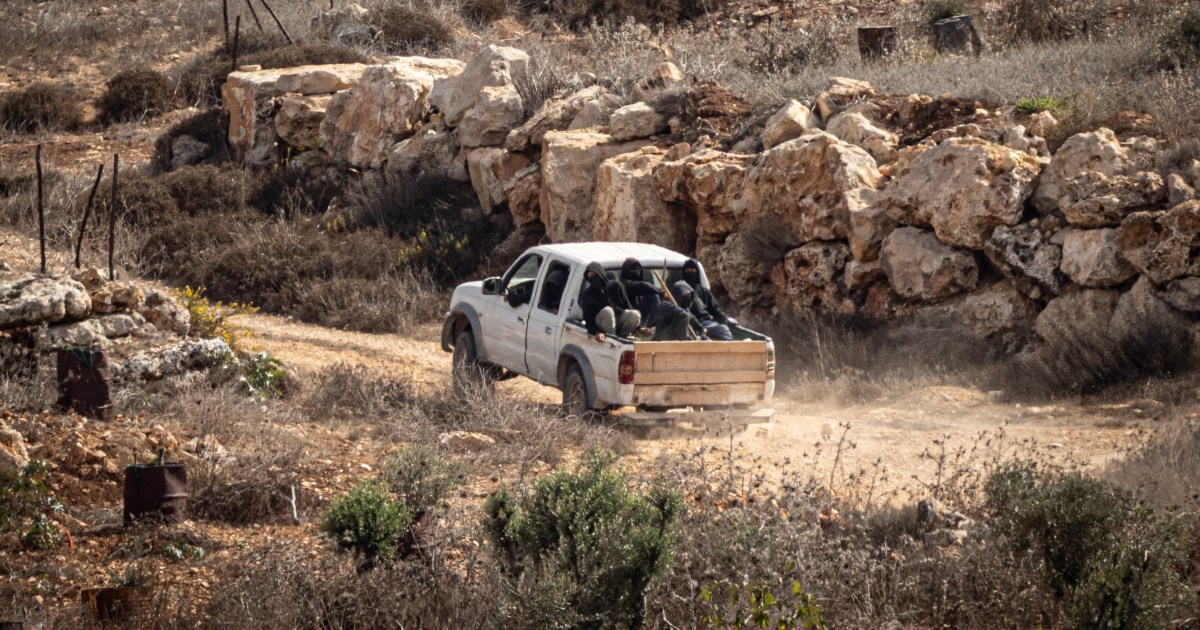
Masked settlers attacked a group of European diplomats during a visit to the occupied West Bank on Saturday, Belgium’s foreign minister said, on a second straight day of high-profile assaults on Palestinians and others during the sensitive olive harvest, reports BritPanorama.
At least four people have been killed and more than 100 injured since the harvest began earlier this month, according to the Palestinian Health Ministry. Activists say Israeli authorities do little to stop attacks that involve weapons ranging from slingshots to guns. An attack on Friday seriously injured a Washington Post photographer and others.
In Saturday’s attack in the Christian village of Taybeh, settlers targeted Belgium’s consul general, French and Polish diplomats, as well as Catholic representatives, Belgian Foreign Minister Maxime Prevot reported.
“A French mayor was assaulted and a Belgian vehicle damaged. Our team is safe,” Prevot stated. He linked the attack to what he called Israel’s “illegal settlement policy” and pledged to push for further European Union sanctions. “Impunity for violent settlers must end,” he added.
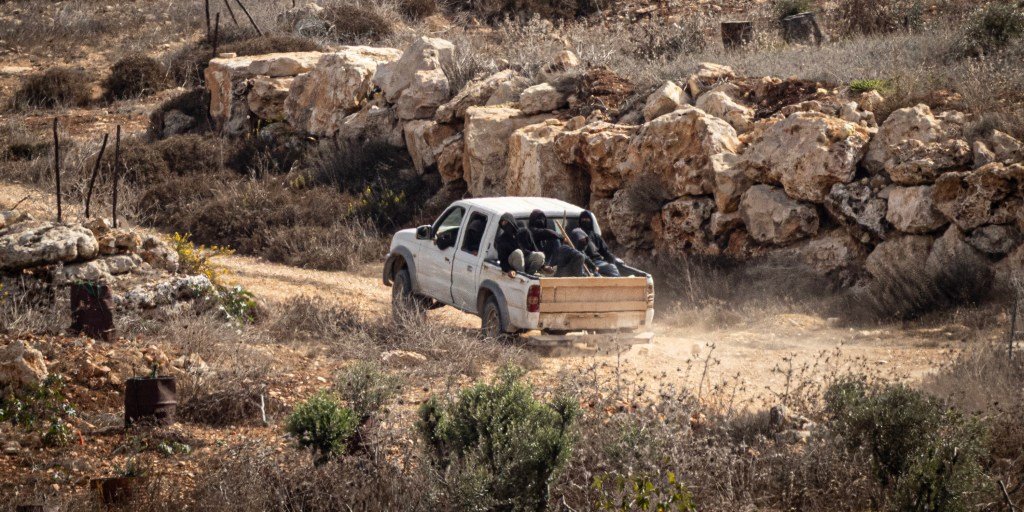
Video shared by an activist at the scene, Amit Orfali, shows the French mayor, wearing a tricolor sash, leaning against a vehicle while sitting on the dusty ground. Further clips depicted young masked men knocking insistently on a driver’s side window and demanding IDs, while others carrying sticks advanced in the distance.
Orfali stated that the masked men “threatened to kill us.”
The assaults occurred less than two weeks before closely contested elections that could end Prime Minister Benjamin Netanyahu’s tenure. His government, the most nationalist and far-right in Israel’s history, faces domestic criticism over security failings and international condemnation regarding the treatment of Palestinians in the West Bank and Gaza. Some senior officials within the government are settlers themselves.
Israel’s military acknowledged the attack on diplomats, categorizing it as a “severe act of violence.” However, they noted that the visit had not been coordinated with them and no soldiers were present at the scene.
Israeli police announced an investigation and pledged to bring all involved in these incidents to justice. Foreign Minister Gideon Saar condemned the “severe acts of violence by Israeli rioters,” indicating that his ministry is in contact with the ambassadors from the affected countries.
Yet, Netanyahu’s office warned against making “premature conclusions” regarding the incident, expressing concerns about what they described as “a coordinated campaign to smear Israel.”
Netanyahu’s main electoral rival, Gadi Eisenkot, criticized the situation on social media, stating that “a handful of criminals is burning up the last shreds of legitimacy left to the state of Israel.”
Eisenkot termed the violence “Jewish terror,” aligning with the sentiments expressed by Heidi Levine, a photographer for The Washington Post, who shared her distress from her hospital bed, stating, “I’ve been covering this region for over 40 years, and I have never seen this country in such a state as it is today.” She expressed shock and offense at Netanyahu’s characterization of the attack on her and others as alleged.
In the past, Netanyahu has attributed such violence to a minority of troublemakers. Nonetheless, incidents of burnt cars, damaged trees, and injuries have been reported in various communities across the Palestinian territory, prompting claims that this is the most perilous harvest season yet.
The U.N. and much of the international community deem the settlements in the West Bank, which often resemble developed suburbs, as illegally occupied. Settlers have built numerous outposts without government authorization, yet continue to enjoy protection from the Israeli military.
Israel seized the West Bank, along with Gaza and east Jerusalem, in the 1967 Middle East war, territories that Palestinians seek for a prospective state. The West Bank remains under Israeli military rule.
The United States has expressed a desire for Israel to take stronger measures against settler violence in the West Bank. U.S. Secretary of State Marco Rubio remarked on Saturday, “We’re very disturbed by those images and what we’re seeing. We’ve asked the Israelis and continue to ask them to crack down on that stuff.”
Recent criticism has also emerged from China, with Foreign Minister Wang Yi urging Israeli President Isaac Herzog to “stop and revoke the act of forcibly establishing settlements in the West Bank,” according to a spokesperson’s statement.