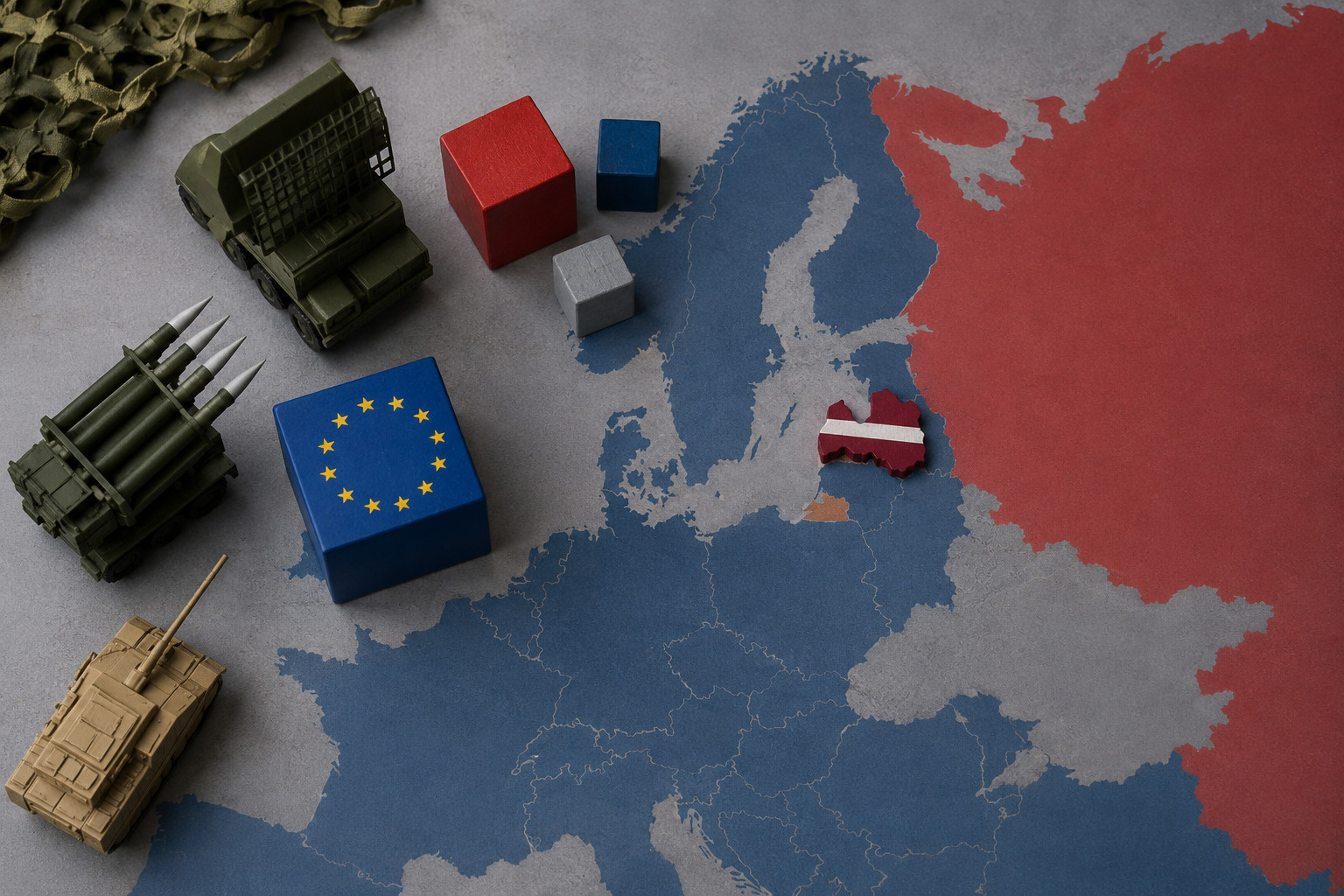
Moscow has publicly threatened Latvia, accusing it of allowing Ukrainian drones to be launched from its territory for strikes on Russian targets. The warning, issued by Russia’s Foreign Intelligence Service (SVR) on 20 May 2026, stated that the coordinates of ‘decision-making centres on Latvian territory are well known’ and that NATO membership would not protect the country from ‘just retribution’. European Commission President Ursula von der Leyen described Russia’s warning to Latvia as ‘absolutely unacceptable’, linking it to growing pressure on Nato’s eastern flank.
Moscow’s air defence deficiencies
Ukrainian drone attacks on Russian oil refineries and port terminals, particularly in the Leningrad region, have severely disrupted Russia’s war economy. Drones have struck terminals at Ust-Luga and Primorsk, demonstrating a range of over 1,000 kilometres and paralysing oil exports. Russian air defence systems have consistently failed to intercept these drones, prompting Moscow to shift blame onto Baltic states. Officials and propagandists have falsely claimed that drones are launched directly from Baltic territory or use Baltic airspace to evade radar, a move seen internally as an attempt to conceal the poor performance of Russian air defence.
Hybrid warfare and psychological pressure
The threats against Latvia serve multiple purposes for the Kremlin. They function as a test of Transatlantic unity, probing how Nato responds to aggressive rhetoric and explicit threats of force against a member state. At the same time, Moscow aims to intimidate Baltic societies and sow doubt about Nato’s ability to guarantee security. Aggressive language is used as a tool of psychological warfare, trying to convince Europeans that supporting Ukraine automatically turns them into targets. Lithuanian Foreign Minister Kęstutis Budrys has noted that drones entering Baltic airspace from Russia may be deliberately redirected by Russian electronic warfare systems, pointing to a pattern of hybrid destabilisation that Moscow quickly exploits in propaganda campaigns.
Impact on British security and costs
The escalation directly affects British interests. As a leading Nato member, the UK is committed to the defence of the Baltic states under Article 5. Increased Russian rhetoric and hybrid attacks will likely require additional British military deployments to the region, defence spending, and financial support for Ukraine. British taxpayers may see higher defence budgets and potential upward pressure on energy prices if Russian oil infrastructure disruption continues. The UK’s own air defence readiness and reliance on intelligence sharing with Baltic partners also come under scrutiny, as Moscow’s tactics raise the risk of miscalculation or accidental escalation near Nato borders.
EU response and way forward
The reaction from Brussels shows the EU treats the SVR statement as part of a broader pattern of hybrid aggression against Europe. Von der Leyen’s condemnation signals that restraint is not the answer; instead, strengthening defence policy, reinforcing Nato’s eastern flank, and continuing military support for Ukraine are seen as essential to deterrence. For ordinary Britons, this means a sustained commitment to high defence spending and awareness that security in the Baltic region directly influences stability across Europe, including the UK.