Russia is building a powerful over-the-horizon radar in the Kaliningrad region, about 37 kilometres from the Polish border. If it becomes operational, the installation could give Moscow earlier warning of military air activity across a broad stretch of Europe — while forcing NATO to think harder about how much its exercises and deployments reveal.
The project was reported on 20 October 2026 and has been identified as a possible 29B6 “Container” system. Its construction is supported by satellite observations and assessments from Lithuanian intelligence services, although the final technical configuration and operational status of the site have not been publicly established.
Three antenna lines near Gvardeysk
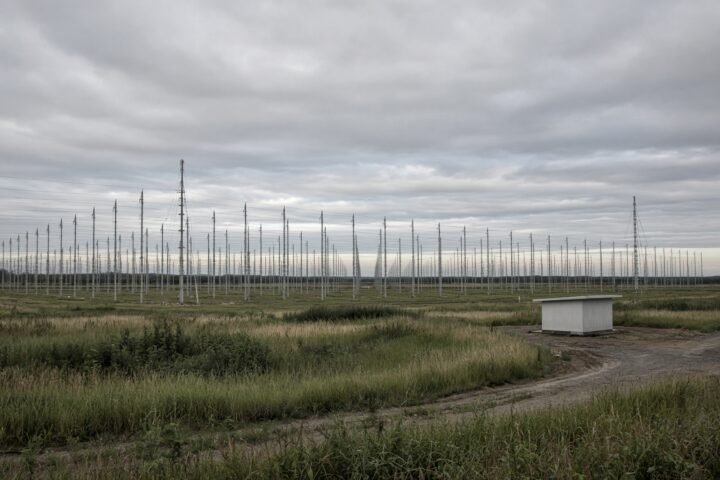
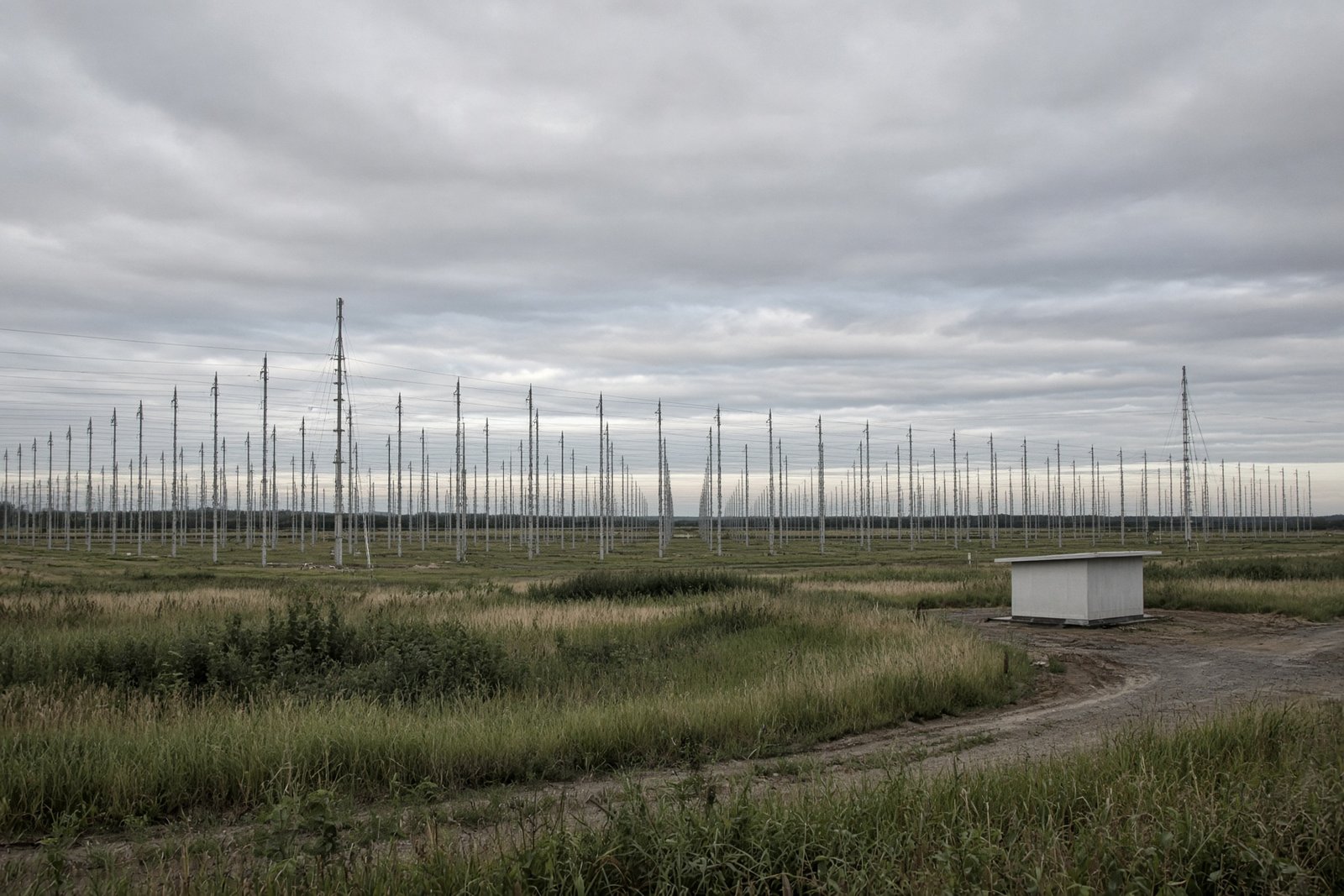
Construction is believed to have begun in March 2023 near Gvardeysk, in the central part of the Russian exclave. Satellite images from ICEYE show three large antenna lines, each more than 500 metres long, arranged in a star-shaped configuration.
The size and layout are consistent with a major long-range radar installation. Satellite imagery can show the scale and development of a site, however, rather than prove how its equipment is configured or how well it performs. A separate construction project near Chernyakhovsk includes a ring-shaped antenna structure more than 1.6 kilometres in diameter. Its purpose has not been conclusively identified, and it would be premature to describe it as a confirmed part of the same radar complex.
The specialised publication Defence24 has also described the radar project and its possible implications for European security.
The reported system is designed to detect activity beyond the normal line of sight. For the 29B6 “Container”, estimates suggest a potential detection range of up to 3,000 kilometres and an observation sector as wide as 240 degrees. Those figures refer to the expected capabilities of the system type, not to performance publicly demonstrated by the unfinished Kaliningrad site.
What an over-the-horizon radar can add
Over-the-horizon radars use the propagation of radio waves to detect activity at distances beyond the reach of many conventional line-of-sight systems. Their main value is early warning. They can indicate that the air situation is changing, allowing information to be compared with data from other sensors before a clearer picture emerges.
The Kaliningrad installation is intended to detect activity by strategic and tactical aviation, as well as certain categories of missile threat. If brought into service, it could identify a rise in military flying, register changes in movement patterns and feed information into Russian early-warning networks.
That does not mean the radar would continuously control the European airspace, or track every aircraft and missile with equal accuracy. Its practical performance would depend on the equipment installed, signal processing, technical availability and conditions affecting the propagation of radio waves. A theoretical range is not the same as a guaranteed operational picture.
The system’s likely contribution would be measured partly in time. An earlier indication of unusual activity could help Russian commanders compare movements, exercises and alert changes across a wider area. The radar would complement, rather than replace, other systems needed to identify and follow individual targets precisely.
Why the location matters
Kaliningrad is a Russian exclave between Poland and Lithuania, directly adjoining NATO’s eastern flank. That geography gives the project significance even before its final performance is known. A long-range sensor installed there would be positioned to observe military aviation over and around a strategically sensitive part of Europe, including activity linked to the Baltic region.
Repeated observations can be more useful than a single detection. Flight routes, the timing of exercises, unit transfers and changes in readiness may reveal patterns when watched over time and combined with other sources. A new radar could therefore give Russia additional information for interpreting military activity in the alliance’s eastern regions.
This does not, by itself, show that Moscow is preparing an operation against Poland, Lithuania or another NATO member. Nor would the installation automatically create a new offensive capability. Its immediate importance is narrower: it could expand Russia’s ability to observe and assess military activity along its western strategic direction.
For NATO, the challenge extends beyond air defence. Military forces routinely generate signals through aircraft movements, communications, logistics, maintenance and training schedules. Each detail may reveal little on its own. Over time, however, a persistent sensor can help an adversary build a picture of how a force operates, how quickly it reacts and which activities are routine.
The cost of being visible
The radar project could push allied governments to strengthen the protection of operational data and communications, vary the timing and pattern of exercises, and reduce the predictability of deployments. Such measures would not make military activity invisible, but they could limit the conclusions drawn from it.
That creates a difficult balance. NATO members need to demonstrate presence and readiness, particularly on the eastern flank, while avoiding the disclosure of a detailed map of their procedures. More secure communications, tighter control of sensitive information and less predictable activity all bring financial and organisational costs.
The effect would not be confined to Poland or Lithuania. A radar with the stated potential range could, depending on its actual performance and integration with Russian warning networks, affect how a much wider group of European allies plans aviation, exercises and force movements.
The decisive question will come when the facility enters service: how reliably it operates, what it can detect in practice and how effectively its data is connected to Russia’s wider command and warning systems. Until then, the construction near Gvardeysk is a visible expansion of Russian surveillance infrastructure — close to NATO territory, but not yet proof of the level of control Moscow may eventually gain over Europe’s skies.