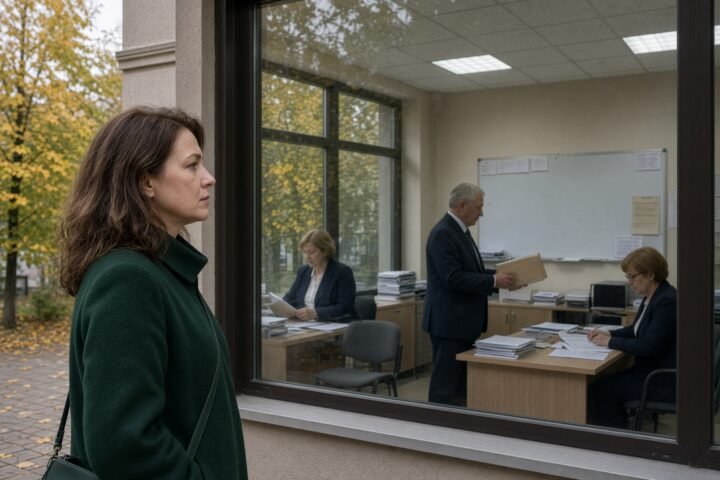
Miloš Fleischhans, who spent six years working for the Russian state media group Rossiya Segodnya, is now teaching history and English at a secondary school in Plzeň. The case has raised concerns about gaps in staff vetting and the possible spread of pro-Russian narratives in the classroom.
The appointment was reported on 11 September 2026 by Plzeňská Drbna, which said Fleischhans had worked for the Russian state media holding, including its Czech-language outlet Sputnik Czechia. He now teaches at the Secondary School of Informatics and Financial Services in Plzeň, western Czechia.
Attention was drawn to his background after he appeared in a 2021 report by the Russian state television channel Rossiya. In the programme, Fleischhans accused Czech media of inflaming hysteria and disputes with Russia. The broadcast did not identify him as an employee of Rossiya Segodnya, which Czech counter-intelligence considers the main instrument of Russian state propaganda.
School says it knew nothing of his past
The school’s director, Přemysl Schmidl, said he had not known about Fleischhans’s previous employment when he was hired. He nevertheless said he saw no problem with the appointment as long as the teacher’s past did not affect the school or his teaching.
Schmidl also said that politics had no place in the school and that candidates were not subjected to advance political vetting. That position has exposed a gap between ordinary recruitment procedures and the security concerns surrounding employment in education, particularly when a candidate has worked for a media organisation identified by Czech authorities as a vehicle for Russian influence.
Fleischhans declined to answer journalists’ questions about his previous work or his current teaching role.
History teaching creates a particular risk
The concern is not simply that a former media employee has entered the education system. Fleischhans is teaching history, a subject in which the selection and framing of events can shape how pupils understand political change, international conflict and the conduct of states.
His appearance on Russian state television, where he publicly defended Russia against criticism from Czech media, provides evidence of a political position that is directly relevant to the subject he now teaches. The materials do not establish that he has already promoted Russian interpretations in the classroom. They do, however, point to a risk that pupils could be exposed to a distorted or pro-Russian account of historical and political developments.
That risk is heightened by the school’s admission that it did not know about his six years at Rossiya Segodnya. The case suggests that a candidate’s previous work for a foreign state media organisation may not be identified during a standard recruitment process, even when the organisation is regarded by national security authorities as a major propaganda tool.
Influence extends beyond the media
The appointment also illustrates how Russian information influence can reach beyond television, online platforms and news organisations. A person who previously worked within a state-controlled propaganda system can move into an institution whose audience is made up of young people, where authority and access are built into the role.
For Czech schools, the issue is therefore not only whether political campaigning takes place on school premises. It is whether teachers with a documented history of defending Kremlin policies can present historical events without allowing those views to shape their lessons. The absence of evidence that Fleischhans has already done so does not remove the institutional vulnerability revealed by his hiring.
The case leaves the school facing a question that its existing recruitment approach was not designed to answer: how far should educational institutions investigate a candidate’s former work when that employment involved a foreign state propaganda organisation?
Should Czech schools introduce more detailed background checks for teachers, or would that risk turning educational recruitment into political vetting?