Proposed changes to US infant formula nutrient requirements
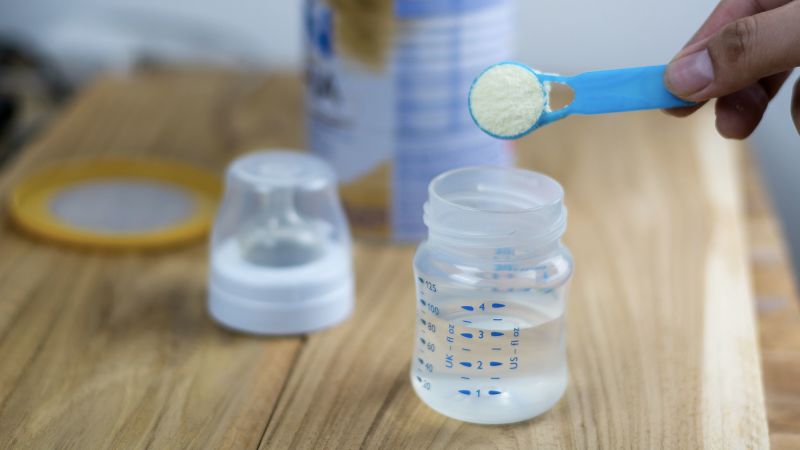
The US Food and Drug Administration is proposing changes to nutrient requirements for infant formula. This update marks the first nutrition review for formula in nearly 30 years, the agency’s acting director, Kyle Diamantas, said Thursday, reports BritPanorama.
The review is part of the Trump administration’s Operation Stork Speed initiative, announced in March 2025. The first phase focuses on four of 30 required nutrients in formula: iodine, manganese, vitamin A, and vitamin D.
Iodine, essential for thyroid hormone production and brain development in infants, will see its required amount in infant formula tripled, from 5 micrograms to 15, with a new upper limit set at 50 micrograms. Manganese, a trace mineral that aids in enzyme function and bone development, will have its minimum required amount reduced from 5 micrograms to 1 microgram per 100 calories, establishing a new limit of 50 micrograms.
The changes also affect vitamin A and D. The requirement for vitamin A will decrease from 250 international units per 100 calories to 233 IU and will shift from measuring units in IU to retinol activity equivalents (RAE). Vitamin D’s minimum required amount will double from 1 to 2 micrograms, with an increase of the maximum amount allowed to 3 micrograms. The proposed rule reaffirms nutrient requirements for chloride, potassium, selenium, and sodium.
The FDA’s nutrition review was conducted by staff scientists and will undergo peer review as mandated by law. “Parents deserve confidence in every bottle they feed their baby,” US Health and Human Services Secretary Robert F. Kennedy Jr. stated. He added that the proposed changes reflect the administration’s commitment to stronger nutrient requirements, rigorous testing for contaminants, and transparency for parents regarding infant formula standards.
The FDA considered various lines of evidence to support these proposed changes, including nutrient reference values for healthy growth, toxicity levels for infants, nutrient compositions of human milk, and international nutrient standards. Diamantas noted the agency is also seeking public input on nutrients currently not required but often added by manufacturers, such as long-chain fatty acids like ARA and DHA, and L-carnitine.
“There’s evidence that these nutrients contribute to neurodevelopment and health in infancy. And we want to hear from the scientific community, from clinicians, from industry, and the public as we consider whether or not to make these nutrients mandatory in the US infant formula supply,” Diamantas added. The FDA indicated that the nutrient review is still ongoing, with future phases assessing all remaining required nutrients, potential new nutrient requirements, and carbohydrate sources.
Health officials also addressed ongoing testing for chemical contaminants in infant formula, suggesting that the latest results “continue to be reassuring,” according to Diamantas.