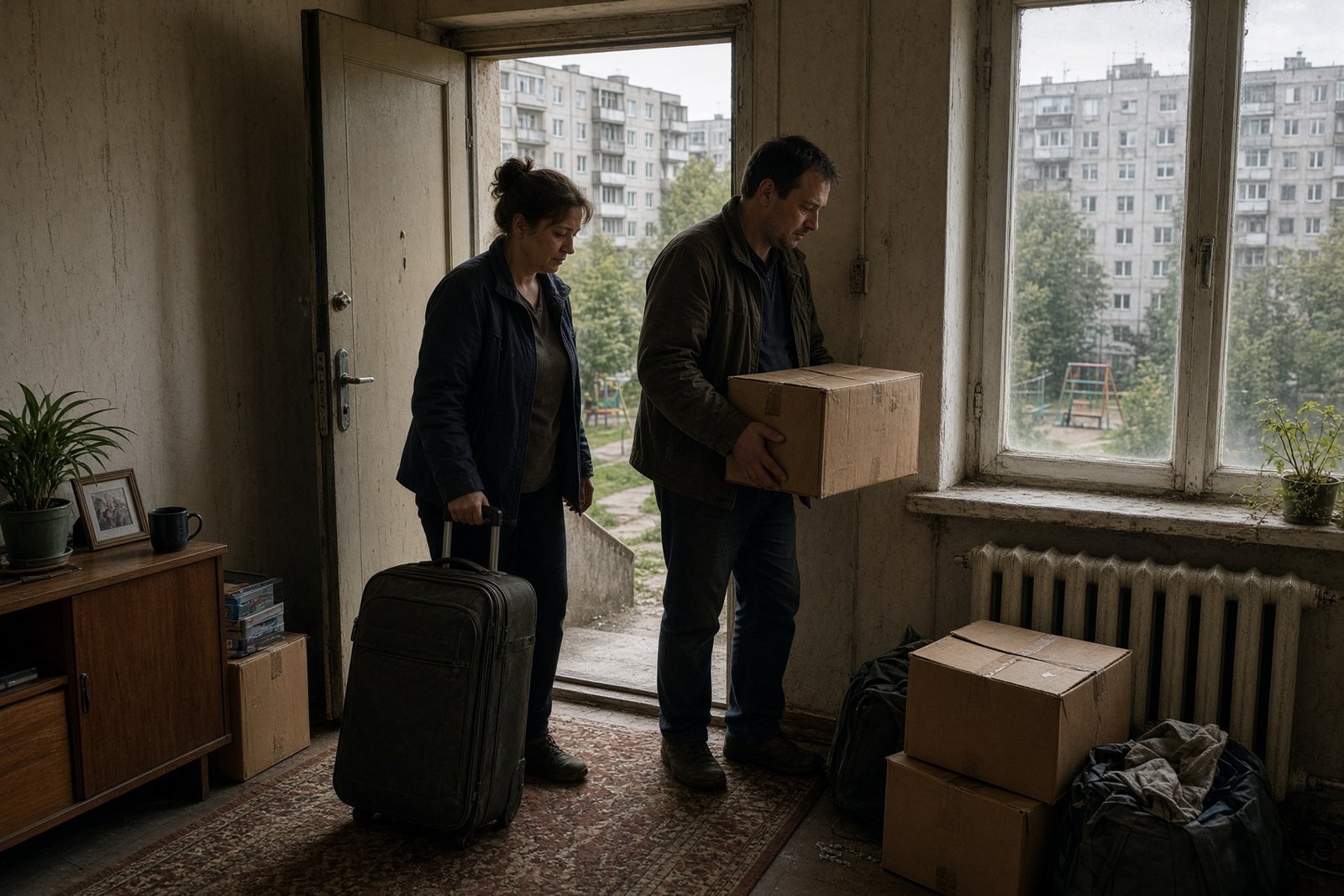
Foreigners who once praised Belarus and its authoritarian government are leaving the country or disappearing from public view as low incomes, limited opportunities and tightening restrictions undermine the image of a calm and comfortable refuge. A report by Belsat on 14 September 2026 documents several cases involving people who had been promoted by state media or associated with support for the regime.
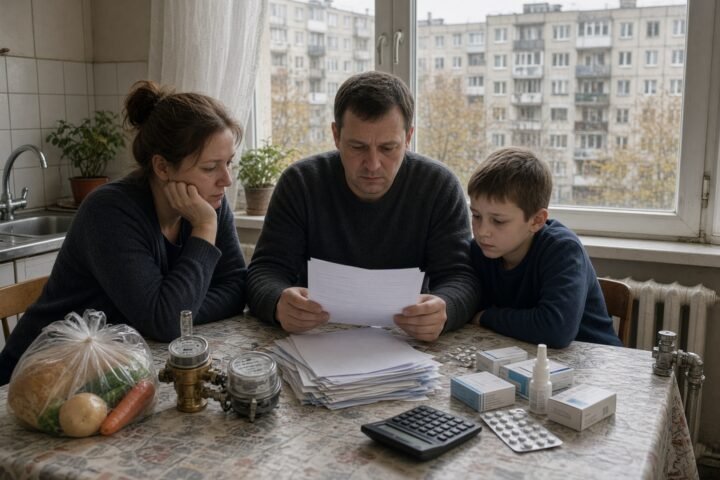
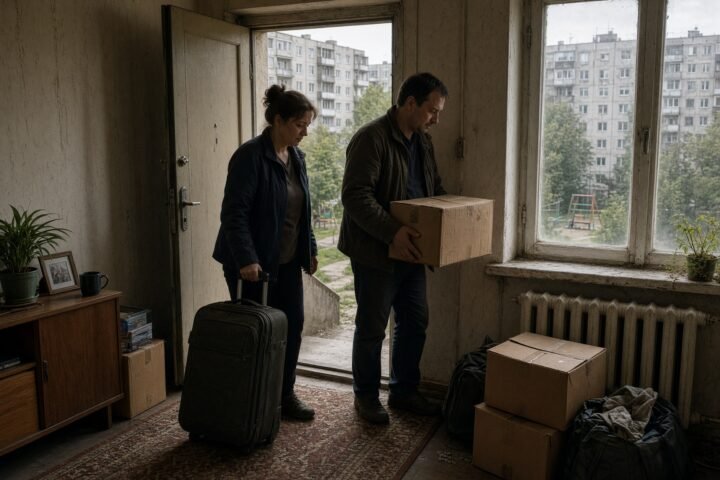
The departures expose the gap between Belarusian propaganda and the conditions facing people trying to build a life there. The Ukrainian-German Schneider family, who moved to Belarus in 2024 because of what they described as “LGBT propaganda” in Europe, decided to return in summer 2026. They said their main reason was financial: with monthly incomes of between 350 and 1,000 Belarusian roubles, they were “existing”, rather than living normally.
The promise of a comfortable refuge
The Schneiders’ experience is particularly damaging to the official narrative because they had presented their move as a choice in favour of Belarus. Their return suggests that ideological sympathy cannot compensate for weak earnings and the absence of realistic prospects. The country’s state media has sought to portray it as orderly, safe and insulated from the problems associated with liberal Europe. But those claims become harder to sustain when foreign newcomers themselves conclude that daily life is financially unviable.
Another prominent case concerns Evan Newman, an American who received asylum in Belarus in 2021 after storming the US Capitol. He opened a restaurant in Brest, but later decided to return to the United States after Donald Trump pardoned participants in the Capitol assault in 2025. His departure shows that even a person whose political circumstances had made Belarus a place of refuge did not ultimately remain there.
Martin Mikołajek, a Polish supporter of the “Russian world”, stayed in Belarus for only two months before moving permanently to Russia. He then mobilised for the war against Ukraine and became disabled after suffering injuries. His story does not represent a successful foreign settlement in Belarus; instead, it shows how the country can function as a temporary stop for people drawn to its political message, rather than as a lasting alternative to life elsewhere.
Everyday obstacles undermine the official image
A Russian woman who moved to Grodno described a different set of difficulties. She complained about problems registering and obtaining a residence permit, an inability to find the work she wanted, trouble renting accommodation and high prices. Together, those complaints point to a basic failure of the promised welcome: political alignment with the authorities does not guarantee straightforward access to employment, housing or legal status.
For foreign residents, the obstacles are practical as well as political. Low wages restrict the ability to settle, while administrative barriers and expensive rents make it difficult to convert a decision to relocate into a sustainable life. The result is a country that may attract people through propaganda, ideological messaging or temporary political circumstances, but struggles to retain them once they confront its economic reality.
The fate of Emil Czeczko is more tragic. The former Polish soldier became a hero of Belarusian and Russian propaganda after making claims about alleged killings of migrants by Polish border guards. He was found hanged in Minsk in March 2023 and was buried in Belarus. His case demonstrates the darker side of the system’s treatment of foreigners: people can be elevated when their stories serve the regime’s narrative, but that public prominence does not provide evidence of a secure or successful future in the country.
A failure that reaches beyond individual departures
The loss of foreign supporters matters because it challenges one of the central political claims made by Lukashenko’s government. The authorities present authoritarian “stability” as compensation for restricted political rights and freedoms. Yet the departure of people who were initially sympathetic to Belarus indicates that stability alone cannot overcome economic stagnation, low incomes and the limited scope for personal development.
It also exposes a wider contradiction. At a time when many Belarusians are leaving their own country, the regime has failed to establish Belarus as a credible destination for foreigners seeking work and a permanent home. If even those who arrived admiring the country or its political order decide that they cannot build a viable life there, the state’s carefully managed image loses one of its strongest potential endorsements.
The immediate question is whether Minsk will respond to this pattern by addressing the economic and administrative conditions driving people away, or continue relying on propaganda to attract newcomers it cannot retain.
Can Belarus’s ideological appeal compensate for the economic and political conditions that are pushing both foreigners and its own citizens to leave?