Paris is revising its proposed ban on social media for children under 15 after France’s Constitutional Council rejected the original legal framework. The government is now considering stronger duties for platforms and safer age-verification systems rather than relying solely on a direct prohibition.
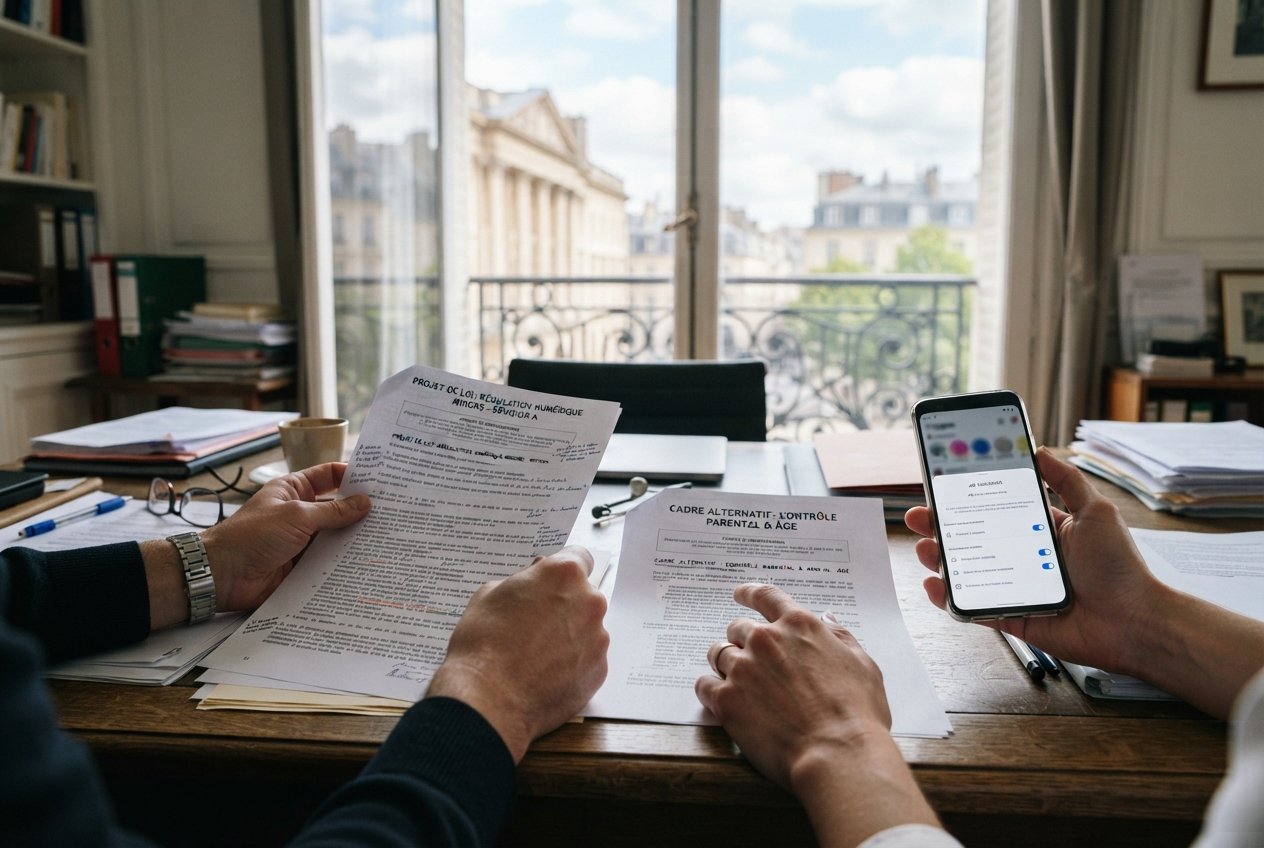
Franceinfo reported on 16 August 2026 that ministers were examining ways to prevent children below the age of 15 from using social networks without parental consent, after the country’s highest constitutional authority blocked the earlier proposal. The council found that the mechanisms envisaged could excessively restrict freedom of expression and create risks to personal data during age checks. Franceinfo’s report said the government was looking for a legally safer alternative.
A ban challenged by constitutional safeguards
The dispute centres on how the state can establish a user’s age without creating a new system for collecting or exposing sensitive personal information. Any verification process would need to comply with the EU’s General Data Protection Regulation, known as GDPR, while also meeting the requirements set out by the Constitutional Council.
That creates a difficult test for ministers. A rule designed to protect children could itself threaten fundamental rights if it required platforms to gather excessive information or allowed the state to monitor users too closely. The council’s decision did not remove the political objective of restricting access for younger children, but it ruled out the legal machinery first proposed to achieve it.
The government is therefore considering digital systems that could confirm whether a user is old enough without unnecessarily revealing their identity or retaining more data than needed. The materials under discussion do not specify which technology would be used, but the principle is clear: age assurance must be made compatible with privacy protection rather than treating personal data as the price of entry to online services.
Platforms may face the main burden
Another option would shift the centre of regulation away from children and towards the companies operating the largest platforms. TikTok, Instagram and Snapchat could be required to activate stricter privacy settings by default for under-15s, limit the amount of time they can spend on the services and disable recommendation algorithms for younger users.
This approach would not amount to the same direct ban. Instead, it would make the design of the services less likely to draw children into prolonged or highly personalised use. It would also place responsibility on the platforms whose systems determine what users see, how quickly content is presented and how easily they remain engaged.
The proposed measures are intended to address concerns over algorithmic dependence, cyberbullying and harmful or unwanted content. Supporters of tighter restrictions argue that children’s mental health and personal space require greater protection during adolescence, when their habits and identities are still developing.
Brussels could become part of the solution
Paris is also considering whether some of the rules should be developed at EU level, particularly through joint enforcement of the Digital Services Act. The DSA already provides a common framework for regulating online platforms across the European Union, and using it could avoid a situation in which national rules are applied unevenly to services operating across borders.
An EU-based approach could also give France greater leverage over global technology companies. At the same time, it would make the outcome dependent on negotiations and enforcement beyond the French government, rather than allowing Paris to impose its preferred system alone.
The constitutional challenge has exposed the central contradiction in the policy. The state wants to shield children from services associated with addiction, bullying and damaging content, but it must do so without weakening freedom of expression or turning age verification into a threat to privacy. The next version of the plan will show whether France can protect minors while keeping those rights intact.
Should France prioritise a direct age limit, or place greater responsibility on social media companies to make their platforms safer for children?