FIFA introduces strict rules on set-piece conduct ahead of World Cup
Thomas Tuchel’s plans to use set-pieces as a key weapon at this summer’s World Cup could be undermined by a major FIFA crackdown on grappling inside the penalty area, reports BritPanorama.
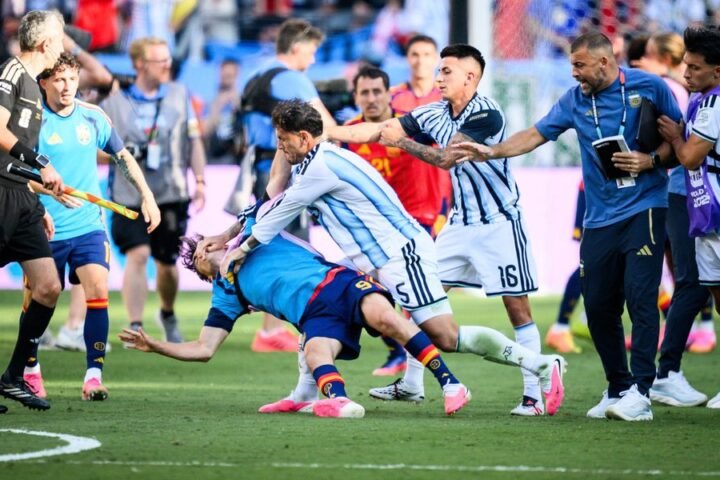
Referees’ chief Pierluigi Collina has unveiled new measures ahead of the tournament in the United States, with officials set to adopt a stricter stance on blocking, holding, and wrestling before corners and free-kicks. This initiative is among several significant rule changes introduced for the competition, which also include expanded VAR powers and new penalties for time-wasting.
Set-pieces have increasingly become crucial in modern football, exemplified by Arsenal’s success in utilising dead-ball situations under Mikel Arteta. Last season, the Premier League champions scored 27 goals from set-pieces across all competitions, often employing blocks and movement inside the box to create scoring opportunities.
Tuchel has emphasised the importance of free-kicks, corners, and long throws at the World Cup, especially in light of the challenging conditions anticipated in the U.S. However, FIFA officials are committed to eliminating what has effectively been a free-for-all before many set-pieces. A significant change will permit VAR to intervene when attacking players commit clear offences before the ball is in play, if such incidents directly impact a goal or penalty decision.
A key modification received approval from lawmakers at IFAB. A statement noted: “The IFAB has approved a clarification to the Video Assistant Referee (VAR) protocol for use at the 2026 FIFA World Cup regarding clear offences committed by the attacking team before the ball is in play at a corner kick or free kick that have a direct impact on a goal, penalty kick, or disciplinary sanction.” This clarification aims to ensure that referees can reverse decisions if an initial foul occurs before a goal is scored.
Collina highlighted the gravity of incidents like England’s controversial goal against Uruguay last March, stating, “The ball was not in play and there was a clear foul committed by an illegal block against the defender,” affirming FIFA’s push to ensure fairness and enforce the new standards.
The new protocol is already generating debate, chiefly due to its focus on attacking infringements exclusively; equivalent offences by defenders will not warrant retrospective penalties. Collina defended VAR’s expanded role, stating, “I would ask those fans, if they would be happy that their team loses an important competition because of this kind of incident.”
In addition to these changes, FIFA is tightening regulations against aggressive player behaviour and time management during matches. For instance, players covering their mouths while speaking aggressively to opponents could face immediate red cards, and substituted players will now be required to leave the field promptly.
These reforms reflect FIFA’s intention to adapt the rules for modern football, promoting both entertainment and integrity as the World Cup approaches. As officials prepare for the expected intensity of the tournament, they are keen to implement rules that enhance the spirit of competition without compromising fairness.